Get Full Government Meeting Transcripts, Videos, & Alerts Forever!
Get email alerts on the Land Use Rezoning topic
No spam. Unsubscribe anytime.
Council rejects rezoning in Villa Park amid anti-displacement concerns
Summary
Denver City Council declined to rezone a single-family lot in Villa Park (Council Bill 24-15-81), voting 10-0 against the application after residents and some councilmembers said the West Area plan and anti-displacement policies require broader neighborhood tools before individual rezonings proceed.
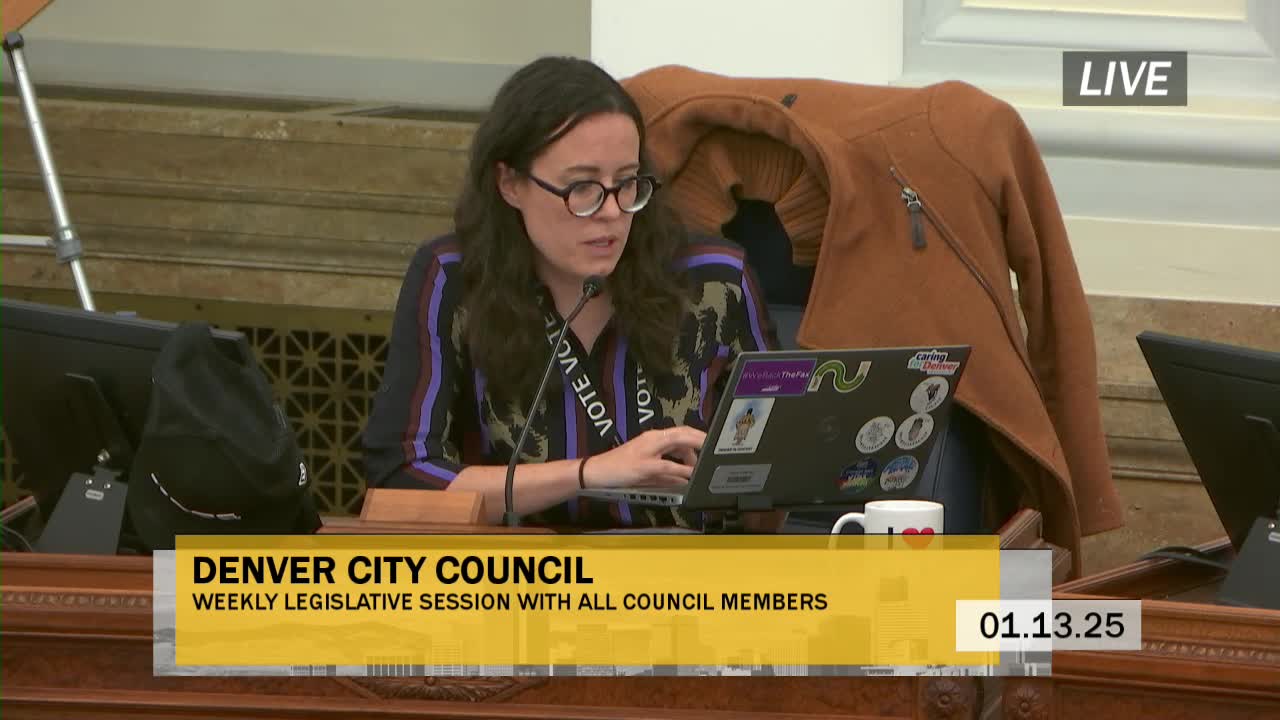
Denver City Council on Jan. 13 voted to deny a proposed rezoning at 1090 North ****** Street (Council Bill 24-15-81) after extended public comment and policy discussion about displacement risks in West Denver. The final recorded result was that the bill failed, with 10 councilmembers voting against the rezoning.
What was proposed: The applicant sought to change zoning from ESUDx (existing single‑unit district) to URH 2.5 (urban row‑house up to 2.5 stories), which would allow low‑ to mid‑scale multiunit housing — typically rowhouses or small multiunit buildings — on the 6,250‑square‑foot lot.
Why it mattered: The vote landed in the policy tension created by Denver’s newly adopted West Area plan and a subsequent City Planning memo issued Oct. 10, 2024, which advises caution on one‑off rezonings from single‑unit to higher‑intensity zoning within the West Area until anti‑displacement tools and regulatory changes are in place. Councilmembers who opposed the rezoning said implementing the West Area plan’s anti‑displacement measures before approving numerous individual rezonings was essential to protect longtime residents.
Public comment and neighborhood concerns: Residents and neighborhood leaders urged the council to delay piecemeal rezonings that they said accelerate gentrification in historically Black and Latino neighborhoods. Jaime Aguilar, a Villa Park resident and RNO board member, told council the community worked for years to shape neighborhood plans and asked council to “vote no and examine the three-plus years of work we put into the West Area plan.” Opponents cited potential increases in property taxes, traffic and the loss of naturally occurring affordable housing.
Applicant and staff view: The private applicant said the proposed change aligns with adopted citywide plans (Comprehensive Plan 2040 and Blueprint Denver), and CPD staff earlier recommended approval (planning board recommended approval on Oct. 27, 2024). Applicants noted the project’s expected scale (small multiunit development on a corner lot) and the affordable-housing linkage fee the project would trigger. The applicant also reported outreach activities including a small survey and direct contact with neighbors.
Council debate and rationale for denial: Councilmember Chris Torres (District 3) said the West Area plan anticipates tools to prevent involuntary displacement and that approving isolated rezonings without those tools contradicts the plan and risks rapid demographic turnover. Torres noted demographic shifts in West Denver (a drop in share of residents of color over recent years) and said the memo called for a more comprehensive approach. Several other councilmembers referenced similar concerns and favored city- or area-wide legislative approaches rather than individual, applicant-driven rezonings.
Outcome and follow-up: Council Bill 24-15-81 failed. City planners and councilmembers said the decision signals the need for coordinated implementation of the West Area plan’s anti‑displacement measures and for clearer pathways that link neighborhood rezonings to neighborhood stabilization programs and funding. The applicant may pursue other options or future action once citywide implementation guidance is clearer.
Ending: Councilmembers and planners said they will continue to work on frameworks that balance housing production with anti-displacement measures, and urged continued engagement with neighborhood organizations on policy and stabilization tools.