Denver council narrows barriers to needle-exchange programs, approves ordinance after heated debate
Loading...
Summary
Denver City Council voted 8-5 to remove limits on the number and school-setback rules for syringe access and treatment-referral programs, updating rules that sponsors and public health officials said create barriers to services while opponents warned of local impacts and called for stronger neighborhood protections.
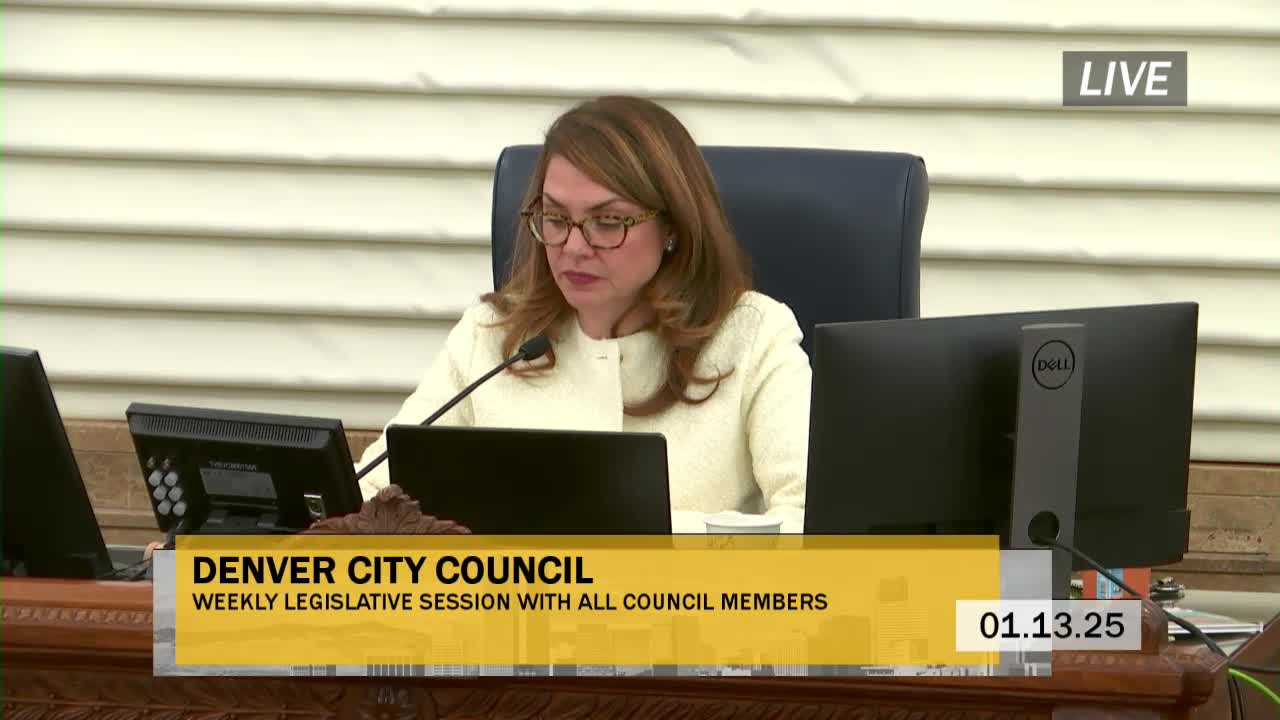
Denver City Council on Jan. 13 voted 8-5 to adopt Council Bill 24-17-91, an ordinance that removes caps on the number of syringe access (needle-exchange) and treatment referral programs and eliminates a 1,000-foot school setback for fixed sites in the Denver Revised Municipal Code.
The measure’s sponsors and public health officials said the change brings Denver into alignment with public-health practice and removes a major barrier to access for people who inject drugs. “Syringe access programs are a road to recovery” and people who interact with them “are five times more likely to access treatment,” Councilmember Amanda González Gutierrez said during debate.
The ordinance also directs the Department of Public Health & Environment (DDPHE) to set mandatory regulations that include a required community engagement process and a “good neighbor” agreement mechanism; any terms reached through that process may become licensure conditions enforceable by DDPHE, according to sponsors’ remarks.
Why it mattered: City public-health staff and program operators told council that distance limits and a numerical cap block the development or relocation of life‑saving services in neighborhoods that need them. Chris Hynes, a councilmember who urged support, said syringe programs collected more than 664,000 used syringes in 2023 and that higher accessibility reduces needles in parks and playgrounds.
Supporters’ case: Sponsors and public-health witnesses cited local outcomes and national guidance. Councilmember González Gutierrez cited DDPHE’s 2023 syringe-access needs assessment and the 2021 White House guidance urging removal of location limits. Lisa Rayville, executive director of the Harm Reduction Action Center, described day-to-day operations: clean-syringe exchange, naloxone distribution, referrals (Medicaid enrollment, mental-health and substance-use treatment), street outreach and neighborhood cleanups. Rayville said the centers do not allow on-site drug use and that mobile services and two fixed sites together serve thousands of people: “Last year we saw about 5,100 unduplicated visits for 27,000 access episodes,” she told council.
Opponents’ concerns: Several councilmembers who voted no said neighborhood impacts outside program doors, enforcement limits for “good neighbor” agreements and the removal of the school setback were central concerns. Councilmember Sarah Sawyer — who said her no vote was not a rejection of harm-reduction providers — criticized the reliance on voluntary good-neighbor agreements because they are not contractually enforceable unless embedded in licensing, and said that the need to police activity outside facilities remained unresolved. Councilmember Parisa Romero Campbell and Councilmember Watson also voiced constituent opposition and cited public-safety incidents and quality-of-life impacts in their districts.
Process and safeguards: Sponsors and DDPHE staff emphasized that licensed syringe-access programs already operate under detailed public-health regulations (licensure, required advisory boards, surprise inspections and reporting requirements) and that the ordinance does not authorize supervised consumption sites. Councilmember Gonzalez Gutierrez and other sponsors repeatedly stated that separate ordinances would be required for any supervised use sites, and that those would trigger additional zoning and rulemaking steps.
Vote and next steps: The council voted 8 in favor, 5 opposed; the ordinance was adopted and will be implemented through DDPHE rulemaking and licensing work to define enforceable conditions (including the good‑neighbor agreement process). Sponsors asked the department to return with regulations and implementation details that make neighborhood protections enforceable.
Community reaction and follow-up: Supporters — including public-health organizations and some school representatives who previously worked with local syringe programs — urged rapid implementation. Opponents pressed for added locality-specific safeguards and for the city to expedite programs to limit displacement or other indirect effects described by council members from neighborhoods in West and South Denver. DDPHE and sponsors committed to follow-up rulemaking and reporting to the council.
Ending: Councilmembers stressed the vote does not expand to supervised consumption sites without additional, separate action; instead, sponsors framed the change as updating an ‘‘outdated’’ ordinance that public‑health experts and local providers say impedes consistent access to proven prevention services.