Get Full Government Meeting Transcripts, Videos, & Alerts Forever!
Get email alerts on the Marijuana Policy topic
No spam. Unsubscribe anytime.
Council refers repeal of 2024 recreational‑marijuana measure to April ballot after heated hearings
Summary
Colorado Springs City Council voted 7-2 to refer a repeal question on ballot question 300 to the April 1 municipal election, setting up a new public campaign weeks after voters approved the original measure in November. Supporters of 300 called the move a second‑guessing of the electorate; opponents urged a second vote to c
Colorado Springs City Council on Feb. 11 voted 7-2 to place a repeal question on the April 1 municipal ballot asking whether voters want to rescind the voter‑approved ordinance that authorized retail recreational marijuana sales in the city.
The repeal question asks voters whether to repeal the ordinance that appeared as ballot question 300 on the Nov. 5, 2024 election, the measure that — among other provisions — limited new recreational sales licenses to existing medical‑marijuana licensees, set a limit on new licenses and earmarked a 5% retail tax for public safety, mental‑health services and PTSD treatment for veterans.
Council debate followed an unusually large turnout of public comment over the sales and legal framing. Supporters of keeping question 300 in effect argued that voters had clearly approved the measure in November and that rescinding it now would redirect tax revenue away from veteran and mental‑health services. Opponents and some council members said sufficient numbers of voters had told them the 300 ballot title and text were confusing when they voted and that a short, clear repeal question would allow the electorate to confirm its intent.
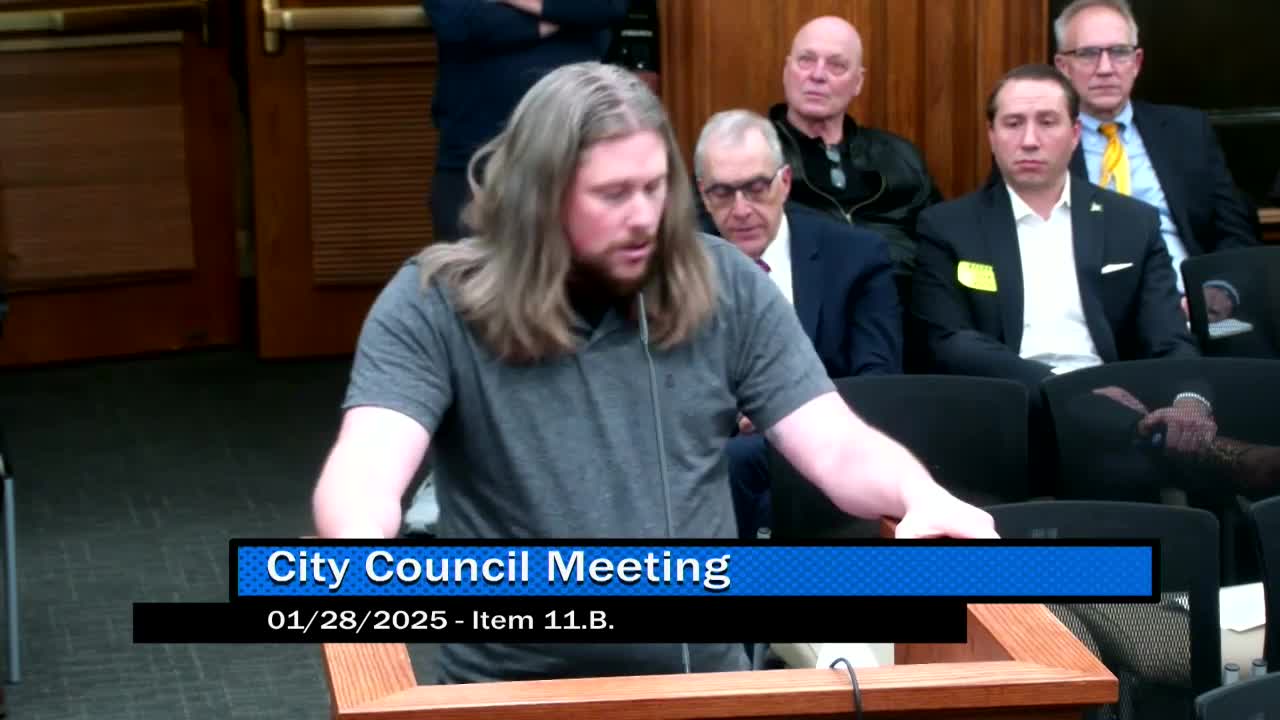
Mark Gruskin, the attorney who drafted the citizen initiative that became question 300, urged council members to take care when framing the repeal question. Gruskin said the proposed repeal ballot title circulated by council staff omitted “central features” of the initiative — for example, the limit on new licenses and the earmarked taxes — and therefore risked misleading voters. “Voters told you in no uncertain terms what policy they wanted at the 2024 election,” he told council. Gruskin warned that a flawed ballot title would invite court challenges and could delay any referendum.
Council also approved second‑reading ordinances on licensing and a retail sales tax (earlier items 10i, 10j and 10k), which set the regulatory and fee framework the city will use if recreational sales are permitted. Those ordinances passed on second reading in votes recorded during the meeting and will become effective unless the repeal measure nullifies them after the April vote.
The council’s vote to refer the repeal measure does not change the November result; it gives voters another opportunity to approve or rescind the citizen‑initiated ordinance that became law in November. The council’s referral drew sharp public comment from veterans’ groups, business owners and campaign backers who said a second vote would overturn the democratic will expressed in November. Other residents and two council members said a clearer, single‑issue question is the only way to determine voter intent.
Councilman Dave Donaldson, who led the motion to place a repeal question on the April ballot, said he had heard from voters who reported confusion and wanted the council to provide a cleaner question for the next vote. Opponents said the timing — a municipal election with typically lower turnout than a general election — risked producing a different result than the more than 30,000 residents who decided in November.
The vote on the repeal referral was 7 in favor, 2 opposed (Councilmembers Avila and HidgeMAn voting no). Councilmembers who supported the referral said it would give voters a second chance to consider the measure in plain language; councilmembers opposed said the voters’ November decision should stand.
What’s next: The council‑approved repeal resolution will appear on the April 1 municipal ballot with the title and text approved by council. Any court challenge to the ballot title — and Gruskin warned one was more likely if the title was abbreviated — could delay voting or require a change in the way the question is presented. If a repeal passes in April, ordinances the council approved to license and tax retail recreational sales would be nullified; if the repeal fails, that regulatory framework would proceed and the city could issue licenses under the rules council adopted earlier in the meeting.
Key vote: referral of repeal of ballot question 300 to the April 1, 2025 municipal ballot — approved 7‑2 (Councilmembers Avila and Hidgeman voting no).