Get Full Government Meeting Transcripts, Videos, & Alerts Forever!
Get email alerts on the Medical Education Residency Programs topic
No spam. Unsubscribe anytime.
Senate committee hears bill to fund residency start-ups to keep more doctors in Montana
Summary
Lawmakers and health advocates told the Senate Public Health Committee on Feb. 7 that a one-time grant program in Senate Bill 216 would help hospitals start new residency programs, with witnesses citing $2 million startup costs per program and a $6 million fiscal note to support three launches. No committee vote was taken at the hearing.
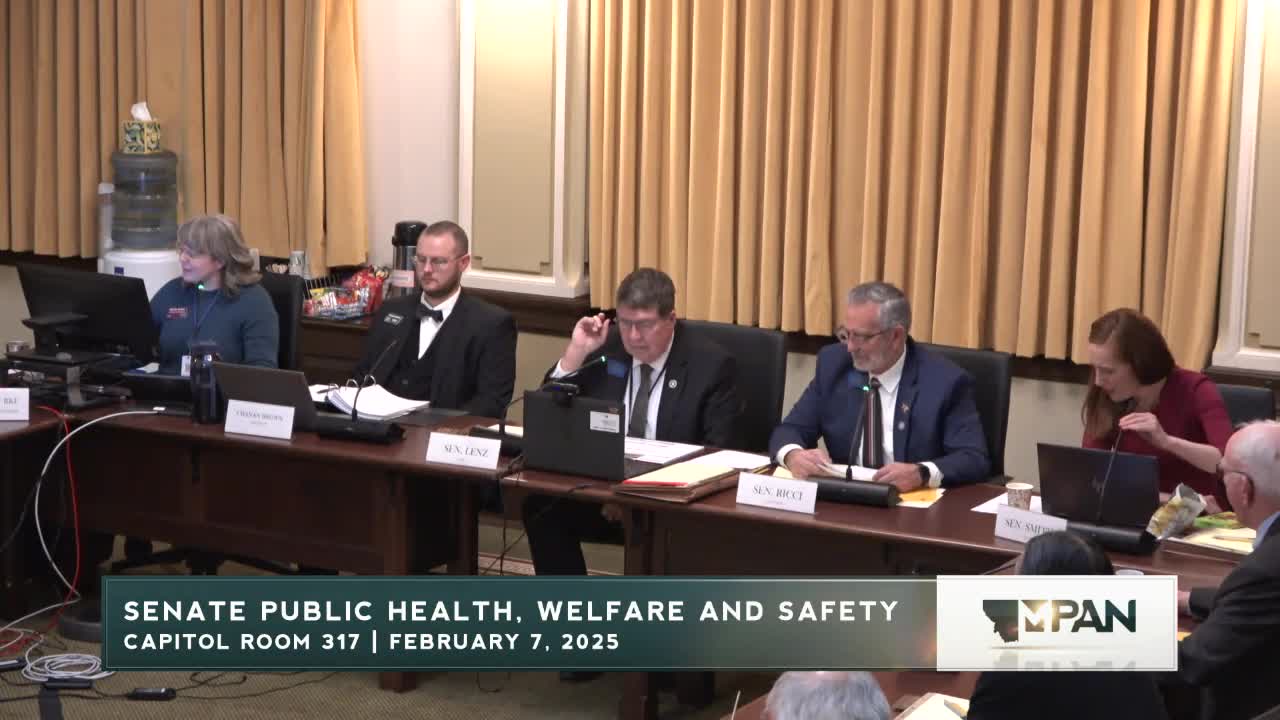
Senate Public Health Committee members heard testimony Feb. 7 on Senate Bill 216, the Montana Physicians Workforce Investment Act, a proposal to create one-time grants to help hospitals and other health facilities start new graduate medical education (GME) residency programs.
Sponsor Sen. Dennis Lentz, representing Senate District 25, told the committee the bill is intended to increase the number of physicians who train and then remain in Montana by supporting the costly startup phase of new residency programs. “What this bill would do would be to provide more residency programs in the state,” Lentz said during his opening remarks.
The bill would authorize a fiscal appropriation of $6 million in one-time grants, testimony said, with awards of up to $2 million per facility to cover startup costs such as hiring program directors and faculty, creating on-call and classroom space, and purchasing equipment. Jean Branscum, who identified herself as representing physicians and medical students in the state, described residency training as the final step before independent practice and told the committee that about “65 percent of physicians graduating from our Montana residencies … are staying in the state and practicing.”
Physician witness Dr. David Park said Montana faces a physician shortage and that the state currently has far fewer residency positions than comparably sized states. He told the committee Montana had only 34 first-year residency positions available for new graduates and said the state has about five existing residency programs. Park summarized the financing challenge: hospitals typically must incur 2–3 years of startup losses before federal Medicare (CMS) funding begins to flow to residency programs, which is why an upfront grant could be necessary.
Testimony identified three larger hospitals that have expressed interest in creating new residency programs if startup funding were available: Bozeman Health, St. Peter’s in Helena and St. James in Butte. Witnesses also said the bill would create a GME task force to develop the application process, determine eligibility and grant allocations, and hold recipients accountable for using funds to start residency programs.
Sarah Swanson, commissioner for the Montana Department of Labor and Industry, appeared as an informational witness and noted that this bill would establish a new grant program administered by her department; she said the department does not currently oversee residency programs and offered to coordinate with the Department of Public Health and Human Services for background information. Committee members asked for clarification about the task force’s membership and how grant amounts would be decided; Sen. Kirk Carpenter said he was especially interested in the task force’s proposed size and membership.
Sponsor Lentz closed by emphasizing the long timeline and uncertainty associated with training and retaining physicians, and by urging further committee discussion. The hearing was closed without a committee vote or formal action on the bill.
The committee record includes testimony on projected class sizes at Montana’s medical schools and estimates of future graduates: witnesses said more than 200 medical students could graduate from Montana programs in 2027 and more than 300 by 2029, increasing demand for in-state residency slots. Witnesses also described the grant as one-time startup support; hospitals would be responsible for program sustainability after the initial funding period.
Votes at this hearing: none — the committee held a hearing and took testimony but did not take executive action on Senate Bill 216.