Get Full Government Meeting Transcripts, Videos, & Alerts Forever!
Montana officials outline suicide-prevention programs, funding and gaps as committee presses for details
Summary
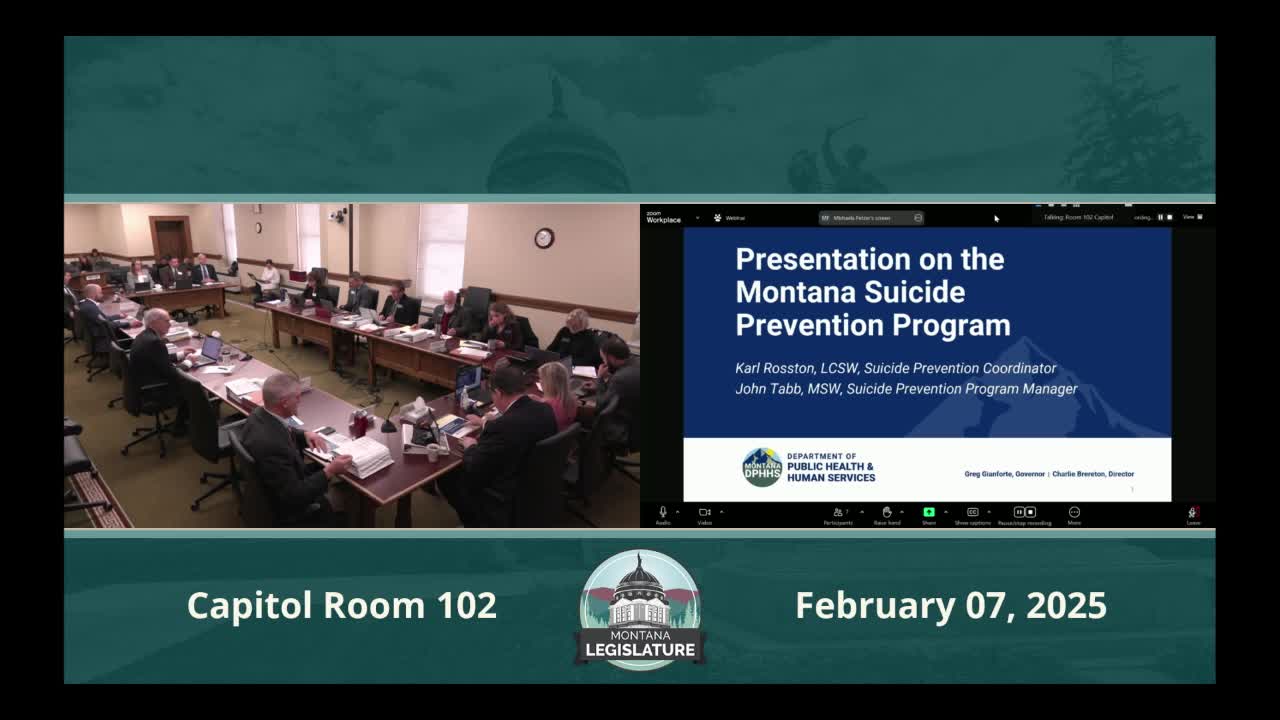
State public-health officials briefed the Legislature’s budget committee on Montana’s suicide-prevention programs, including the 988 crisis lifeline, tribal and veteran efforts, school-based prevention and community grants; lawmakers pressed for clearer budget breakdowns and better post-discharge follow-up.
Megan Peel, administrator for the Behavioral Health and Developmental Disabilities Division at the Montana Department of Public Health and Human Services, told the Legislature’s budget committee the department oversees the state’s suicide-prevention program and provided a PowerPoint and a budget fact sheet for the hearing.
“The original program was House Bill 478, which was created in 02/2007,” said Carl Roston, Montana’s suicide prevention coordinator, explaining that the position was created by statute to coordinate statewide efforts and produce a biennial suicide-prevention plan. Roston and other department staff said the program’s responsibilities include public-awareness campaigns, statewide training, tribal partnerships, grants to local communities and support for the crisis lifeline now reached by dialing 988.
The department described multiple prevention strands: public awareness and media purchased in partnership with the Montana Broadcasters Association and the Northern Broadcasting System; training such as QPR (Question, Persuade, Refer) and Suicide Safe Care for health providers; school-based programs including the PAX Good Behavior Game and the Signs of Suicide curriculum; tribal and urban Indian community postvention resources developed with Columbia University; and the statewide data surveillance effort that reviews every suicide to inform interventions.
John Tabb, the state’s suicide-prevention program manager who oversees the 988 work and veteran outreach, said Montana operates three lifeline call centers (Voices of Hope in Great Falls, the Help Center in Bozeman, and Western…
Already have an account? Log in
Subscribe to keep reading
Unlock the rest of this article — and every article on Citizen Portal.
- Unlimited articles
- AI-powered breakdowns of topics, speakers, decisions, and budgets
- Instant alerts when your location has a new meeting
- Follow topics and more locations
- 1,000 AI Insights / month, plus AI Chat