Get Full Government Meeting Transcripts, Videos, & Alerts Forever!
Get email alerts on the Criminal Penalties topic
No spam. Unsubscribe anytime.
Committee backs bill to raise penalty for tampering with human remains tied to homicide investigations
Summary
House Bill 44 would increase penalties for tampering with or fabricating physical evidence in connection with a homicide when the act prevents a coroner or medical examiner from determining cause or manner of death.
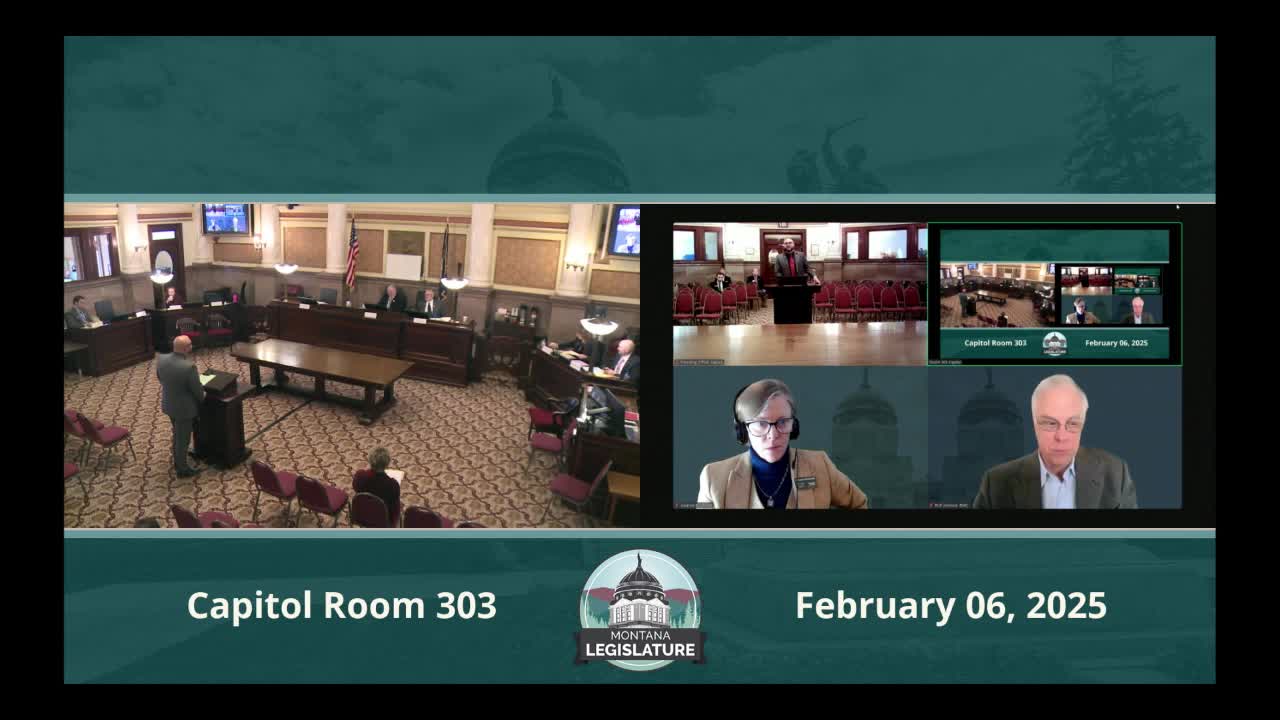
Representative Denise Baum opened the hearing on House Bill 44, describing cases in which suspects took extraordinary steps to conceal or destroy bodies, preventing coroners from determining cause or manner of death and, in some cases, blocking deliberate-homicide charges.
Baum recounted an investigation in which body parts were discovered burned in a coulee and detectives found a victim had been beaten, then later dismembered and burned, leaving examiners unable to determine the exact cause of death. "Due to those extraordinary measures taken to conceal, destroy the victim's body, medical examiners were unable to make an exact cause of his death," Baum said.
Ed Zink, chief criminal deputy for the Yellowstone County Attorney's Office, and representatives of the Montana Police Protective Association and the Montana Sheriffs and Peace Officers Association testified in support. Zink, whose office worked the case Baum described, called the bill a "tailored response" to tampering with human remains and said current penalties create a perverse incentive to destroy evidence.
The bill would add language to make tampering with or fabricating physical evidence in connection with a homicide or homicide investigation an offense carrying up to 40 years in state prison if the tampering affected a coroner's or medical examiner's ability to determine cause or manner of death. Witnesses emphasized the bill is intended to provide prosecutors discretion in charging and judges discretion in sentencing.
Committee members asked how prosecutors would distinguish cases with malicious intent from those driven by other motives or family members acting without intent to impede an investigation. Witnesses replied that decisions will be case-specific, relying on investigative facts and prosecutorial discretion. The sponsor and proponents said the statutory phrase "not to exceed 40 years" preserves judicial and prosecutorial discretion.
The Senate Judiciary Committee moved and passed concurrence on House Bill 44 by voice vote; Senator Amherich was recorded as a nay, and Senator Olson voted yes by proxy.
Proponents framed the bill as providing accountability and closure for families of homicide victims whose remains have been desecrated or destroyed, and said the change was requested by county attorneys and recommended by the Law and Justice Interim Committee.