Get Full Government Meeting Transcripts, Videos, & Alerts Forever!
Get email alerts on the Controlled Substances topic
No spam. Unsubscribe anytime.
Committee backs scheduling gabapentin as controlled substance to aid DUI, toxicology work
Summary
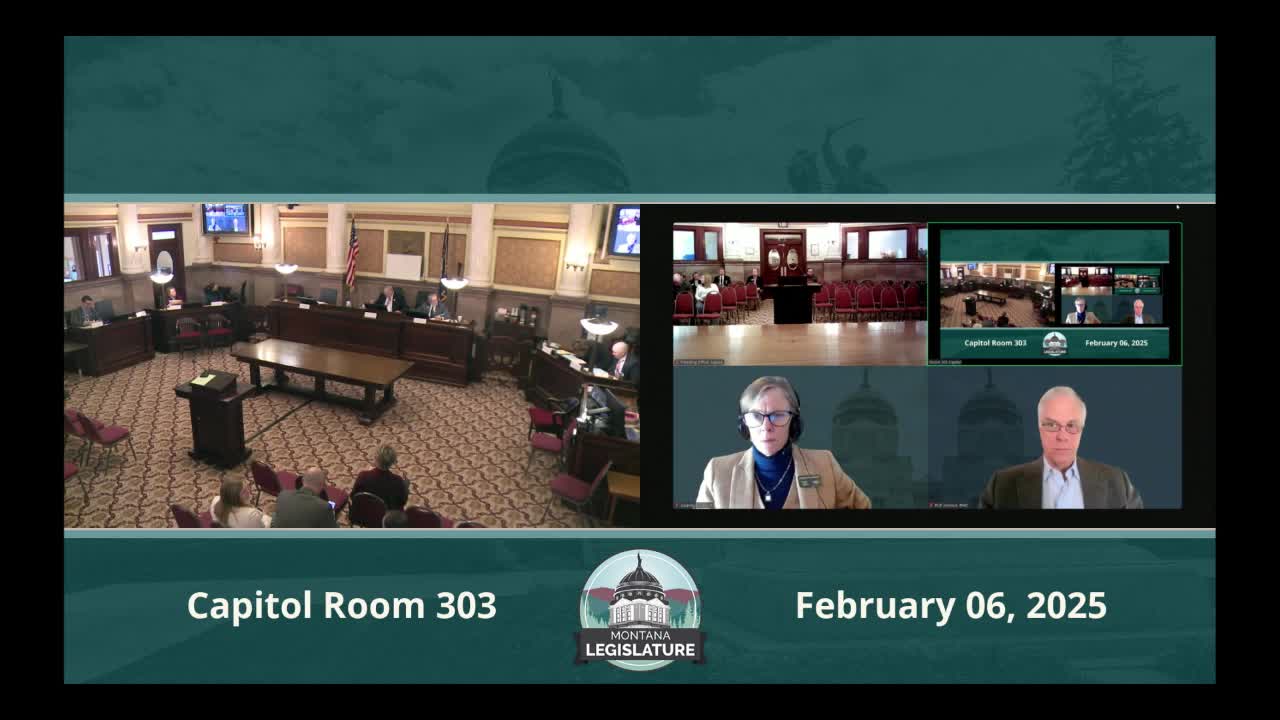
The Senate Judiciary Committee held a hearing on House Bill 41 and later concurred with the bill to classify gabapentin as a Schedule V controlled substance, testimony said the change will improve tracking and toxicology reporting in DUI and postmortem cases while retaining lawful patient access.
House Bill 41, which would list gabapentin as a Schedule V controlled substance, drew testimony from law enforcement, prosecutors and forensic toxicologists who said the change would improve detection and reporting in DUI and other investigations.
Curtis Schomer, the bill sponsor and a Republican representative from House District 48, opened the hearing saying, “House bill 41 makes gabapentin a schedule 5 drug.” Schomer told the committee gabapentin has been used to cut illicit drugs and appears frequently in DUI toxicology reports but currently is not regulated in Montana.
Beth Smalley, lead scientist and supervisor of the toxicology and breath alcohol sections at the Montana Forensic Science Division, testified that gabapentin is “a rising concern” in forensic toxicology after wider adoption of detection methods and that it is “rarely found alone” and typically appears in combination with other prescription or illicit drugs. Smalley said scheduling would allow Montana to track dispensing and help doctors and pharmacies monitor use without changing prescribing access.
Representatives of the Montana Department of Justice, the Montana County Attorneys Association, the Montana Police Protective Association and the Montana Sheriffs and Peace Officers Association also spoke in support, saying scheduling would close enforcement gaps and aid prosecutors and law enforcement in cases where gabapentin contributes to impairment.
Committee members asked whether scheduling would change cost or access for patients; witnesses said scheduling would mainly add a tracking mechanism and should not affect a patient’s ability to obtain prescribed gabapentin. The sponsor and toxicology witnesses explained that scheduling would allow toxicology labs and law enforcement to test for and report gabapentin in blood samples, giving prosecutors and patrol officers more information in DUI cases.
In executive action the committee concurred with House Bill 41. The motion to concur was made by Senator Ricky; the committee approved the concurrence by voice vote with Senator Emmerich recorded as the only nay; proxies for the record included Andrea (yes) and Senator Olson (yes by proxy). The committee named Senator Ricky to carry the bill forward.
The hearing record shows discussion focused on the bill’s purpose as a tracking and enforcement tool, the frequency with which gabapentin appears in multi-drug toxicology results, and the stated intent that lawful prescription access remain unaffected.
The committee closed the hearing on House Bill 41 and moved on to other agenda items.