Get Full Government Meeting Transcripts, Videos, & Alerts Forever!
Get email alerts on the Property Protection Squatting topic
No spam. Unsubscribe anytime.
Senate bill would create criminal and expedited procedures to remove unlawful occupiers; opponents raise due-process concerns
Summary
Sen. Becky Beard introduced SB 101 to create offenses for unlawful squatting, add a fraudulent-sale/lease offense, and establish an affidavit-based removal procedure to help owners and law enforcement remove unauthorized occupants.
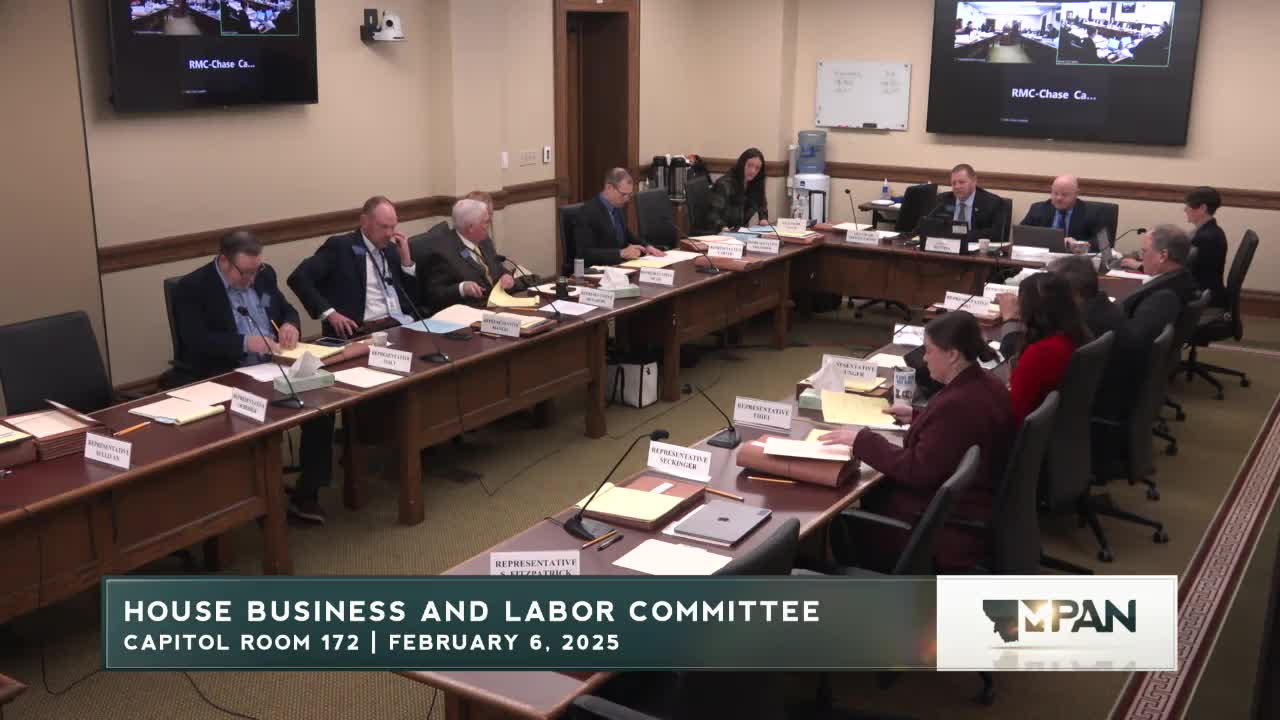
Senator Becky Beard (Senate District 38) brought Senate Bill 101 to the House Business and Labor Committee as the “Stop Squatters Act,” proposing new offenses and an affidavit-based removal process intended to help property owners, builders and law enforcement quickly remove unauthorized occupants.
Beard described the bill as creating the offenses of unlawful squatting and fraudulent sale or lease of property, enhancing procedures in the Landlord–Tenant Act, and adding an affidavit process that would require a sheriff to serve a notice to vacate, allowing property owners to seek immediate law-enforcement assistance when an unauthorized person is occupying their dwelling.
Supporters included the Montana Building Industry Association (Adrienne Cotton), which said builders need protection against unlawful occupation of vacant or under-construction properties. The Montana Association of Realtors (Daniel Cox) told the committee it had worked with the sponsor to refine language and urged a due pass. The Montana Landlord Association (John Sinrude) supported the bill’s aim to give law enforcement clearer guidance but suggested removing a statutory provision that would entitle law enforcement to a service fee and questioned adding a separate civil cause of action that may duplicate tenant-remedy statutes.
Jim Manley of the Pacific Legal Foundation, testifying as a proponent, described the bill as addressing a distinct situation: when an unauthorized person arrives at a home while the owner is away and later claims a right to occupy, or when an actor fraudulently leases or sells property they do not own. Manley said other states have enacted similar targeted statutes to clarify law-enforcement authority in those circumstances and to create a civil cause of action where appropriate.
Opponents included John Rhodes of Kalis, Montana, who argued SB 101 is duplicative and may threaten renters by allowing removal based on an on-the-spot law-enforcement determination when civil eviction and judicial processes already provide remedies. Aubrey Godbey of the Montana Budget & Policy Center warned the proposal could imperil tenants in verbal-lease situations and said the bill lacked a fiscal note; Godbey urged investment in housing affordability rather than new removal remedies.
Committee staff Jamieson and Manley answered technical questions about drafting and about limiting fees that sheriffs could collect for service of process. Manley said the bill’s cause of action was intended to cover unauthorized occupants who are not tenants, and he supported retaining that remedy rather than relying solely on existing tenant-remedy statutes.
Sen. Beard said she expected to offer and accept amendments developed with stakeholders and that a revised draft would be provided. The committee did not take a final vote on SB 101 at this hearing; staff indicated amendments were under consideration and the sponsor closed the hearing asking for concurrence.
Votes at a glance (from this meeting): None for SB 101; hearing only.