Get Full Government Meeting Transcripts, Videos, & Alerts Forever!
Get email alerts on the Background Checks topic
No spam. Unsubscribe anytime.
Committee split over standalone fingerprint bill for massage therapists
Summary
Senate Bill 234, which would require fingerprint background checks for all Montana massage therapists, drew support from industry proponents but opposition from the Department of Labor and Industry, which said the FBI will not approve a stand-alone statewide ORI for all licensees and urged combining the requirement with the interstate compact.
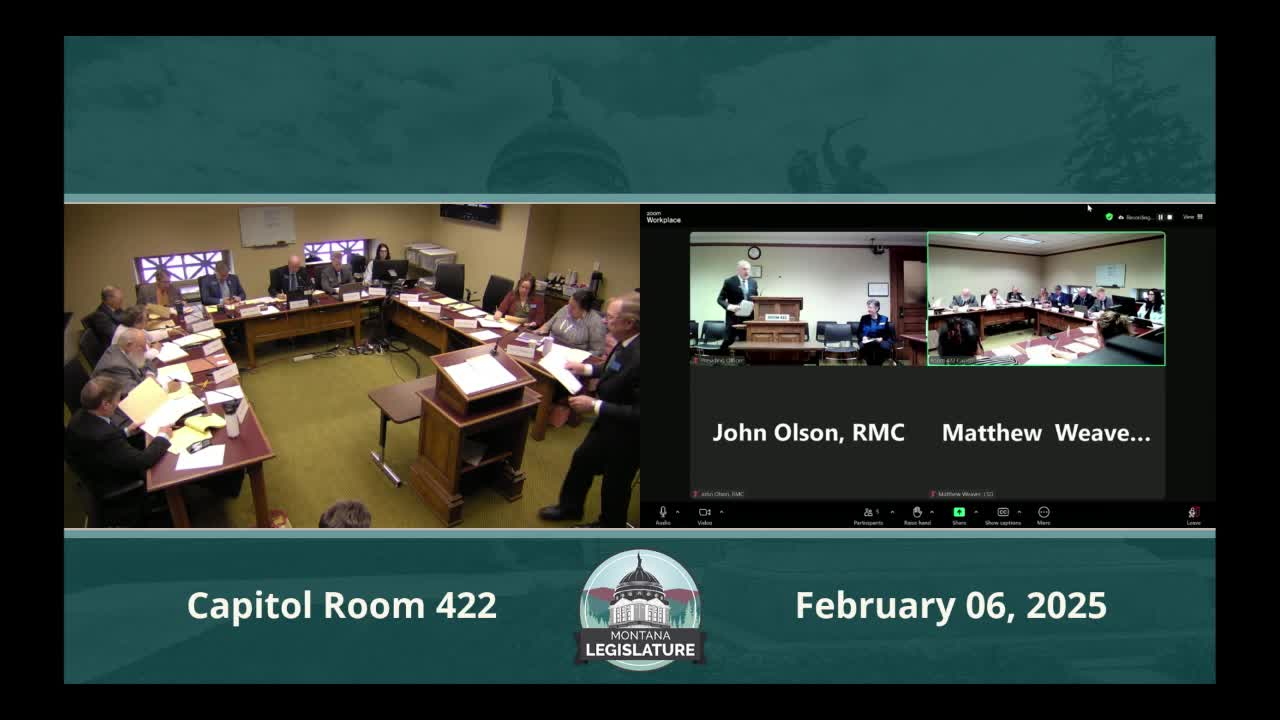
HELENA — The Montana Senate Business and Labor Committee on Wednesday heard Senate Bill 234, a measure that would require fingerprint-based criminal background checks for massage therapists licensed in Montana.
Sponsor Senator Willis Curdy, R-Missoula, told the committee he filed the bill to address unlicensed operations and cited local incidents. "We have a problem with unlicensed massage therapist," Curdy said, recounting encounters while campaigning.
Deborah Kimmet, representing the Business League for Massage Therapy and Bodywork, urged the committee to combine SB234 with the interstate compact bill (SB233) so that fingerprinting applies to compact and Montana licensees. "A fingerprint background check requirement will screen out those with previous records because criminals lie on their applications, but fingerprints don't lie," Kimmet said.
Sarah Swanson, commissioner of the Montana Department of Labor and Industry, opposed SB234 as written. She said federal rules require an FBI-approved ORI (Originating Agency Identifier) tied to the legal authority for the check, and the FBI will not approve a stand-alone universal ORI that would allow the state to fingerprint all 2,115 massage therapists without the compact framework. "A stand alone background check for all 2,115 massage therapy licensees in Montana is not something we can support," Swanson said, adding that the compact language in SB233 contains the appropriate multistate background-check mechanism.
Swanson also noted that licensing is not a law-enforcement function. "We issue licenses, and we intake and investigate and prosecute complaints against those licenses. That is not a law enforcement function," she said, and warned that trying to make the licensing agency a law-enforcement body would create legal and implementation risks.
Kevin Bragg, bureau chief for professional licensing, said compacts are one of several pathways for out-of-state practitioners to qualify to work in Montana and described the department's work on reciprocity and substantial-equivalency evaluations.
Senators asked about timeline and cost. Swanson estimated fingerprint checks cost roughly $30 to $50 per person and said obtaining FBI approval for a new ORI can take a year or longer; in one prior case the department waited more than a year for FBI review and was ultimately required to resubmit after the legislature acted.
The hearing included no formal committee vote. Sponsor Curdy indicated he had a proposed amendment to fold fingerprinting language into SB233. The commissioner urged the committee to pass SB233 (the compact bill) rather than the stand-alone SB234 as written.