Get Full Government Meeting Transcripts, Videos, & Alerts Forever!
Get email alerts on the Emergency Protective Services Sb230 topic
No spam. Unsubscribe anytime.
Committee hears bill to restrict emergency protective services to 'immediate or imminent' danger; measure tabled
Summary
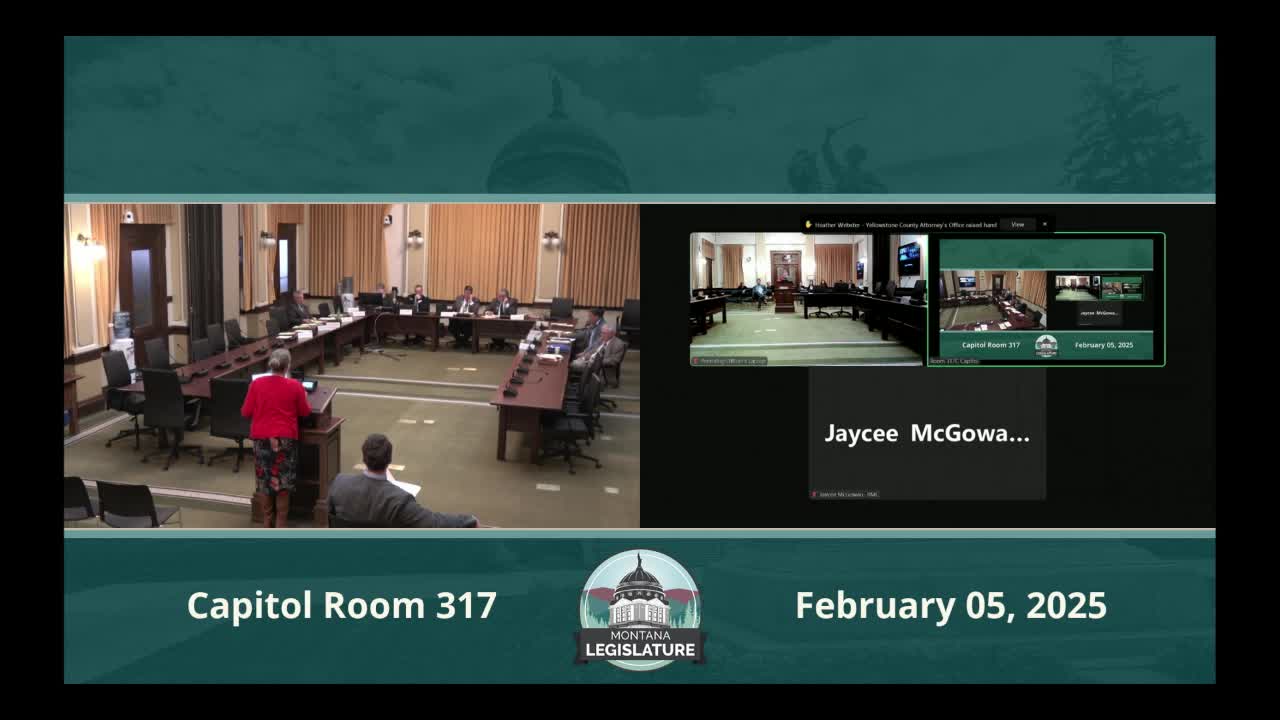
Senate Public Health on Feb. 5 heard testimony on Senate Bill 230, which would revise the standard under which the Department of Public Health and Human Services may provide emergency protective services to only when a child is in “immediate or imminent danger of harm.”
Senate Public Health on Feb. 5 heard testimony on Senate Bill 230, which would revise the standard under which the Department of Public Health and Human Services may provide emergency protective services to only when a child is in “immediate or imminent danger of harm.” After testimony that included concerns from DPHHS and victim‑advocacy groups, the committee voted to table the bill.
Sponsor Senator Emmerich said SB 230 clarifies that the emergency‑protective‑services statute applies to exigent circumstances and argued the measure was intended to align the statute with current temporary investigative and removal authorities. “This just deals with the circumstances outside of that petition,” the sponsor said, adding the bill “emphasize[s] the fact that, this emergency protective statute is for emergencies.”
Nikki Grossberg, division administrator for Child and Family Services at DPHHS, testified in opposition and said she was “unclear what it’s trying to do.” Grossberg warned the change would raise the threshold for seeking emergency protective services from “reasonable cause to suspect” to only when harm is immediate or imminent, which could prevent the department from filing for emergency services in situations where siblings or a family need services even if only one child is at immediate risk. “This would impact our ability to file on a case to ask for emergency protective services unless there is that level of harm,” Grossberg said.
Beth Brennaman of the Montana Coalition Against Domestic and Sexual Violence echoed concerns about narrowing the standard. “It doesn’t make a lot of sense to add imminent to immediate,” Brennaman told the committee, and she said removing the broader language could leave children unprotected when danger is apparent but not visually observable.
Yellowstone County Deputy Chief County Attorney Heather Webster and others testified the change is unnecessary and could create confusion; Webster noted DPHHS follows a safety model intended to remove children only when workers cannot mitigate safety risks in the home.
After public testimony and committee questions, Senator Emmert moved to table the bill; the motion to table was made as a substitute motion and carried without objection and with proxy votes recorded in the hearing. The committee clerk recorded proxies and the tabling motion; no final floor action on the bill was taken that day.
Supporters of the bill — including the sponsor — said the measure intends to ensure emergency protective services are confined to true emergencies and that court petitions remain the mechanism for longer‑term removal or custody changes. Opponents said the proposed language risks preventing the department from obtaining court support for protective services short of removal and could remove the ability to file for multiple children in a household when a safety plan or services are needed for the whole family.
The committee adjourned the bill to allow further work; the sponsor indicated willingness to amend the bill’s language (for example, by reordering phrases to “immediate and apparent danger” to address some concerns).