Get Full Government Meeting Transcripts, Videos, & Alerts Forever!
Get email alerts on the Child Protection Affidavit Disclosure Sb231 topic
No spam. Unsubscribe anytime.
Senate committee hears wide opposition to bill requiring law‑enforcement reports be appended to child‑abuse affidavits
Summary
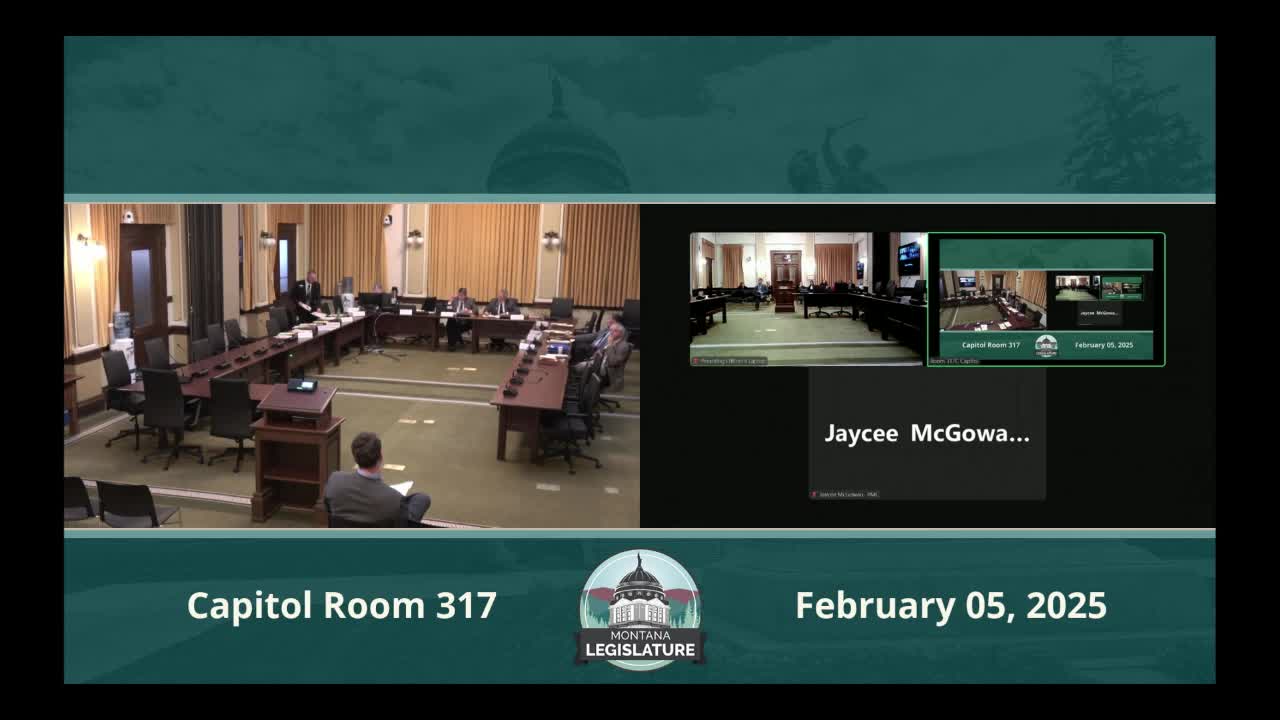
Senate Public Health on Feb. 5 heard opponents warn that Senate Bill 231, which would require the Department of Public Health and Human Services to append available law‑enforcement reports and related investigative materials to affidavits in child abuse and neglect proceedings, could jeopardize criminal investigations, victim safety and accreditation of child‑advocacy services.
Senate Public Health on Feb. 5 heard opponents warn that Senate Bill 231, which would require the Department of Public Health and Human Services to append available law‑enforcement reports and related investigative materials to affidavits in child abuse and neglect proceedings, could jeopardize criminal investigations, victim safety and accreditation of child‑advocacy services.
Supporters of the bill, led by sponsor Senator Emmerich, said the measure aims to “bring a little bit of balance to the department’s affidavits” by ensuring court filings include the disposition of prior criminal cases and verified, accurate information. The bill would require that an affidavit “include court records indicating file disposition of any criminal case filed as a result of allegations of abuse or neglect,” and “include all information evidence that tends to contradict, disprove, or otherwise not support allegations,” the sponsor told the committee.
The committee heard broad opposition from prosecutors, county attorneys’ offices, law‑enforcement and victim‑advocacy groups. Mary Berry, chief criminal deputy for the Lewis and Clark County Attorney’s Office, said dependency and neglect proceedings and criminal prosecutions have different purposes and timelines and that releasing nascent investigative materials could cause witness tampering or destruction of evidence. “It would be terrible law enforcement practice to make any conclusions this early on in the investigation,” Detective Steven Cornish of the Helena Police Department testified, describing concerns about releasing body‑worn camera footage, forensic interviews or other materials that may need redaction or protective handling.
County attorneys and the Montana County Attorneys Association said the bill would also burden dependent‑neglect cases with delays because criminal records often are not immediately available. Nikki Grossberg, division administrator for Child and Family Services at DPHHS, told the committee the department already discloses exculpatory evidence as required by civil‑procedure and department policy, and that the bill’s mandate to obtain and attach all criminal records would “prolong the dependent neglect cases” and create operational burdens when records are unavailable.
Victim‑advocacy groups and child‑advocacy partners warned that the bill lacks existing confidentiality protections that apply in criminal procedure and Title 44 statutes, and that premature disclosure could put victims at risk or threaten accreditation for child advocacy centers. Beth Brennaman of the Montana Coalition Against Domestic and Sexual Violence said the bill does not import the criminal‑justice protections needed to shield victim information and urged the committee to table the measure.
No committee vote was taken on Senate Bill 231 after the testimony. The bill remains under consideration with opponents urging amendments to preserve confidentiality protections and to limit any requirement to attach materials only when they are already public or directly relevant to the court’s immediate safety determination.
The committee recorded repeated concerns about operational impacts: opponents said collecting and verifying law‑enforcement reports could take “weeks, if not months,” while investigators often have a 60‑day investigative window in dependency matters. Testimony also warned that including conclusions by investigators in an affidavit filed early in a civil safety proceeding could conflate civil and criminal standards and undermine both processes.
Committee chair Lenz closed the hearing with no immediate action announced; sponsors signaled a willingness to work on amendments to narrow the bill’s scope and address procedural and confidentiality concerns.