Get Full Government Meeting Transcripts, Videos, & Alerts Forever!
Get email alerts on the Workplace Training Policy topic
No spam. Unsubscribe anytime.
Montana committee hears bill to bar mandated workplace trainings deemed 'controversial social vision'
Summary
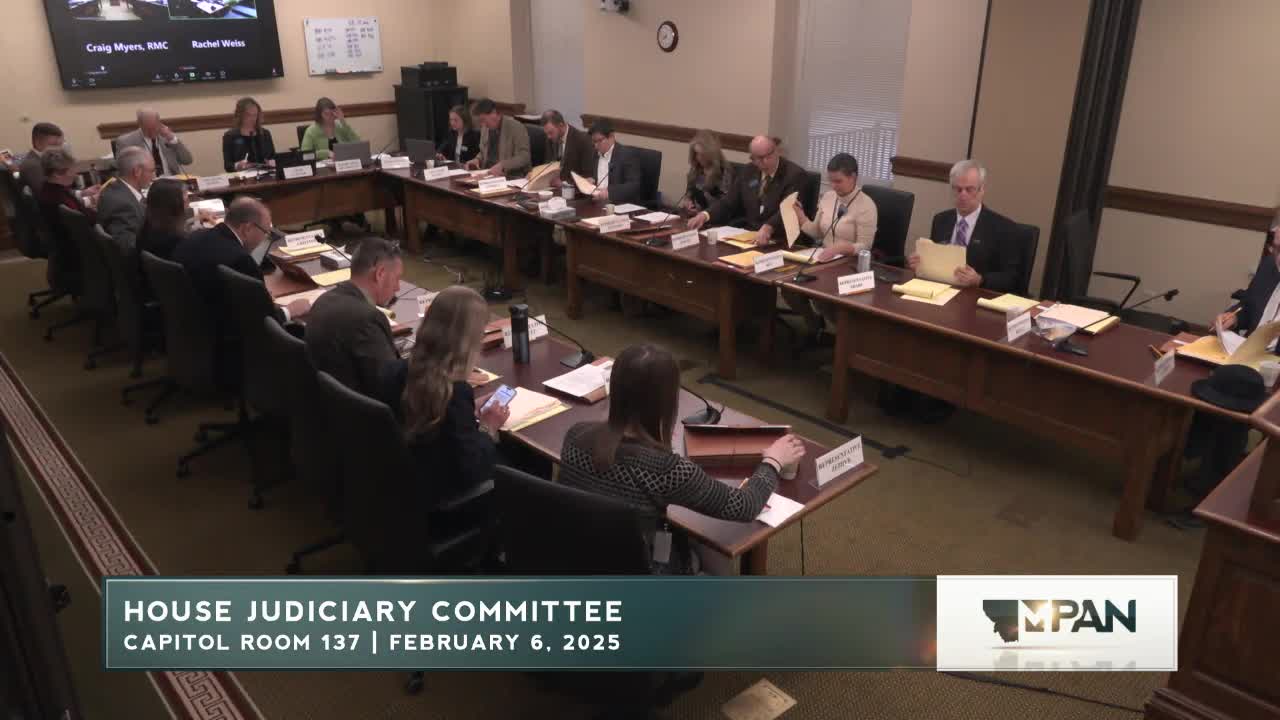
House Judiciary heard testimony on House Bill 319 on a proposal that would prohibit employers from disciplining employees who refuse to attend workplace trainings the bill labels as promoting a “controversial social vision.”
House Judiciary heard testimony on House Bill 319 on a proposal that would prohibit employers from disciplining employees who refuse to attend workplace trainings the bill labels as promoting a “controversial social vision.” Representative Steve Kelly (R., House District 9) sponsored the measure, saying "the workplace is the workplace" and that employees "should not have to... conform to somebody's ideology just to have a job."
The bill would add a protected refusal-to-attend-training category to the Human Rights Act and defines "controversial social vision" broadly as "any agenda, concept, or theory that promotes concepts, ideas, or issues that are not broadly accepted in society or that generates strong opposition by mainstream political, religious, or social groups." The sponsor said exemptions would cover political organizations and churches and that the intent is to limit the rule to standard workplaces, not faith-based or explicitly political employers.
Why it matters: Witnesses and several committee members warned the bill's key terms are vague and could affect common anti-discrimination, diversity and implicit-bias trainings. Quinlan O'Connor, chief legal counsel for the Department of Labor and Industry (which houses the Human Rights Bureau), told the committee the department "would attempt to work out [definitions] through the rulemaking process and with the Human Rights Commission." O'Connor also told members that the Human Rights Bureau has statutory investigation timelines and that new protected categories could increase complaint volumes and require staff resources.
Committee concerns and details: Lawmakers pressed the sponsor and the department on how the bill would apply to routine, job-related trainings (for example, implicit-bias or patient-safety training in health care), on the meaning of "mainstream" religious groups, and on who decides whether a particular training is "outside the scope of employment." Representative Staffman asked whether Judaism would count as a mainstream religion; the sponsor said he would view Judaism as mainstream, while O'Connor noted the term is not defined in the bill and would be subject to administrative rulemaking. Representative Howell raised the point that the bill would bar adverse actions such as denial of pay or termination: O'Connor confirmed the change would be added to the list of unlawful discriminatory practices under current law and thus could cover compensation and terms and conditions of employment.
Several lawmakers said the bill could create litigation and administrative burdens. O'Connor described the typical Human Rights Bureau process: an intake, drafting and serving a complaint, employer response, witness interviews and a final investigative report; the bureau has about 180 days statutorily to investigate a claim and administrative hearings may extend the timeline. The fiscal note discussed in committee anticipates an increase in complaints and the possibility of adding an investigator position to handle the caseload.
Opponents warned the measure could unintentionally block trainings intended to improve workplace care (for example, some implicit-bias programs). Representative Cunningham asked whether the bill would prevent training that helps staff avoid unequal treatment; the sponsor said he expected mainstream anti-discrimination trainings to fall outside the "controversial" label because they are well-established. Other members emphasized the risk of uncertainty while the department defines the new terms by rule.
The hearing closed with the sponsor asking members to "vote green" on the bill. No committee action was recorded at this meeting.
Ending: Members indicated they expected to continue scrutinizing definitions, exemptions and administrative impacts in follow-up discussions.