Get Full Government Meeting Transcripts, Videos, & Alerts Forever!
Get email alerts on the Fuel Taxation topic
No spam. Unsubscribe anytime.
Committee hears bill to shift fuel-tax point of taxation to simplify reporting for distributors
Summary
Representative Courtney Sprunger introduced House Bill 351 to move Montana’s fuel-tax point of taxation to the first licensed distributor after fuel leaves a terminal or is imported, saying the change will reduce errors and reporting burden for distributors and the Montana Department of Transportation.
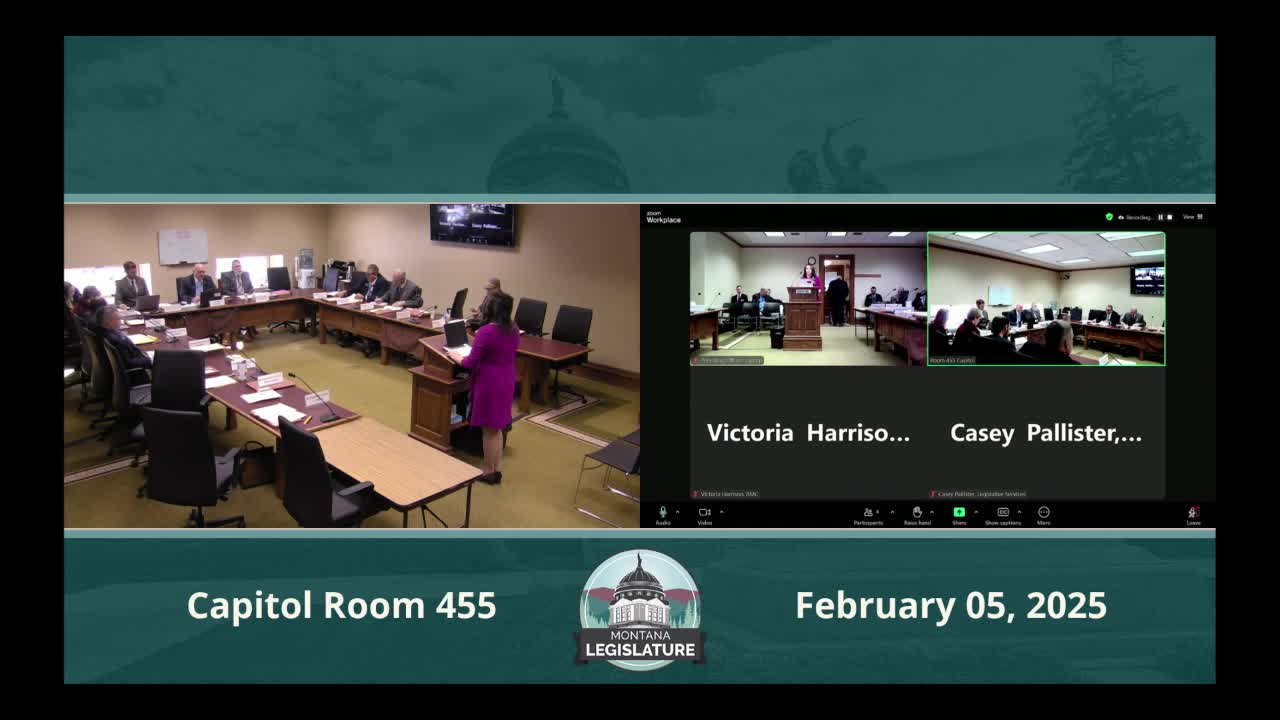
Representative Courtney Sprunger, sponsor of House Bill 351, told the Montana House Transportation Committee that the bill would shift the point of taxation for Montana’s fuel tax from the last licensed distributor to the first licensed distributor who owns fuel after it is withdrawn from a terminal or imported into the state.
Sprunger (R., House District 7) said the change is intended to reduce “inadvertent errors” and opportunities for “intentional underreporting,” and to allow the Montana Department of Transportation to track fuel movement more accurately. She told the committee the bill would not increase the gas tax and is a process change only: “This is about process. This has nothing to do with anything outside of that,” Sprunger said.
Why it matters: Montana’s fuel tax funds Montana Department of Transportation operations and maintenance and provides matching dollars to leverage federal funds, which Sprunger said can be “sometimes at a 7-to-1 or greater ratio.” Committee testimony described a heavy administrative burden under current law because the tax only applies to the last licensed distributor to possess the fuel while it can be transferred multiple times on paper during distribution.
Chris Dorrington, director of the Montana Department of Transportation, told the committee the department supports the bill. “I rise in support of this bill,” Dorrington said. Industry groups also expressed support: Kevin Wade spoke for the Montana Crawl Tractors Association, Duane Williams spoke for the Montana Trucking Association, and Brad Longcake testified for the Montana Petroleum Marketers and Convenience Store Association, saying stakeholders had worked with the department and “the majority of all of our concerns have been addressed.”
Supporters said the change would simplify reporting and compliance for about 130 licensed petroleum distributors and reduce the thousands of monthly line-item transactions MDT must currently reconcile; one witness said the department reconciles roughly 85,000 lines of transfers each year. Supporters also addressed earlier concerns that the bill might shift the tax burden to refineries, saying it would not do so.
Committee members asked clarifying questions. A committee member asked whether the bill would affect state revenue; Sprunger and department witnesses said it would not change the amount of tax collected, only the point at which it is assessed, and that the change could increase administrative efficiency. Vice Chair Wirth asked what changed since last year; witnesses said the sponsors and MDT spent the interim doing stakeholder outreach and education.
There were no opponents in the hearing. Representative Sprunger closed by commending two years of stakeholder outreach and asked the committee to pass the bill. The committee chair closed the hearing on House Bill 351; no vote was recorded during the hearing.