Get Full Government Meeting Transcripts, Videos, & Alerts Forever!
Get email alerts on the Aging Services Infrastructure topic
No spam. Unsubscribe anytime.
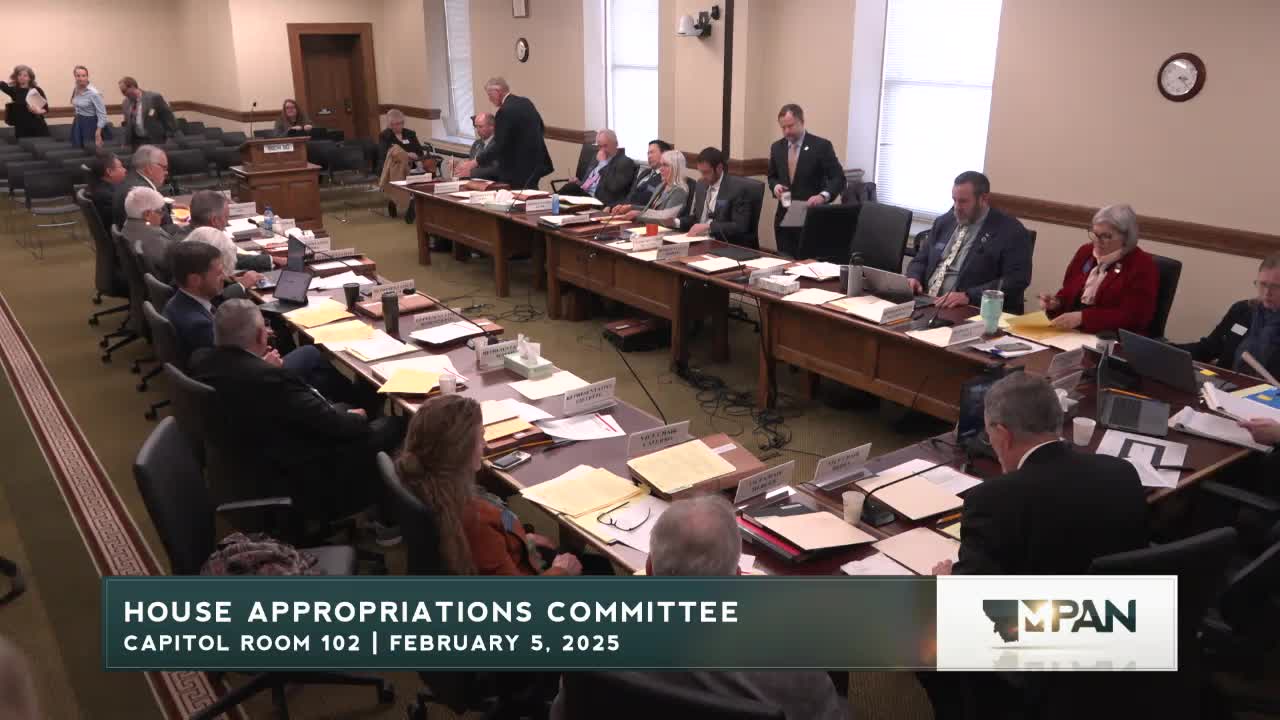
Appropriations Committee hears testimony for $5 million senior-center grant program; commerce warns of staffing costs
Summary
House Bill 182 would appropriate $5 million for competitive grants to senior centers. Supporters described deferred maintenance and accessibility needs; the Department of Commerce opposed on fiscal-note grounds, citing the need for 1.5 FTE to administer one-time funds.
House Bill 182, which would appropriate $5 million to fund a competitive grant program for senior citizen centers across Montana, drew supporters who described deferred maintenance and accessibility problems at local centers and opposition from the Department of Commerce over the fiscal note and staffing required to administer one-time funds.
Sponsor Representative John Fitzpatrick told the committee the bill would fund equipment, maintenance and capital needs for senior centers and that the $5 million figure was modeled on a prior grant program. Proponents included Fran Viereck, an AARP Montana volunteer, who gave on-the-ground examples of aging facilities, trip hazards and the need for covered entries for seniors waiting for transportation. Laurie Ann Berhop, policy director at the Montana Nonprofit Association, said the funding would “infuse much needed resources into Montana senior centers” and benefit older adults statewide.
Mandy Rambo, deputy director of the Montana Department of Commerce, testified in opposition to the bill because of the fiscal note. She said one-time appropriations require additional staff to write and manage contracts and warned that if the department lacks funds to hire temporary staff, existing employees would need to work additional hours or the department would incur overtime and comp-time liabilities. Rambo said the fiscal note estimates 1.5 full-time-equivalent staff would be needed to administer the program and cautioned the committee to consider vacancy-savings and the difficulty of recruiting staff for short-term positions.
Committee members asked detailed questions about administration, matching requirements, average and maximum grant sizes, geographic distribution of senior populations, and whether program funds could be used as low-interest loans instead of direct grants. The sponsor said the bill caps individual grants at $250,000 and anticipates many smaller awards; the bill includes a 1-to-1 cash match requirement and a 3% administrative fee. Rambo said the department’s fiscal assumptions about average grant size were based on experience with similar programs and acknowledged vacancy savings but said hiring for a modified FTE with a set end date is common for one-time appropriations.
Representative Fitzpatrick closed by urging the committee to exercise its budget authority and not defer to the executive branch’s opposition. The hearing was closed with no committee vote recorded; the committee requested additional information and the meeting moved on to other business.