Get Full Government Meeting Transcripts, Videos, & Alerts Forever!
Get email alerts on the Foreign Intergovernmental Jurisdiction topic
No spam. Unsubscribe anytime.
Montana sponsor seeks law saying U.N., WHO and WEF have no jurisdiction in state
Summary
Representative Jedidiah Hinkle introduced House Bill 350 to bar authority of foreign intergovernmental organizations including the United Nations, World Health Organization and World Economic Forum; several residents testified in favor, citing pandemic rules, digital IDs and the International Health Regulations.
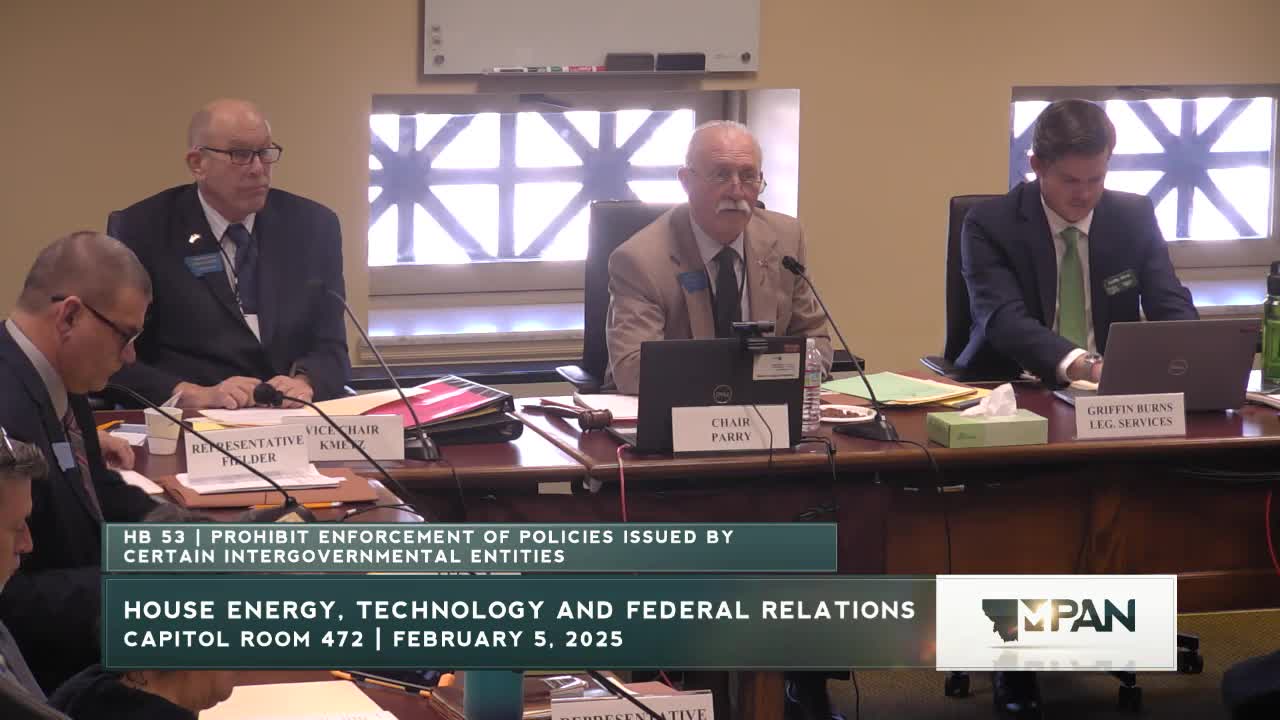
Representative Jedidiah Hinkle, sponsor and a Republican from House District 67, introduced House Bill 350 to the Montana House Energy Committee, asking lawmakers to codify that foreign intergovernmental organizations ‘‘have no jurisdiction in Montana.’’ The bill names the United Nations, the World Health Organization and the World Economic Forum as covered bodies.
Hinkle told the committee he became interested in the issue after hearing the state attorney general discuss international health agreements last summer. He said he wants a state statutory backstop should the federal government sign international accords such as the World Health Organization’s International Health Regulations or a WHO pandemic treaty. "HB 3 50 just lays the framework for state law that will serve to protect and alleviate the pressure on our public entities and people of our state should our nation enter into treaties with these extremely powerful foreign intergovernmental organizations," he said.
The bill’s sponsor and three proponents who testified online tied the measure to concerns about public-health mandates and emerging digital identity systems. Anna Shchemelinin, who said she is an immigrant who escaped communism, argued states retain authority under the Tenth Amendment to refuse international mandates and urged a yes vote. Jolene Crum, who identified her background in biotechnology and said she is part of the grassroots group Montanans for Medical Freedom, told the committee the three organizations named in the bill “work in tandem” and should all be listed. Cheryl Ross of Billings called the measure a protection against a "globalist agenda" she described as the "great reset" and asked the committee for a yes vote.
No opponents or informational witnesses registered in the hearing record, and committee members asked procedural and legal questions about how federal treaties would interact with state law. The sponsor said he had the Department of Justice (DAG) review the language but acknowledged uncertainties about how a future federal treaty would be applied to states and that the bill is intended as a preemptive protection for Montana authorities and residents.
The committee concluded the hearing on HB 350 without a formal vote. The sponsor and proponents framed the bill as a preventive statutory measure; committee members requested follow-up on legal questions regarding the Constitution and treaty-making powers.
Context: The bill cites international instruments and a letter drafted by Montana’s attorney general opposing WHO agreements; the transcript identifies the International Health Regulations (IHR), the WHO pandemic treaty and concerns about vaccine passports, traveler quarantine/testing requirements and digital health passports as the primary reasons proponents support the statute. No legislative text amendments or formal motions were recorded in the transcript.