Get Full Government Meeting Transcripts, Videos, & Alerts Forever!
Get email alerts on the Criminal Law topic
No spam. Unsubscribe anytime.
Committee gives due pass to bill expanding 'endangering welfare of children' offense
Summary
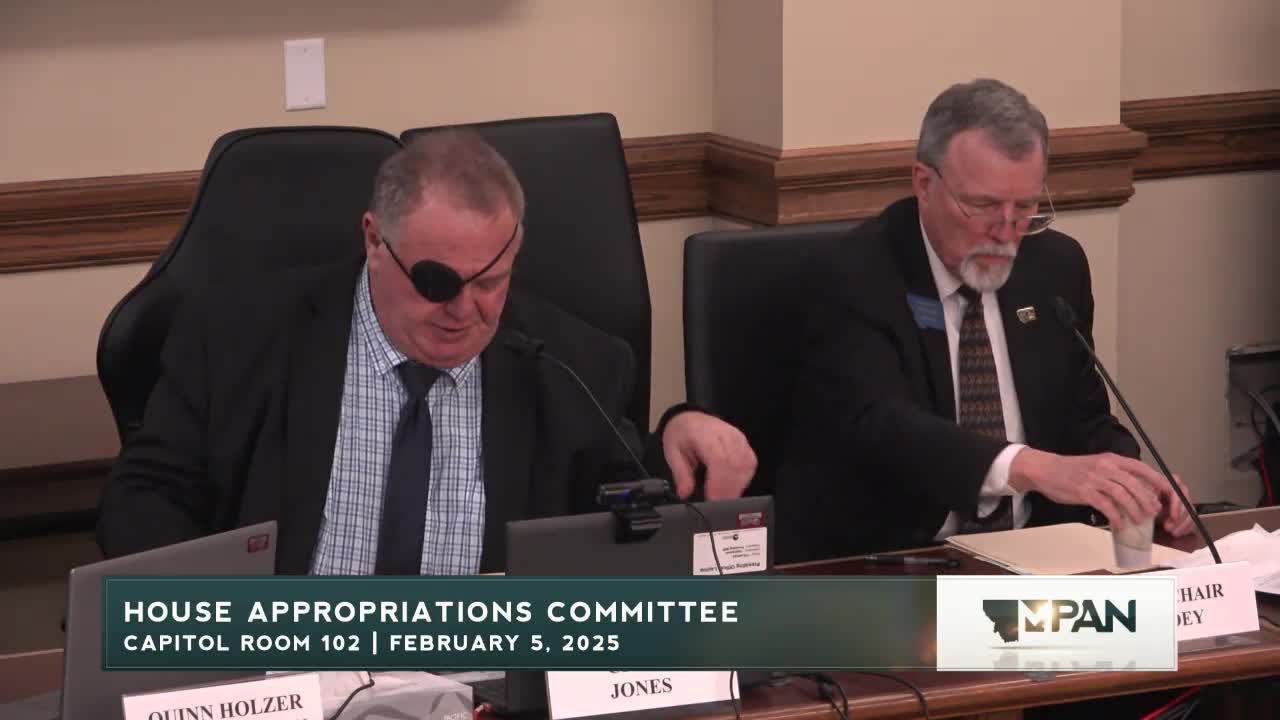
The Montana House Appropriations Committee granted a unanimous due-pass recommendation for House Bill 191, which would revise criminal penalties to make certain domestic assaults in the presence of a child an offense of endangering the welfare of children.
House Bill 191, a bill that would revise laws related to the offense of endangering the welfare of children by making certain partner- or family-member assaults in the presence of a child an offense, received a unanimous due-pass recommendation from the Montana House Appropriations Committee.
Representative Curtis Schomer, sponsor of the bill, opened the matter and described the proposal as “an act revising laws related to the offense of endangering the welfare of children, providing that it is an offense to commit certain crimes related to partner or family member assault in the presence of a child, providing a penalty.” After the sponsor closed, a member of the committee moved a due-pass recommendation. The motion passed “unanimous by those that are present,” and the committee moved the bill back to the floor without a public hearing in committee because it carried a zero fiscal note.
The committee chair explained that because HB 191 carries a 0 fiscal note, the committee’s standard practice is to have the sponsor open and close on the bill, skip proponents/opponents/informational testimony in committee, place the bill into executive action and pass it back to the floor. Representative Schomer confirmed the bill’s zero fiscal note on the record and closed his brief presentation.
Formal action recorded in committee was a motion for a due-pass recommendation followed by a voice vote recorded as unanimous among members present. No public proponents, opponents, or informational witnesses were heard in committee under this item, consistent with the chair’s explanation that the bill does not require a committee hearing because of its fiscal status.
The committee’s action sends HB 191 forward to the next floor stage with a due-pass recommendation; no further detail about statutory cross-references or penalty amounts was provided in committee testimony.