Get Full Government Meeting Transcripts, Videos, & Alerts Forever!
Get email alerts on the Disaster Recovery Funding topic
No spam. Unsubscribe anytime.
Committee hears bill to increase Montana disaster appropriation and fund pre-disaster recovery planning and training
Summary
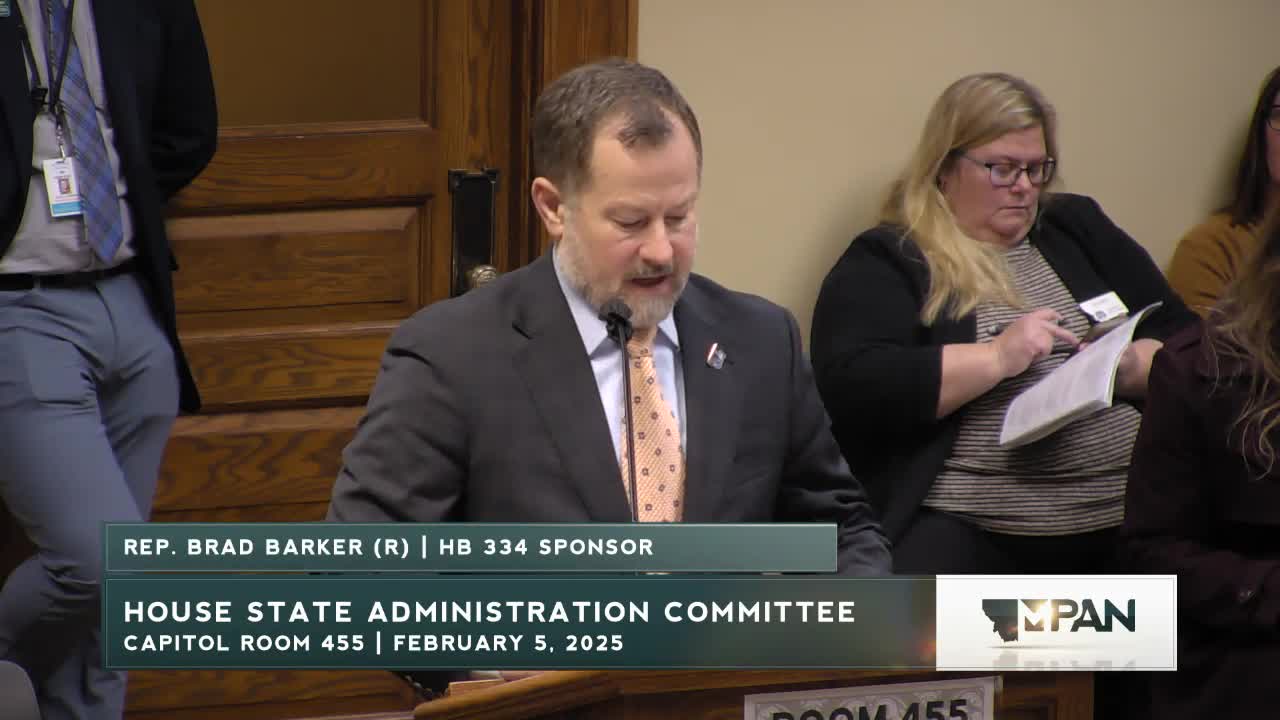
Representative Barker introduced House Bill 334, describing it as a response to an interim study and to the 2022 floods in Red Lodge and saying the bill would increase the state's disaster appropriation from $16,000,000 to $22,000,000 per biennium and "allow some additional flexibility for the state to respond on both the planning and recovery."
Representative Barker introduced House Bill 334, describing it as a response to an interim study and to the 2022 floods in Red Lodge. Barker said the bill would increase the state's disaster appropriation from $16,000,000 to $22,000,000 per biennium and "allow some additional flexibility for the state to respond on both the planning and recovery." An amendment in committee was not recorded in the transcript.
Nut graf: Proponents told the committee that Montana's existing disaster spending and response systems are effective in the immediate aftermath of an event but leave gaps in planning and long-term recovery. The bill would authorize up to $3,000,000 each year of the biennium for activities the Department of Military Affairs (Montana DES) says are needed to surge recovery capacity, cover planning and training, and help navigate permitting and federal reimbursement processes.
Major General J. Peter Ronek, adjutant general and director of the Department of Military Affairs, and Delila Bruneau, Administrator for Disaster and Emergency Services, said the state lacks a sustained, trained workforce to manage recovery projects and documentation over the months and years following disasters. "This bill gives the government the ability to authorize up to $3,000,000 each biennium for gaps in the disaster recovery program," Ronek said. Bruneau described recovery as "a difficult process that requires a lot of technical expertise" including debris removal, damage inventory, permitting and federal reimbursement compliance.
Multiple county officials and emergency managers—representing Gallatin, Park, Carbon, Musselshell and Fergus counties—testified in favor of the bill, describing long recoveries after the 2022 Yellowstone flood, the Lahaina fires deployment experience, and local wildfire and flood incidents. Cheryl Cohen of the Department of Commerce and Melissa Herrera, housing program executive, said additional state resources would support housing recovery planning and alignment with a Montana disaster recovery framework.
During questioning, Representative Perry asked what happens to unspent funds; Bruneau said unspent amounts remain in the governor's disaster appropriation and roll to the fire suppression fund at the end of the biennium under current practice. Committee members asked how the $3,000,000 figure was determined; Barker said proponents used historical experience and examples such as permitting delays and multiagency coordination needs. The sponsor recommended "do pass." No committee vote was recorded in the transcript.
Ending: The hearing closed after sponsor closing remarks recommending the bill be reported out of committee. No formal committee vote or amendment adoption was recorded in the transcript.