Get Full Government Meeting Transcripts, Videos, & Alerts Forever!
Get email alerts on the Education Discrimination topic
No spam. Unsubscribe anytime.
House committee backs bill tightening rules on female-designated school athletics and facilities
Summary
A Montana House committee recommended passage of House Bill 300 after a contentious debate about definitions, implementation and constitutional protections for transgender and intersex students; the committee vote was 58-42.
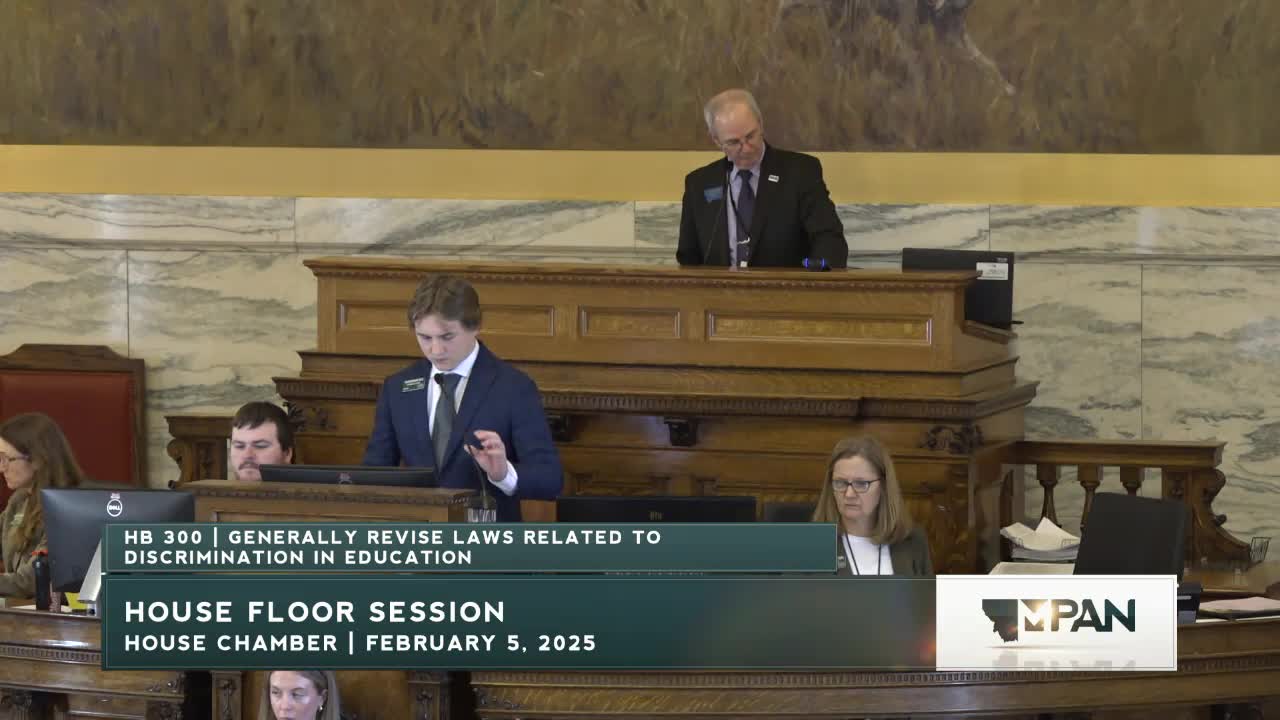
A Montana House committee of the whole on Wednesday recommended House Bill 300, a measure that would add new language making it an unlawful discriminatory practice for an educational institution to allow a male person to participate in athletic programs designated for female persons and to require that certain intimate spaces be inaccessible to a person of the opposite sex while in use. The committee recommended the bill do pass on a 58-42 vote.
The bill’s sponsor, Representative Seekins Crowe, told members the measure is intended to “provide clarity and reinforcing Montana’s commitment to equality in education” by preventing what she described as sex‑based discrimination in athletics and access to restrooms, locker rooms, showers and sleeping quarters. “This bill seeks to close those gaps by providing clear language,” Seekins Crowe said during the committee hearing.
Supporters framed the proposal as protecting competitive opportunities and private spaces for female students. Representative Schubert urged colleagues to “vote yes,” saying succinctly, “men are men, women are women.” Representative Seacens Crowe, speaking in support, said the bill “protects women from employment discrimination and pregnancy discrimination” and cited Title IX as background for protecting female athletic opportunities.
Opponents raised legal and practical concerns. Representative Zephyr, speaking as a trans woman and former high‑level athlete, said the bill reflects a “fundamental misunderstanding of trans people and trans bodies” and offered personal examples about how transition affects athletic performance. She told the committee that trans athletes make up a small share of the population and that evidence does not show the claimed competitive domination. Zephyr said policies like this “allow for heightened scrutiny of all bodies” and “put students at risk.”
Other lawmakers said the bill lacks clear implementation language and could force schools, coaches or volunteers into intrusive inquiries about students’ bodies or medical histories. One legislator warned the bill may conflict with other recent measures and predicted it could face court challenges on equal‑protection grounds.
The committee vote was recorded as 58 in favor and 42 opposed. The sponsoring member moved that the committee “recommend the same do pass”; no second was recorded in the transcript. The committee action is a recommendation from the committee of the whole; the transcript does not show a final third‑reading vote on the House floor for HB 300 on this day.
The debate included direct references to Title IX and to constitutional equal‑protection principles; several speakers predicted litigation if the bill were enacted. The transcript records both personal testimony and legal concerns but does not show any amendment that changed the bill’s core definitions during the committee of the whole session.
If the House advances the bill to final passage, any change will be subject to further floor action and, potentially, judicial review.