Get Full Government Meeting Transcripts, Videos, & Alerts Forever!
Get email alerts on the Judicial Oversight topic
No spam. Unsubscribe anytime.
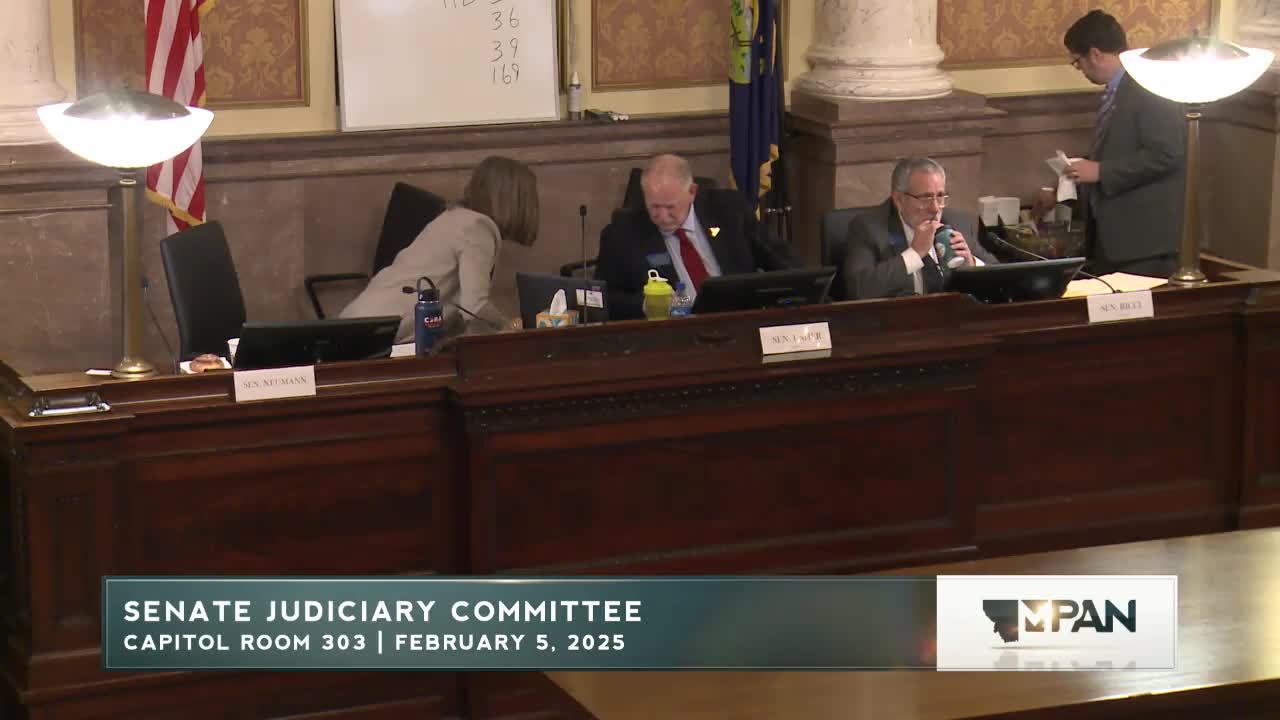
Committee hears bill to move Judicial Standards Commission administration to Department of Justice
Summary
The Senate Judiciary Committee heard testimony on House Bill 35, which would administratively attach the Judicial Standards Commission to the Montana Department of Justice; proponents said the change would reduce perceived conflicts, opponents said it risks politicizing an independent judiciary. No committee vote was recorded.
The Senate Judiciary Committee on a morning hearing considered House Bill 35, a proposal to administratively move the Judicial Standards Commission from the judicial branch to the Montana Department of Justice. Representative Fiona Nave, sponsor of the bill, told the committee the change is intended to “minimize potential interference by the court into the functioning of this important oversight commission.”
Proponents told the committee the move would increase transparency and public trust. Bart Crabtree of the Montana Citizens Council on Judicial Accountability urged a “due pass,” saying the change would “begin the process of removing the self discipline within our judiciary.” Kyla Hailstone, director of the Montana Family Court Awareness Project, said the commission currently offers insufficient recourse for families and cited a “97 percent dismissal rate of JSC complaints,” arguing the Department of Justice has a duty to protect Montanans’ constitutional rights.
Opponents said the bill risks politicizing the commission. Natasha Jones, vice president of the Montana chapter of the American Board of Trial Advocates, said the bill would “politicize the JSC” and argued the Department of Administration is a more neutral administrative home. Sharon Haugen of the League of Women Voters of Montana warned that Montanans “treasure our constitution, especially our independent judiciary,” and urged a do-not-pass recommendation. John Marshall, appearing as an opponent, described the legislation as “a flawed piece of legislation” and argued it reflects partisan motives.
Dave McAlpin, court administrator for the judicial branch, testified as an informational witness and clarified administrative details: the Judicial Standards Commission is currently housed in the Office of Court Administrator, and the fiscal-note discussion indicated staffing assumptions about a 1.0 FTE handling commission work. McAlpin said that if the commission’s administrative home moved, an FTE that now performs overlapping duties would continue to be a full FTE and that the judicial branch would retain certain responsibilities absent a transfer.
Committee members asked procedural and constitutional questions, including whether the constitution assigns oversight of judges to the Montana Supreme Court and how that interacts with administrative placement of the commission. Representative Nave and senators said the bills aim to reduce potential conflicts by separating the commission’s administration from justices who supervise courts. The hearing closed with Senator Benton volunteering to carry the bill; no committee vote was taken at the hearing.
The committee record shows extended questioning by Senators Minton, Newman, Mansella and others about statutory authority, staffing and the legislative intent behind the bills.