
Urbandale officials outline FY26 budget; proposal lowers debt rate, shifts some revenues and proposes stormwater fee rise
Get AI-powered insights, summaries, and transcripts
Subscribe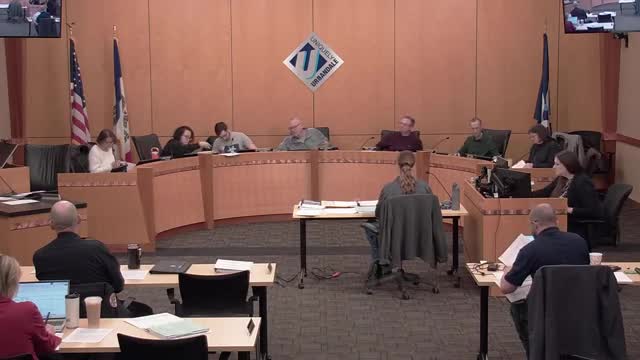
Summary
City staff presented the proposed fiscal 2026 budget at a Feb. 12 workshop, outlining a mix of tax-rate adjustments, fee changes and program requests to support public safety, stormwater projects and information-technology upgrades.
City officials presented the proposed fiscal 2026 budget at a Feb. 12 workshop, outlining a mix of tax-rate adjustments, fee changes and program requests to support public safety, stormwater projects and information-technology upgrades.
City Manager David (City Manager) led the presentation, telling the council the draft recommends a total property-tax rate of $10.03 per $1,000 of taxable valuation — a 5¢ decrease from the current rate (10.08). The reduction reflects work to pay down debt service and allows the city to move some revenue to dedicated levies: staff said nearly all of the state-mandated levy shift will be covered by moving a portion of the lost revenue to the employee benefits levy and the police and fire pension levy.
The draft also proposes shifting local funding sources for capital projects. Staff described a multi-year plan to use local-option sales tax proceeds to “buy down” future general-obligation borrowing for capital projects rather than increasing the city’s general levy. That plan relies on building a cash balance in the capital project fund over the next 1–2 years so a larger share of the FY27 CIP could be paid with cash rather than long-term borrowing.
Stormwater: staff proposed a small rate increase. The budget recommends raising the stormwater utility fee to $9 for the first 100 ERUs and $6 for each additional ERU, a roughly $900,000 revenue increase in FY26. Staff said part of the increase will be used to reduce future debt for the stormwater capital program and to fund projects in the CIP. The council also discussed a separate administrative proposal to create a foundation-drain disconnect (sump-pump) assistance program for older neighborhoods where foundation drains flow to the sanitary sewer. Under staff’s plan the city would offer up to $3,500 per property in relocation assistance, with $2,500 funded by the city and $1,000 expected from the homeowner’s sanitary district; the council directed staff to bring an ordinance and program details back to council for review.
Public safety requests and mental-health supports: the police and fire budget presentations included personnel requests and service changes. The police chief asked the council to add a school‑resource officer (SRO) at Urbandale Middle School; staff said the school district would cover about 75% of the SRO salary during the school year with the city covering the other 25%. The police budget also includes a line for a mental‑health professional to support the Crisis Intervention Team (CIT); staff warned that regional reorganization of behavioral-health funding left that revenue source uncertain and budgeted to continue the CIT by contracting or by bringing a mental‑health specialist in-house if outside funding disappears. The fire department’s budget includes a prevention specialist position the department and staff say has been recommended for years and would allow more regular inspections and code enforcement of higher‑risk occupancies.
Information technology and software: the IT director, James Fry, briefed council on a planned enterprise license for Microsoft Copilot (50 seats budgeted as a pilot). Fry said the Microsoft government‑cloud settings do not use customer data to train the public model unless the customer explicitly consents and that web‑grounding (which would let the product augment internal results with web content) is off by default for the government offering. Council asked for clear rollout policies and training for staff who will use AI‑enabled productivity tools.
Other operational items: staff presented routine departmental budgets and small fee changes. Solid‑waste rates were held steady for FY26 (the city still has one of the lowest monthly solid‑waste bills in the metro), and public-works staff told council the city expects continued sanitary‑sewer rate pressure because of capital needs at the regional treatment authority. The library budget includes design work funded by donations to update interior space; Parks staff noted strong demand at the new splash pad and continuing costs for utilities and maintenance.
What’s next: staff will bring the formal budget and the required public hearing and certification documents in the coming weeks. Council members discussed but did not decide whether to seek voter approval for major facility projects; staff said funding and timing options exist using local‑option sales tax, TIF, or bond referenda depending on the council’s policy preferences and the final cost estimates.