Get Full Government Meeting Transcripts, Videos, & Alerts Forever!
Get email alerts on the Elementary School Redistricting topic
No spam. Unsubscribe anytime.
Perrysburg Schools propose redistricting to reduce bus routes, balance enrollment and delay trailers
Summary
District officials presented two redistricting options for Perrysburg elementary schools that they say would reduce bus routes from 20 to 15, balance enrollment across four buildings and delay the need for portable classrooms; about a third of students would be reassigned under each plan.
Perrysburg Exempted Village Schools officials presented two elementary redistricting options intended to balance enrollment, reduce bus routes and delay the need for portable classrooms in a recorded presentation shared with the community.
Tom Hasler, superintendent of Perrysburg Schools, said the district is growing and that redistricting is one tool staff use to manage that growth. "As most people know, in Perrysburg, we are a growing school district," Hasler said, describing roughly 800 students added to the district when comparing year-to-year enrollments across multiple cohorts.
The plan matters because officials say it would cut transportation costs and even out class sizes across Woodland, Toth, Fort Meigs and Frank elementaries. "We want to eliminate multiple buses going back through the same development in the same neighborhood," Courtney Uppel, director of transportation, said when describing the routing goals.
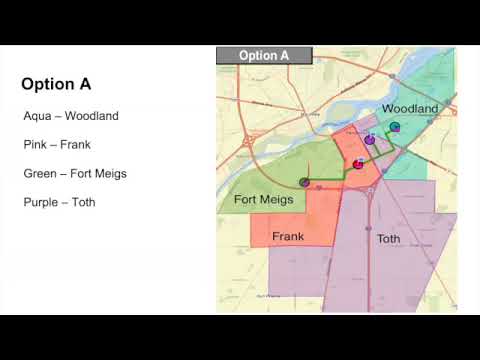
District staff offered two mapped options, A and B, developed from current kindergarten-through-third-grade address lists, enrollment projections and bus-routing software. Both options aim to reduce the number of elementary bus routes from 20 to 15, increase self-transport (walk) zones and create more balanced grade-level sections between buildings. The district estimates annual transportation savings of about $100,000 to $150,000 and a potential reduction of roughly six grade-level sections, which staff say would equate to about $480,000 in staffing savings; the combined annual savings range the district presented was $505,000 to $630,000. Staff also said the plans would delay the need for portable classrooms, which they estimated would push roughly $500,000 to $1,000,000 in capital costs further into the future.
The presentation described how growth has repeatedly driven smaller, incremental redistricting decisions: "Every time a new subdivision comes online ... the school district evaluates where there is space available for new students," Hasler said. He told viewers the district developed a facility plan with input from 64 community members that the board presented to voters; that bond issue was rejected in November 2023, and a scaled-down elementary-only proposal presented the following March also failed, Hasler said. He also stated, "Last November, voters turned down a levy for operational funds," and added the district has therefore been forced to make operational reductions; Hasler used the phrase "we've lost 13 of funding," a formulation not clarified in the presentation.
Brooke Price, assistant superintendent, summarized family feedback the district collected by survey: the largest concerns were disruption to social and peer networks and keeping neighborhoods together. Price said staff would prioritize orientation events and opportunities to meet new teachers and classmates if the board approves a plan.
Staff outlined specific boundary changes in each option (for example, moving parts of Fort Meigs Road areas to Toth in both options and reassigning all of Lakeview to Woodland in the maps shown) and provided projected enrollment totals. The presentation estimated that Plan A would affect about 31% of elementary students and Plan B about 34%.
Price also explained a possible accommodation for current fourth-graders: the district would open an interdistrict open-enrollment application for fourth-grade families so those students could request to remain in their current building for their final elementary year, but any approved requests would be family-transport only (no district busing) and younger siblings would not be guaranteed placement.
Next steps: staff will post maps, the slide deck and a lookup tool on the district website and collect survey responses; Hasler said staff will present the options and survey summary to the Board of Education on Tuesday, February 18, at 5:45 p.m. in the Commodore Building for the board's consideration. The presentation materials include a QR code and link to the community survey.
The district did not take a formal vote in the presentation; staff framed the session as outreach and preparation for the upcoming board meeting where the board may choose whether to proceed with one of the options.