
New Hanover board hears Fiscal Control Act overview; superintendent seeks limited new spending to avoid eroding fund balance
Get AI-powered insights, summaries, and transcripts
Subscribe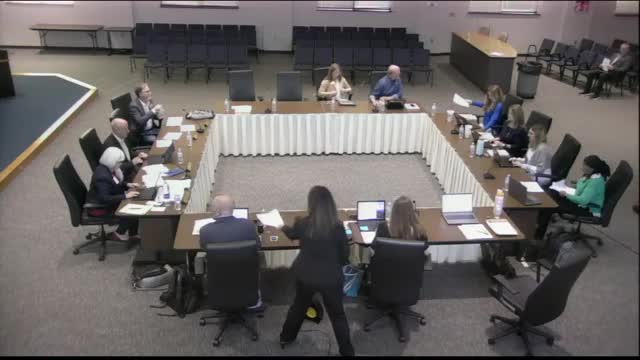
Summary
A consultant and Superintendent Dr. Barnes told the New Hanover County Board of Education that the district is operating at a "subsistence" level after several years of draws on fund balance and enrollment declines, and that Barnes will ask the board and county for targeted, outcome-tied funding for school safety and one additional school-based position per school.
Aaron Buller, a school operations specialist retained to review district budgeting practices, opened the Board of Education's budget work session with an overview of the School Budget and Fiscal Control Act, state allotment mechanics and enrollment trends that are constraining New Hanover County Schools' finances.
Buller told the board that state funding in North Carolina is position- and allotment-driven rather than a weighted-student formula and that average daily membership (ADM) declines are difficult for districts to manage because many costs are fixed. "85% of every dollar you spend in a school system budget goes to salary benefits," Buller said, emphasizing that personnel costs dominate the budget. He also noted the state frequently issues budget revisions and that districts often work from proposed budgets until state and county figures are finalized.
Superintendent Dr. Barnes described the district's fiscal position and the budget priorities she intends to present. Barnes said the district has not drawn on its fund balance this year for the first time in five years and warned that the current operating level is "subsistence." "This is the first year in 5 years that we have not touched our fund balance and it affected children," Barnes said. She told the board the district's four-year average draw from fund balance is about $6,000,000 and that the current unassigned fund balance is roughly $2,100,000 (about 2–3% of operating revenue), well below commonly cited healthy ranges (around 8%).
Barnes gave specific revenue and cost items she expects to affect next year: the loss of SafeLight citation revenue (about $1,400,000 based on a recent three-year average), and forecasted cost increases in utilities, liability insurance and benefits totaling roughly $2.6–2.7 million. She said district-level changes during and after ESSER funding and recent statewide developments have left long-term structural budget pressures; Buller added that North Carolina received more than $6.5 billion in ESSER funding overall.
To respond, Barnes said she will ask the board and then the county commissioners for funding targeted at two central priorities: (1) a two-pronged focus on safety and student behavior that includes restorative or preventive programs and (2) the creation of one additional school-based position per school, the role to be defined locally and tied to each school's improvement plan (examples: graduation coach, remediation/extension teacher, or behavior support). Barnes framed this as a limited, two-year ask so the district can demonstrate measurable student outcomes tied to each position and then seek state or ongoing funding in future cycles.
Barnes described how the district has already cut central-office staff and school-based positions in recent years; she gave the example that the district had about 44 custodians last year and cut 10 while total costs remained similar. She warned that modest drops in ADM translate into teacher allotment reductions and cited a local example in which a small decline could translate to the loss of 13 teacher positions under the state's second-month ADM funding rule.
Board members and staff discussed process and timing. Buller reviewed statutory dates in the Fiscal Control Act and recommended that board members focus on the largest budget drivers—personnel, contracts and vendor commitments—rather than minute line-item detail. Ashley (the district CFO) clarified how the state held districts harmless in one year and explained why several ADM figures may appear different in state reports versus district end-of-year counts.
Barnes said she plans to present her superintendent budget priorities during the meeting and to deliver a proposed budget to the board in time to submit to county commissioners on April 15, with the statutory mayoral/county deadlines discussed. She repeatedly emphasized the need for measurable data points tied to any new investment so the district can report outcomes to county commissioners and the public.
Votes at a glance - Motion to approve the agenda: passed (4–0). (Motion and second not specified in the record; outcome recorded as approved.) - Motion to adjourn: passed by voice vote (motion seconded by Pat Bradford; outcome approved).
What this means going forward The superintendent will bring a prioritized, measurable budget request focused on safety and one additional school-specific position per school to the board; those requests will be framed as outcome-driven and, where possible, time-limited (two years) so the district can measure impact and pursue longer-term funding. Staff and the consultant recommended board emphasis on strategic priorities and fund-balance targets as the district prepares to present to county commissioners.
Quotes (selected) - Aaron Buller, school operations specialist: "85% of every dollar you spend in a school system budget goes to salary benefits." - Superintendent Dr. Barnes: "This is the first year in 5 years that we have not touched our fund balance and it affected children."
Background and context Buller reviewed how North Carolina's allotment and funding process differs from weighted-student formulas used elsewhere, noted frequent state budget revisions and described the administrative reporting burden districts face. Board members asked for copies of the district and state allotment formulas and for a clear timeline of upcoming budget deliverables. Staff said they will provide those materials at the next budget work session.
Ending Board members and staff agreed to continue the conversation in follow-up budget work sessions and to use measurable, school-level goals to justify any new county funding requests. The session concluded with procedural actions to approve the agenda and adjourn.