Get Full Government Meeting Transcripts, Videos, & Alerts Forever!
Get email alerts on the Jail Project topic
No spam. Unsubscribe anytime.
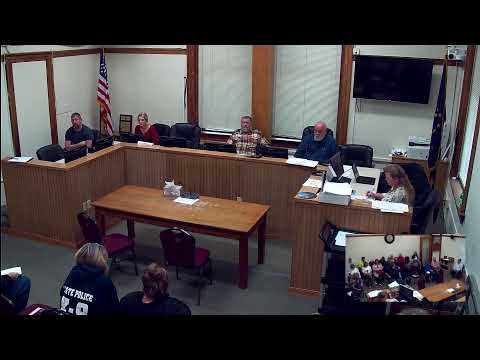
Owen County moves storage‑unit funds into new jail project account; commissioners hear financing options for new facility
Summary
Owen County commissioners on Feb. 6 approved Ordinance 2025‑002 to transfer the county's storage‑unit fund into a newly created jail project fund and heard from a financial adviser on financing options, estimated project costs and annual debt‑service shortfalls that the council and commissioners will need to address before construction proceeds.
Owen County commissioners voted Feb. 6 to move the county's storage‑unit fund into a new jail project account and spent much of the meeting discussing how to pay for a proposed new detention facility.
The commissioners passed Ordinance 2025‑002, creating a "jail project fund" and directing the transfer of the balance of the county's storage‑unit fund to that new account. Commissioner Risk made the motion; the motion was seconded and approved by the commissioners present.
The vote followed a detailed briefing from Jeff Peters, an outside municipal finance adviser who outlined financing options the county could pursue, including municipal bonds sold on the open market, use of the Indiana Bond Bank and U.S. Department of Agriculture financing programs. Peters told the commissioners the full project estimate presented to the board was roughly $31.4 million, including construction, design, contingency, utility extensions and bond issuance costs. He said the county already has about $3 million in cash set aside for a correctional facility and expects about $1 million additional this year.
"We can only build what we can afford without straining the rest of the county's budget," Commissioner Risk said during the discussion. "You can't rob everything to do something and strain everybody else's budget to the point that our services are hampered."
Why it matters
The ordinance makes a dedicated account for the jail project and moves existing restricted funds into it; the financing discussion showed the county faces a multi‑million‑dollar gap between available revenues and projected debt service unless additional revenue or cost reductions are identified. County leaders said they will need to identify how much of local income‑tax or public‑safety revenue can be pledged and whether other revenue sources or multi‑year amortization could reduce annual shortfalls.
Most important details
- Ordinance: Commissioners approved Ordinance 2025‑002 to create the jail project fund and transfer the balance of the storage‑unit fund into it. The storage‑unit fund balance cited at the meeting was $152,779; commissioners said a modest maintenance reserve (about $5,200) would remain to cover upkeep tied to the existing storage operations pending transfer details.
- Cost estimate: Peters summarized the adviser's current estimate for the project at about $31.4 million (construction estimate, soft costs/contingency, utility extension and bond issuance were included in that figure). He said the construction line estimate supplied by county estimates did not include soft costs, contingency and issuance fees.
- Available cash: Commissioners reported roughly $3 million already accumulated in correctional facility reserves and an expected roughly $1 million this year from prior distributions.
- Debt‑service gap: Using the financing scenarios presented, Peters said the county would face a projected annual shortfall of about $935,000 if the bonds were amortized over 17 years under the assumptions he used; that shortfall would shrink to about $710,000 on a 20‑year amortization. Peters and the county discussed options to close the gap, including pledging additional local income‑tax streams, extending amortization, or using property tax backing (which carries remonstration risk). He also said USDA 40‑year loans could reduce annual payments but may reduce bidder competition and raise project costs for construction contractors who must meet USDA requirements.
What commissioners said and next steps
Commissioner Risk said the county will hold more work sessions with the council, sheriff, chief deputy and other stakeholders to identify potential offsets, including whether additional carve‑outs of local income‑tax revenue for debt service are feasible. Peters advised the county to pursue follow‑up research with bond counsel, the bond bank and underwriters on debt‑service reserve options and whether combining income‑tax streams (correctional and public‑safety LITs, for example) would improve market reception.
Peters also recommended exploring property sales and other non‑tax revenues to reduce borrowing needs; commissioners discussed the possibility of selling the existing jail property and studying revenue from housing inmates for other jurisdictions as potential program income but cautioned additional beds would increase staffing costs.
Votes at a glance
- Ordinance 2025‑002 (create jail project fund; transfer storage unit fund balance): Motion by Commissioner Risk; seconded; outcome: approved. Vote recorded by the chair as "aye"; tally not formally recorded in roll call minutes at the time of the vote. - Approval of meeting minutes (Jan. 9 and Jan. 23): motion and second recorded earlier in the meeting; approved. - Approval of payroll and claims totals: recorded and approved earlier in the meeting.
Context and constraints
Speakers stressed they are not committing to a final funding plan: Peters's figures are estimates used to illustrate options. Several potential legal and policy constraints were flagged, including statutory limits on income‑tax pledging and the possibility of remonstration if property tax is used as the exclusive backstop for bond repayment. County attorney follow‑up and additional legal review were requested.
What to watch next
Commissioners and the county council agreed to schedule additional work sessions to narrow revenue options and to ask county staff and bond counsel to model alternatives (longer amortizations, different pledge mixes, property sale proceeds and potential grant or program income) before any final financing action or construction contract is authorized.
Ending
The ordinance creates a dedicated account intended to centralize the county's jail planning funds; commissioners approved it and asked staff to return with more detailed revenue and borrowing scenarios so the council can determine whether and how to proceed on a new detention facility without unduly constraining other county services.