Get Full Government Meeting Transcripts, Videos, & Alerts Forever!
Get email alerts on the Neighborhood Meetings topic
No spam. Unsubscribe anytime.
Commissioners discuss mandatory neighborhood meetings for land-use items; staff to draft ordinance options
Summary
The board debated proposals to require mandatory neighborhood workshops for certain land-use applications. Staff will draft an LDC amendment for the board’s consideration that balances countywide consistency with practical notification and meeting standards.
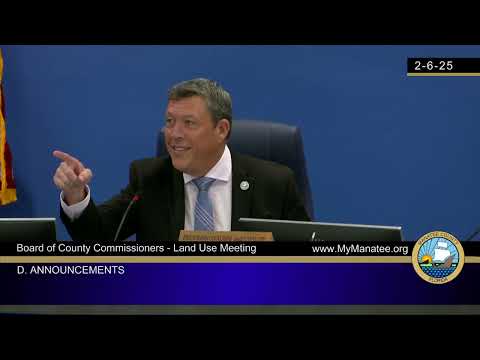
Commissioner Phelps introduced a proposal and a staff discussion on Feb. 6 about whether to require mandatory neighborhood meetings for certain land-use applications and how those meetings should be conducted, noticed and enforced.
Staff reported it is already common practice to request applicants hold neighborhood meetings, but said the county’s Land Development Code currently makes such meetings discretionary. Rachel Layton and planner Laura Gonzalez presented research on mandatory neighborhood workshop models used by neighboring jurisdictions and asked the board for direction on scope, thresholds, notice radii, and whether meetings should be in-person, virtual, or hybrid.
Options discussed included: defining specific application types that would require a meeting (e.g., future land-use map amendments, rezones with site plans, conditional uses); establishing different notice radii by urban/suburban/rural context; requiring in-person meetings with a virtual option; and posting standardized on-site signage and mailed notices. Commissioners emphasized consistency across the county and urged staff to avoid fragmenting rules by district.
Commissioner Phelps said the policy is intended to improve transparency and public education about land-use decisions; Commissioner Felt and others urged a common countywide approach rather than district-by-district rules. Several commissioners and staff noted logistical pitfalls—mailing lists that go to absentee landowners, insufficient or unclear signage, and the need to avoid creating cumbersome requirements for small, single-family projects.
Staff said it would return with a concrete draft amendment to the land development code that would specify which application types trigger a required neighborhood meeting, the timing relative to application submittal, notice procedures and minimum meeting standards. The board did not take a formal vote but directed staff to proceed with drafting options and recommended return to the board for review.