Get Full Government Meeting Transcripts, Videos, & Alerts Forever!
Get email alerts on the Land Use Zoning topic
No spam. Unsubscribe anytime.
Lexington council resumes debate over conditional use permits for university offices, parking management
Summary
City council continued a months‑long discussion over conditional use permits for higher‑education-related office uses downtown, focusing on whether the zoning code properly treats university administrative offices, how to address "institutional creep," and whether parking can be considered under CUP criteria.
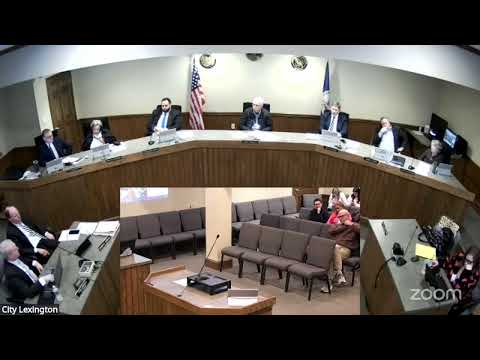
City Council members on Feb. 13 resumed a work‑session discussion about the city’s conditional use permit (CUP) requirement for higher‑education uses in the downtown C‑1 zoning district and whether the ordinance unintentionally targets colleges’ off‑campus administrative offices.
The exchange, led by City Manager Tom Carroll and Planning Director Arnie (surname not specified in transcript), centered on whether the city should change its code so that offices for Washington and Lee University and Virginia Military Institute would be allowed by right instead of requiring a CUP, and whether parking impacts can be considered when deciding CUP applications.
Carroll told council that the code currently treats “higher education” uses differently than ordinary business offices: "I find it odd that we have a conditional use permit for higher education when it's not exactly instruction or classrooms," he said, noting the rule means university offices must seek a CUP while comparable private firms would not. He said the city has seen multiple off‑campus university leases downtown and that the Rockbridge Building debate in recent months prompted the review. Carroll said he anticipates a CUP for the Grand Building at Main and Washington and that property owner John Adamson was present that evening.
Planning staff reiterated that CUP decisions are case‑by‑case and that council has “wide latitude” to interpret the CUP criteria. Jeremy (identified in the transcript as the city attorney) reminded council of relevant case law and said the governing body may require certain uses that have potentially greater impacts on neighboring properties to undergo the special‑exception process. He added that officials should study the site and the projected impacts to determine reasonable conditions.
Council members debated whether the focus of CUP review should be the use itself (for example, increased density and resulting traffic) rather than the identity of the tenant. “It’s the impact of the use and not the impact of the user,” one councilmember said, summarizing the legal view described by staff. Council discussed options including revising the definition of educational facility in the zoning code, removing administrative educational uses from the CUP list and allowing them by right with conditions, or using time‑limited CUPs tied to payment‑in‑lieu‑of‑tax (PILOT) arrangements.
Parking was a persistent theme. Staff reviewed a 2010 downtown parking inventory, saying the study showed roughly 1,100 public on‑ and off‑street spaces downtown and an approximate 200‑space cushion at a single‑day peak; staff described current parking as more a management problem than a supply problem. Carroll and others said enforcement improvements have eased problems since an earlier slump in the summer months. Council members asked whether applicants could be required to submit a parking management plan as part of a CUP application; counsel and staff said they could request that information and consider conditions tied to demonstrated increases in density.
Several councilmembers urged a broader approach to the pattern they called "institutional creep" — recommending collaborative talks with the universities, and the possible use of memoranda of understanding or an institutional overlay instead of repeatedly adjudicating one CUP at a time. Councilmember Leslie Alexander suggested replacing the term “institutional creep” with language focused on whether a proposed use advances the comprehensive plan’s downtown vitality goals.
No ordinance change or formal vote occurred at the session. Council asked staff to return with options (zoning text amendments, comprehensive plan clarifications, or draft MOU approaches) and agreed to seek clearer guidance for property owners about expectations for downtown second‑floor redevelopment.
A number of clarifying points were made on the record: staff said a CUP requires affirmative findings on six conditions (cited during the work session), the city has a historic overlay downtown that is separate from any institutional overlay, and Lexington’s PILOT agreement with Washington and Lee dates to 1990 and currently requires payments to approximate taxes on acquired off‑campus property.
Councilmembers emphasized they favor increased downtown density and retail vitality while wanting to ensure public‑safety and tax‑base considerations are weighed in land‑use decisions. Carroll and planning staff will draft possible ordinance language and engagement plans to present at a future meeting.