Officials warn rescinded federal grant freeze would have jeopardized services; Gracedale reports hiring, higher census and in-house dialysis planning
Loading...
Summary
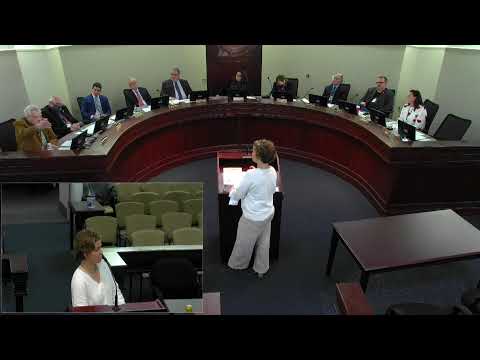
At a Feb. 6 Northampton County Human Services Committee meeting, a public presenter outlined countywide impacts from a briefly issued federal grant freeze, and county staff updated the committee on staffing, census, clinical programs and capital issues at Gracedale, the county nursing home.
On Feb. 6, 2025, the Northampton County Human Services Committee heard that a now-rescinded federal executive order temporarily freezing certain federal grant funds would have put hundreds of county jobs and millions in service contracts at risk, and committee staff gave a detailed operational update on Gracedale, the county-owned nursing home.
The human-services presentation matters because the county relies on federal and state funds to pay staff and subcontractors who deliver mental-health services, aging services, children and youth services and nursing-home care. Committee members pressed for details about payroll exposure, Gracedale’s census and staffing, and next steps on several clinical and licensing initiatives.
Lamont McClure, a resident of Bethlehem Township who addressed the committee during courtesy of the floor, said county advisers had modeled the possible effects of President Trump’s executive order when it was active and reported that the county estimated “approximately 954 employees” whose salaries are paid fully or partly by federal-grant dollars would have been affected. McClure said a conservative county estimate identified about 610 employees who would have needed immediate furloughs and that the freeze “would have placed $238,844,000 in revenue in jeopardy,” with $144,482,000 flowing to subcontracted services that deliver early intervention, meals-on-wheels and other community programs. “This puts the service providers in limbo,” McClure told the committee.
County staff noted the practical limits of local response. The presentation estimated the county’s current millage at 10.8 and said making up the projected federal shortfall through property taxes would require a tax rate near 32 — a change the presenter characterized as an untenable, roughly 300% increase.
Committee discussion then focused on Gracedale. County staff reported the facility’s current census at 456 residents and said management is pursuing a modest growth plan: long-term beds targeted at 500 and a short-term rehab caseload that would bring the operational census toward about 520 when combined with the short-term unit. Jennifer Stewart, identified in the meeting as directing the admissions office at Gracedale, was credited with recent census gains.
Larry Erickson was identified as Gracedale’s acting administrator and “Beth” as assistant administrator. Staff reported 17 new hires scheduled for orientation in mid-January and said ongoing efforts — including on-site CNA (certified nursing assistant) training classes — aim to convert agency workers to permanent Gracedale staff. Staff described the CNA ratio on long-term units as roughly 1 CNA per 10 residents and said one LPN or RN is assigned per floor, with exact RN/LPN ratios to be provided on follow-up.
Clinical and quality items discussed included work to reduce hospital transfers by expanding in-house care pathways (for example, administering IV fluids on site), renewed attention to pressure injuries and falls prevention, hand-washing audits, vaccine outreach and a nutrition pilot. Staff said an enhanced diet program rolled out in November through Sodexo nutrition support to 75 residents produced measurable gains within weeks: staff reported a 49% increase in weight for that sample and estimated weekly supplement-cost savings of about $883 for that group.
Staff also described a proposal to provide dialysis on site — described at the meeting as a “dialysis den” — in partnership with a regional dialysis provider. The county said doing dialysis in house would increase per-diem revenue for those residents and, staff indicated, could be implemented without adding Gracedale nursing staff.
On licensing and capital issues, staff said the Gracedale daycare remains physically ready but still requires an occupancy permit from the township and subsequent licensing from the state Department of Human Services; that licensing process could take “at least a few months” once the permit is issued. A small licensed long-term short-term rehab (LTSR) unit on site holds eight beds and cannot be expanded without substantial capital investment; staff estimated an expansion would likely require several million dollars in reinvestment and zoning approvals.
Finance and sustainability were a recurring theme. Former County Executive Mr. Brown acknowledged there is no single solution and said maintaining a county nursing home requires ongoing supplemental revenues. Committee members and staff discussed intergovernmental transfer (IGT) payments, recent Medicaid rate increases and prior one-time federal/state relief (including COVID-era funds) that temporarily bolstered Gracedale’s budget. No formal vote or budget decision occurred at the meeting.
Committee members directed staff to continue the hiring process for a permanent Gracedale administrator, to pursue grants or capital funding opportunities when available, and to return with more detailed financial analyses and staffing-ratio tables at a future meeting.
The committee heard no formal motions or votes on Gracedale or the federal-funding analysis during the session; discussions were presented as operational updates and planning items.