Get Full Government Meeting Transcripts, Videos, & Alerts Forever!
Get email alerts on the County Budget topic
No spam. Unsubscribe anytime.
Story County supervisors review countywide budget, plan carryovers and ARPA reallocations
Summary
Supervisors met Feb. 7 to reestimate countywide budgets, discussed carrying over local option sales tax for debris‑site improvements, reestimated ARPA projects and identified several equipment and personnel requests to include in next year’s budget.
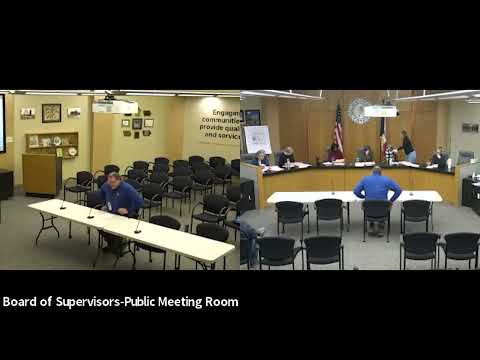
Story County supervisors and staff spent their Feb. 7 budget work session reviewing countywide spending priorities, carryover requests and reestimates of federal and local grant revenues.
The meeting, led initially by Supervisor Lisa Heddens and continued by Supervisor Linda Merkin after Heddens left, focused on reestimating current‑year spending and placing several items into the FY 2026 request. Sandra King, director of external operations and county services, and Alyssa Wignall, director of internal operations and human resources, walked the board through detailed line‑item changes and carryover proposals.
Why it matters: supervisors must balance uncertain revenues, including local option sales tax and ARPA drawdowns, against one‑time capital needs and recurring costs such as union contract negotiations and insurance premium increases. Several decisions at the session were described as provisional pending final revenue numbers and subrecipient drawdowns.
Key budget items and reestimates
- Local option sales tax and debris site: County staff proposed carrying about $35,000 of unused local option sales tax into the next fiscal year and including $75,720 in the FY 2026 request for debris‑site improvements. Merkin said the county purchased the land from the general fund but has historically funded improvements from local option sales tax; staff recommended continuing that practice. The precise carryover and final funding source remain subject to year‑end actuals.
- ARPA and subrecipient drawdowns: Crystal (ARPA staff) said the county has been reestimating subrecipient claims month‑to‑month and that remaining ARPA obligations are dwindling; staff reported roughly $4 million remaining of an original $18.8 million allocation as a working estimate. Crystal and other staff said several large project claims (housing, sewer, broadband) are expected this summer and will affect how much must be budgeted in FY 2026.
- Capital and equipment requests: Staff outlined multiple capital requests, including $275,000 for patrol vehicles, $325,000 for engineering equipment and $200,000 noted for the IRVM building (to be paid from capital projects if needed). Joby, referencing fleet practice, said the county gets higher proceeds by auctioning surplus vehicles than by trading them in.
- Programs and grants: Staff included reestimates for several grants and pass‑throughs: an IDPH immunization pass‑through, a $64,300 three‑year “burn” grant administered by YSS, and ongoing opioid‑settlement revenues treated as placeholders because annual amounts are not finalized.
Personnel and contracts
- Union contracts and contingency: Wignall said all union contracts will be open next fiscal year, with two covering wages only; the budget includes a $25,000 placeholder for FY 2026 to cover potential mediation or arbitration outcomes. Wignall also said the county reduced the taxable fringe benefit line to zero and removed a cell phone stipend request.
- Proposed positions: Supervisors discussed adding one shared administrative assistant position for general assistance and veterans’ services. Merkin and others expressed support for including that position in the upcoming FY 2026 request and asked staff to present levy and levy‑impact scenarios when the board reviews the full budget.
Other operational notes
- Countywide services: Staff reestimated board proceedings ($38,000 trending), county outreach (reduced to $900), copier/printer maintenance (reduced), and education and training (adjusted based on anticipated conferences). ISAC HIPAA membership and policy updates were noted; Wignall said the county would contract directly with ISAC at an annual returning‑member fee of $1,750.
- Secondary roads facility: Supervisors agreed the new secondary roads building should be budgeted in the secondary roads fund rather than countywide. Staff noted previous construction was paid from secondary roads and that placing the building in that fund was the board’s intent; an approximate $1 million placeholder was discussed, subject to final CIP figures.
Remaining uncertainties and next steps
County staff emphasized that many figures are reestimates: property tax levies had not yet been set, several grant drawdowns remain timing‑dependent, and ARPA subrecipient claims will affect final FY 2026 needs. Staff said final levy and transfer decisions will come with the formal budget presentation; in the meantime, they will refine month‑by‑month ARPA projections, update secondary‑roads figures, and bring the recommended staffing and levy options to the board for formal action.
The board did not take formal votes in the work session; staff will return with a more complete budget and levy scenarios at a later public meeting.