Get Full Government Meeting Transcripts, Videos, & Alerts Forever!
Get email alerts on the Community Supervision topic
No spam. Unsubscribe anytime.
Agency cites agent safety and high caseloads after parole agent’s killing; home visits remain suspended
Summary
Catherine Barber reported the fiscal 2026 community supervision allowance is $139.7 million and outlined safety and caseload concerns after the May 31, 2024 murder of a parole agent.
Catherine Barber, DLS analyst for DPSCS Community Supervision, told the Appropriations Committee that the fiscal 2026 allowance totals $139.7 million, a $3.8 million (2.8%) increase from the working appropriation, with personnel costs making up about 89% of the allowance.
Barber outlined safety measures the Division of Parole and Probation (DPP) has taken since the May 31, 2024, murder of a parole agent: ballistic and multi‑threat vests ordered and being dispersed, armed guards placed in offices using FY25 deficiency appropriations, agent phones to be equipped with location‑tracking technology (pending collective bargaining terms), law‑enforcement accompaniment pilots and a plan for body‑worn cameras contingent on enactment of authorizing legislation. Barber said DPP suspended routine home visits approximately eight months earlier; critical need and absconder visits are handled by warrant and apprehension units and other specialized teams.
The analyst reported caseloads remain high: DLS recorded 85,343 total supervised cases in fiscal 2024, a 3% increase from the prior year, of which roughly 34,000 were actively monitored by agents. DLS compared regional cases per agent to American Parole and Probation Association (APPA) guidelines and found only two of four regions met recommended ratios; DLS recommended committee narrative requiring an annual report on caseloads by September 15, 2025, and requested an annual report on implementation of new DPP risk assessment tools by September 1, 2025.
Secretary Carolyn J. Scruggs and acting DPP director Yolanda Mathia briefed the committee on implementation: more than 300 multi‑threat vests have been received and distributed, additional vests are on order, bargaining with AFSCME over nine safety policies is underway, the fluid mobile app (for agent location tracking) is in testing pending bargaining, and an independent review of practices surrounding the agent’s death has been commissioned. DPSCS said it will not resume routine home visits until agents are re‑equipped and retrained and that some visits may be accompanied by local law enforcement under memoranda of understanding; a 90‑day pilot with the Montgomery County Police Department is beginning.
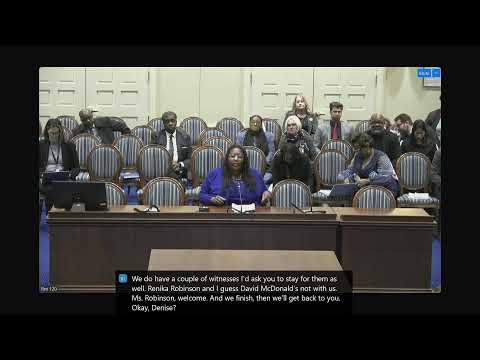
Union leaders and field agents told the committee field staff continue to operate with high caseloads and need real‑time emergency communications (panic buttons or radios) and lower caseloads. DLS recommended restricting $150,000 pending a DPSCS report on strategies to improve community supervision agent safety.