Get Full Government Meeting Transcripts, Videos, & Alerts Forever!
Get email alerts on the Parents For Parents Peer Support topic
No spam. Unsubscribe anytime.
Parents for Parents peer advocates assist Sarasota dependency court families, panelists say
Summary
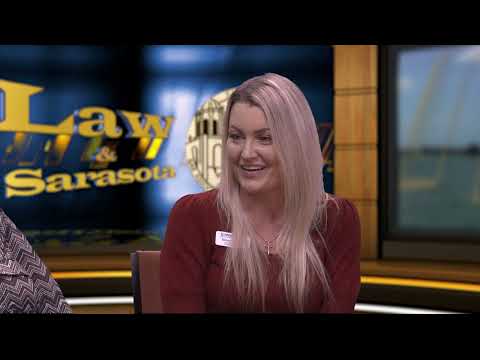
Panelists on the Law in Sarasota program described Parents for Parents, a NAMI-run peer-support program in Sarasota dependency courts that mentors parents through case plans, offers a two-hour Dependency 101 class and — organizers say — has helped some parents reunify with their children more quickly.
Parents for Parents, a peer-support program run through NAMI of Sarasota and Manatee Counties, connects parents who have lost custody with trained parent advocates who meet them at early hearings and mentor them through dependency court processes, panelists said on the Law in Sarasota program.
The program pairs parents with advocates who have "been through the system themselves," Andrea McHugh, a circuit judge assigned to the juvenile and dependency division, said on the show. "It's called Parents for Parents." McHugh said the program supplements the work of case managers and aims to help parents overcome barriers to reunification.
Nathan Scott, Child and Family Well‑Being System Coordinator in the Health and Human Services Division, said the idea came after he attended a virtual 2021 conference where parent partner programs were described. "We put a PowerPoint presentation together to pitch to the court team," Scott said, and the court team — including judges, attorneys, department leadership and Guardian ad Litem representatives — responded with "an overwhelming yes." Scott said Sarasota adapted a model from Washington State and established a steering committee in early 2022.
Scott described a long‑standing gap in parent engagement: "When we look at our qualitative metrics across the state, it's not just here locally. We all struggle into the 30 to 40% range of qualitative engagement with parents," he said. He and other panelists said parents working with peer advocates attended hearings and visitations more often, completed tasks that support reunification and were less likely to reenter care, though specific aggregate outcome data were not provided on the program's effectiveness.
Sonya Johnson, Parents for Parents program coordinator and recovery care specialist at NAMI of Sarasota and Manatee Counties, said NAMI is a peer‑led mental health organization and a natural host for the program. "It's not a clinical organization. Everybody at NAMI is a peer," Johnson said. She described the program's two‑hour, one‑time Dependency 101 class that orients parents to the court process, teaches what to do during visitations and court, and introduces common stakeholders that appear in hearings.
Johnson said advocates meet parents at the initial hearing and provide one‑on‑one mentoring, practical help (for example, drafting an email or supporting a parent in court) and repeated education about case steps. "We can educate the parents on the process of what's going on, who all of these people are, what their goals are," she said. Johnson added the program aims to help parents shift from "anger and resentment to acceptance and personal responsibility."
Panelists included a parent‑turned‑advocate, Elizabeth Davis, who described concrete assistance she received. Davis said a peer advocate helped her make a recorded DVD of lullabies and positive affirmations so her child could hear her voice during placement and that having an advocate as a sounding board kept her from taking frustrations to her case manager. "She helped me make that," Davis said.
McHugh noted a statutory context: "under Florida law, the Department of Children and Families is required to make reasonable efforts and assist parents" facing barriers to safe caregiving, and she framed Parents for Parents as a program that helps operationalize support during that process. Panelists said the program is funded in part by local grants and community partners mentioned on the broadcast: the program segment noted a grant from the Community Foundation of Sarasota County and production support from the Sarasota County Bar Association.
Panelists cautioned that the program is complementary to, not a replacement for, caseworkers or legal counsel. Scott described differences between caseworker and peer roles: caseworkers manage multiple responsibilities for children, caregivers and case plans, while peer advocates focus on building trust through shared lived experience.
Anecdotal outcomes featured on the program included parents who "engage faster, they have hope quicker," Johnson said, and at least one parent whose parental rights were later reinstated after long involvement with services; the panel emphasized that the parent completed the required work. The show did not provide a formal study or comprehensive quantitative evaluation on reunification rates, time to reunification, or long‑term recidivism.
For more information about the Parents for Parents program, the broadcast directed viewers to NAMISarasotamanatee.org.
Funding and partnerships mentioned during the program included the Community Foundation of Sarasota County and the Sarasota County Bar Association, which the broadcast credited for supporting the Law in Sarasota episode that featured the panel.