Get Full Government Meeting Transcripts, Videos, & Alerts Forever!
Get email alerts on the Elections Canvassing Audit topic
No spam. Unsubscribe anytime.
Sarasota supervisor outlines canvassing board duties, ballot handling and new countywide audit
Summary
Sarasota County Supervisor of Elections Ron Turner described how the county canvassing board, vote-by-mail processing, ballot duplication and a new automated audit work to safeguard elections and enforce Florida law, and explained rules that limit third-party return of ballots.
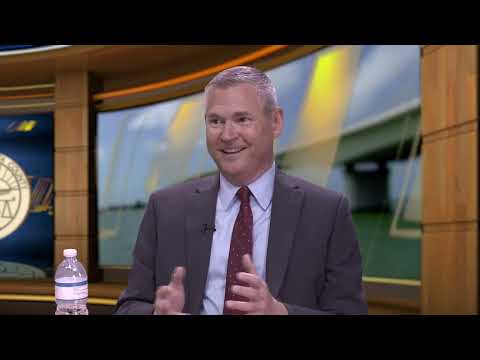
Ron Turner, Sarasota County supervisor of elections, laid out the county’s canvassing, vote-counting and audit processes in a recorded Law in Sarasota interview, describing how staff and the canvassing board handle vote-by-mail envelopes, duplicate ballots and a new automated audit that can review every ballot in the county.
Turner said the county’s canvassing board — composed of a county judge serving as chair, the supervisor of elections and the chair of the county commission or a designated alternate — meets publicly to authorize the staff to begin opening and scanning vote-by-mail ballots and to decide voter-intent questions on ballots that scanners treat as overvotes or damaged. “It’s the legislative, executive, judicial branches of county government that are balanced in the canvassing board,” Turner said.
The explanation matters because Sarasota canvasses many ballots before election day. Turner said staff run signature checks on tens of thousands of vote-by-mail envelopes and perform logic-and-accuracy tests on tabulators in public. Ballots are preprocessed weeks before election day so the county can reconcile “people versus pieces of paper” at the precinct level, he said. Turner described the county’s process for duplicating ballots that cannot be read by a scanner — for example, where a voter marked more than one oval or made a stray mark — and said those originals are stamped, logged and retained while duplicates are tabulated.
Turner also described a new automated independent audit system Sarasota County implemented using county funding. “This provides us the opportunity though to look at 100% of the ballots in the county,” he said, adding that the county used the tool in a recent presidential preference primary and achieved a “100% match” between systems. Previously, audits relied on a hand-count sample of a randomly drawn precinct and race.
Turner explained how equipment vendors and state certification affect local practice. The Florida secretary of state certifies voting systems and software updates, and Florida law limits counties to certified precinct-based electro-mechanical tabulation systems. Turner named two vendors historically available to Florida counties: Dominion and Election Systems & Software (ES&S). He said the county commission owns the physical voting system while the supervisor’s office operates and maintains it.
On ballot security and chain of custody, Turner said county secure-ballot intake stations are monitored by staff, every removal is logged, and the office tracks who dropped off ballots and when. He addressed social-media videos that showed staff filling out duplicated ballots inside the elections office, saying that duplication is an approved step when a ballot must be recreated so it can be read by tabulators; originals are stamped “original” and kept with a log while only duplicates are counted.
Turner described Florida’s restrictions on third-party collection of ballots, commonly called “ballot harvesting,” as a statutory limit: “In Florida … it prevents ballot harvesting. It’s not legal,” he said, noting Florida law allows voters to return their own ballot, those of immediate family members as defined in statute, and up to two other voters in limited circumstances. The supervisor’s office posts statutory notices at secure intake stations and monitors quantities and patterns of returned ballots.
Judge Erica Quartermaine, host of Law in Sarasota, asked Turner to walk through canvassing steps, ballot styles and what voters should expect. Quartermaine noted the many ballot styles possible in Sarasota because of precinct splits and differing local contests; Turner said the county has 103 precincts and that ballot styles vary by precinct and party in primaries. He said the county will operate six early-voting sites for the primary and 10 for the general election and stressed that vote-by-mail ballots must be returned to the supervisor’s office by 7 p.m. on election day to be counted.
Turner and Quartermaine also discussed workload and turnout: Turner described the preprocessing and reconciliation as labor-intensive and said staff often work extended hours during canvass periods. He said recent presidential elections in the county saw turnout over 80% and predicted a high turnout for the upcoming presidential general, driven in part by statewide ballot initiatives.
The discussion was informational rather than deliberative: there were no formal motions or votes in the program. Turner repeatedly emphasized compliance with Florida law and public transparency during canvassing and audits.
Sarasota voters can expect pre-election testing of equipment, signature verification for vote-by-mail ballots, public canvassing board sessions that set preprocessing schedules, documented duplication of unreadable ballots with originals retained and a county-funded automated audit tool that reviews all ballots rather than a small hand-count sample.