Get Full Government Meeting Transcripts, Videos, & Alerts Forever!
Get email alerts on the Planning Commission Appointment topic
No spam. Unsubscribe anytime.
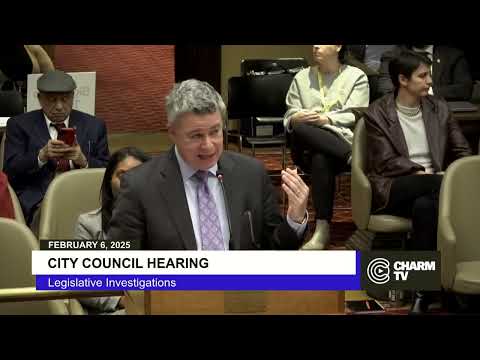
Committee approves John Laria to chair Baltimore planning commission after hour-long vetting
Summary
The Legislative Investigations Committee voted 4-0 to send Mayor’s nominee John Laria to a second reading for confirmation as chair of the Planning Commission after extended questioning about transit‑oriented development, public‑private partnerships, vacancy policy and community engagement.
John Laria, the mayor’s nominee to chair the Baltimore City Planning Commission, was advanced out of the Legislative Investigations Committee on a 4-0 voice vote after roughly an hour of questioning from council members and the committee chair.
Laria told the committee he moved to Baltimore in 1981 to attend Johns Hopkins and has spent three decades in law practice and civic work in the city. “I came to Baltimore from New York in 1981 … I stayed,” he said, listing prior volunteer and board roles and his work at the law firm Ballard Spahr. Laria said his professional experience focuses “on the built environment,” and that he wants the commission to help the city grow while addressing vacancy, public safety and the budget.
Why it matters: Council members used the hearing to probe how the planning commission’s chair would balance economic development with neighborhood priorities and how the commission should help integrate land use with transit and housing policy. Laria emphasized consensus building, staff recruitment and retention, and a coordination role between the commission, the mayor’s office and the council.
Committee members pressed Laria on several recurring policy areas the commission will touch. On transit‑oriented development (TOD), Laria said the city’s zoning code now contains TOD provisions but that coordination with the state and a coherent city strategy are needed. “I think the city needs to have a coherent and comprehensive transit oriented development policy,” he said, noting recent state attention to TOD and pending legislation at the General Assembly.
On public‑private partnerships, Laria said scarce public resources make P3s worthy of careful exploration: “It’s a fertile field for exploration. It has to be done very carefully before you embark upon that.” He named the mayor’s vacancy initiative as another area where the commission can play a partner role on land use policy and financing.
Council members also asked about community engagement and neighborhood impact. Councilman Gray asked how Laria would “balance the need for economic development within showing community voices are heard and prioritized.” Laria repeatedly pointed to transparent, fair meetings and “processes in which people believe they’ve been heard.” In response to questions from other members about group homes, clinics and neighborhood stability, Laria said some uses are limited by federal and state law and that clearer communication with communities about legal limits is often needed.
Laria described the recently adopted comprehensive plan as creating a new annual rezoning rhythm that could allow more regular, comprehensive zoning updates rather than one‑off bills or infrequent wholesale rewrites. He told council members that the proposed annual cycle “sits nicely in the middle” of previous approaches and could help rezoning keep pace with changing conditions.
Vote and next steps: Chair Isaac Gitzu Schleifer moved approval; Councilman Glover seconded. Chair Schleifer, Vice Chair Glover, Vice President Middleton and Councilman Gray voted in the affirmative; Councilman Dorsey was absent. The committee clerk recorded “4 votes in the affirmative, no negatives.” The item was cleared for second reading on the council calendar.
Reported discussion only: The hearing recorded substantial discussion and candidate answers; the commission chairmanship was not finalized by the committee vote and must return to the full council for final confirmation. Laria’s proposals were presented as goals and priorities he would pursue if confirmed, not as council mandates.
Lede follow‑up: The committee also noted Laria’s repeated emphasis on staff capacity within the planning department: recruitment and retention of professional planners was cited as a key operational issue the commission will face. The hearing included multiple offers from council members to help set up district tours and further conversations about neighborhood planning as Laria transitions into the role.