Get Full Government Meeting Transcripts, Videos, & Alerts Forever!
Get email alerts on the Local Control Infrastructure topic
No spam. Unsubscribe anytime.
Porter County commissioners vote to oppose House Bill 16-28, urge retention of local permitting authority
Summary
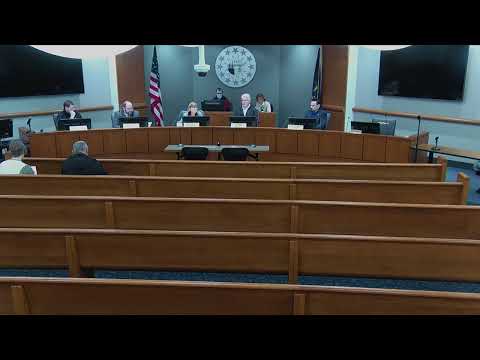
The Porter County Board of Commissioners on Feb. 7 approved a resolution opposing House Bill 16-28, citing concerns the bill would transfer permitting and zoning authority for multi-county energy and water infrastructure from local governments to the state.
The Porter County Board of Commissioners voted Feb. 7 to approve a resolution formally opposing House Bill 16-28, a proposed state law that would transfer permitting authority for certain multi-jurisdictional infrastructure projects from local governments to the state. Commissioner Biggs moved to approve the resolution; a fellow commissioner seconded the motion and the board approved the measure by voice vote.
The resolution targets provisions of House Bill 16-28 that, if enacted, would put the state in charge of siting and permitting for multi-county projects that "deal with the generation, transmission, distribution, or storage of electricity, gas or fluids, or water," and that meet specified thresholds. Scott, a county staff member who reviewed the bill for the board, told commissioners the bill applies to electrical generation facilities with a capacity of at least 50 megawatts that produce electricity used directly or indirectly by a public service utility.
The commissioners said the statute, as written, would remove local oversight over zoning, construction standards, stormwater review, setbacks and other routine permitting processes for qualifying projects. Scott summarized that, if the bill becomes law and a project fits the statute, "the state would be in charge of deciding of the permitting, the construction standards, the stormwater standards, the setbacks, the location," and that local governments "would not have the normal opportunity for their input and remonstrance."
Board members and a member of the public raised specific concerns about how state control would affect county planning and local incentives. Commissioners noted the county is undertaking a comprehensive land-use and thoroughfare plan and said state preemption could override those local plans. They also questioned whether the state would regulate tax abatements for major projects, an element commissioners said often determines whether a developer remains in or leaves a county.
Andy Vasquez, who identified himself as president of the Concord county council but said he was speaking as an individual, commended the commissioners for taking the position and urged continued local engagement. "Once local governance is taken away, don't even bother having local governance," Vasquez told the board.
Commissioners also referenced prior actions by the state — including consolidation of the county E-911 system — as precedent for state-driven changes they said lacked funding or local input. Several commissioners said they were worried about state control over water transfers and whether projects would be allowed in any zoning district under the proposed statute.
As a next step, a county staff member said the commissioners' office will send a copy of the approved resolution to the chair of the legislative committee handling the bill, identified in the meeting as State Representative Ed Salady, and to local news outlets, and will ask that the resolution be entered into committee hearing records. The resolution states the board "formally opposes House Bill 16-28 and any similar legislation that seeks to strip local government of regulatory control over multi jurisdictional infrastructure projects" and affirms the board's commitment to protecting local land-use authority.
The resolution passed by voice vote; commissioners recorded the motion, a second, and an affirmative voice vote for approval.