Get Full Government Meeting Transcripts, Videos, & Alerts Forever!
Get email alerts on the Drinking Water Testing topic
No spam. Unsubscribe anytime.
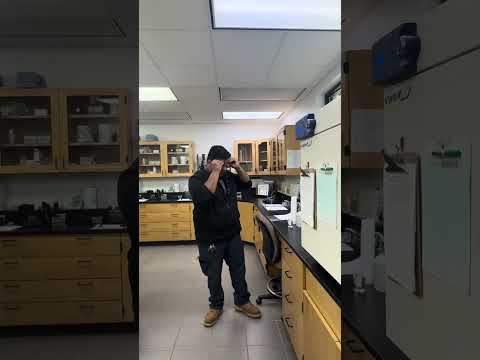
Staff demonstrates bacteriological water-sampling steps and in-house testing process
Summary
At a Village of Tequesta meeting, a staff member demonstrated how to collect bacteriological drinking-water samples, described sample handling and incubation (35°C for 24 hours), and said distribution sampling is performed monthly with multiple sample points.
At a Village of Tequesta meeting, a staff member demonstrated how to collect bacteriological drinking-water samples and described the village’s in-house testing process, saying distribution samples are taken monthly and incubated at 35 degrees for 24 hours.
The demonstration showed step-by-step sample collection and handling and explained why the village runs tests on-site. The staff member described flushing and disinfecting the sample tap, filling the sterile bottle to 100 milliliters, using personal protective equipment and a cooler for transport, and placing samples in an incubator set to 35 degrees Celsius for 24 hours.
The staff member said the village collects three kinds of bacteriological samples—“distribution, raw, and a boil water” sample—and that distribution samples are taken monthly. “We take it once every month, and we have 17 samples we have to take,” the staff member said. The staff member also listed other sampling locations by type: “We have 19 sample caps out of distribution system. We have 13 sufficient wells, and we have 4 RO wells.”
On procedures, the staff member walked through disinfecting the tap with alcohol, allowing the tap to flush, then filling the sample bottle to 100 milliliters. He described basic lab handling: wearing eye protection and gloves, placing samples in a cooler with ice for transport, letting samples reach room temperature when required, and incubating prepared media at 35 degrees Celsius for 24 hours. “Lock it up, and this will sit for 24 hours,” the staff member said when describing the incubator step.
An attendee thanked the presenter and noted the value of in-house testing after service disruptions. “Well, it’s wonderful that we are able to perform these tests in house, especially when a pipe breaks. That way, we can get our customers back in service as quickly as possible,” the attendee said.
The staff member also said the village coordinates with the health department when a boil-water condition is involved; in such cases the sample process and any required re-testing are conducted in coordination with that agency.
No formal motions, votes, or policy decisions were recorded during the demonstration; the presentation served to explain existing sampling and laboratory procedures.