Get Full Government Meeting Transcripts, Videos, & Alerts Forever!
Get email alerts on the Early College topic
No spam. Unsubscribe anytime.
Durfee Early College program reports enrollment growth, broader higher-education partnerships
Summary
Fall River Public Schools officials told the Instructional Subcommittee that the Durfee High School Early College program has grown enrollment, added pathways with UMass Dartmouth, Bristol Community College and Bridgewater State, and shows early outcomes including a high FAFSA completion rate for the class of 2024.
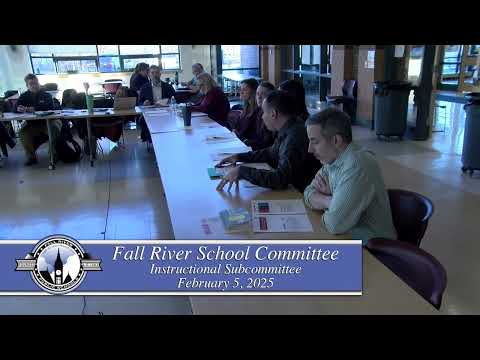
Durfee High School’s Early College program has expanded since a pilot in 2022 and now enrolls a growing share of 10th–12th graders while delivering college credits during the school day, Fall River Public Schools staff told the district Instructional Subcommittee on Feb. 5.
Emma Jacinto, the district’s early college coordinator and counselor, said the program currently runs 22 college-level classes delivered through partnerships with UMass Dartmouth, Bristol Community College and Bridgewater State University and is staffed by four dedicated district employees plus classroom teachers who receive stipends to co-teach or support the courses. “All classes are taken during the normal school day,” Jacinto said, which staff said helps remove barriers for students with family or extracurricular obligations.
The program targets students underrepresented in higher education — including multilingual learners, first-generation college students and economically disadvantaged students — and pairs credit-bearing coursework with mandatory supports such as advising, tutoring and an early-college seminar. Jacinto said the model intentionally omits strict course prerequisites; eligibility considers multiple academic measures, attendance and student interest.
Program staff reported growth after the pilot year. Presenters said enrollment has increased about 78 percent over the last two years and that the program now reaches roughly 20 percent of students in grades 10 through 12. Jacinto told the subcommittee that 233 12th-grade students were “actively taking credit-bearing coursework” this spring, and that 87 percent of Durfee’s class of 2024 earned 12 or more college credits. The staff goal is to ensure that all participating students take at least 12 credits during their pathway; typical pathways can reach 18–21 credits, staff said.
District staff described six pathways aligned to local higher-education strengths and labor-market demand: business, health sciences, education and social services, criminal justice, STEM/engineering and art/fashion. UMass Dartmouth, Boston-area partners and Bristol Community College provide course instruction while Durfee staff support co-teaching, tutoring and advising. Tracy (UMass Dartmouth representative) described campus visits and college “acculturation” activities intended to familiarize high school students with college life and reduce transition barriers.
OneGoal and other partners support college planning, advising and persistence work. A OneGoal representative told the committee the organization embeds multi-year advising in participating schools and helps students complete key steps such as FAFSA; Jacinto reported a FAFSA completion rate of 91 percent for Durfee’s class of 2024, compared with a statewide average of about 54 percent reported by staff. District staff said FAFSA completion is the single best predictor they track for college enrollment and persistence.
Subcommittee members asked about expansion, transferability and staffing. Staff said the program maintains a wait list of about 20 students and that the district is aiming to add roughly 20 more students next year while growing sustainably to preserve supports. School Committee members asked whether technical schools such as New England Institute of Technology or partnerships with Mass Maritime and other technical providers had been explored; staff said they had discussed potential technical partnerships and would consider transferability so credits follow students who change plans.
Presenters emphasized student supports: the district runs a school-embedded MTSS (multi-tiered system of supports) for early college, uses JFY Network for tutoring, and holds weekly data-review meetings to provide 1-on-1 interventions. Staff also highlighted faculty-to-faculty collaboration with higher-education department chairs to align prerequisites and course sequencing.
Why it matters: District staff framed Early College as a strategy to increase college enrollment and credential attainment in a city where postsecondary completion has lagged. Staff noted Massachusetts labor-market data showing a majority of jobs requiring postsecondary credentials and said the program’s combination of coursework and wraparound supports aims to raise opportunity and credential attainment for Durfee students.
Subcommittee action: This item was an informational update; no formal vote was taken. Staff said they plan a larger spring presentation with students and faculty to showcase outcomes and student voices.