Get Full Government Meeting Transcripts, Videos, & Alerts Forever!
Get email alerts on the Signs Digital Signage topic
No spam. Unsubscribe anytime.
Planning commission opens public hearing on digital signs, leaves record open for more comment
Summary
Planning staff proposed a zoning text amendment to allow limited on‑premise digital signs; the commission heard staff, a proponent offering an off‑site advertising sign, public comment and chose to keep the public hearing open and continue the matter to Dec. 8 for additional input.
St. Mary's County planning staff on Nov. 24 proposed a text amendment to Chapter 65 (Signs) and Chapter 90 (Definitions) of the county zoning ordinance to permit limited on‑premise digital signs in specified districts and to set technical standards for their design and use.
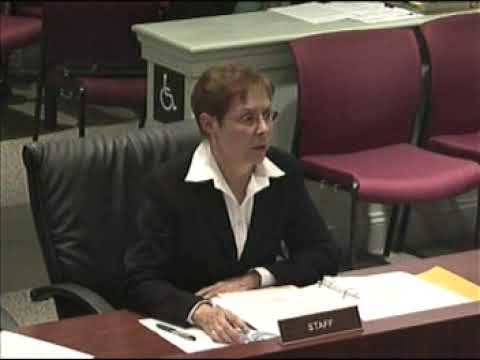
Michelle Shelley, a planning staff member, told the commission the ordinance currently prohibits movement or apparent movement of sign copy except time and temperature, and that staff’s research found a range of approaches in nearby counties. “Staff is recommending allowing digital signs in St. Mary's County where we currently allow on‑premise freestanding signs,” Shelley said, but added staff proposed limits including a minimum message cycle of five seconds, no animation or sound, no intermittent lighting, and a 32‑square‑foot cap on the digital portion of a freestanding sign face.
During discussion commissioners pressed for clearer definitions (for example of “animation”), limits on logos or pictures, and whether shopping centers or multi‑tenant sites could have a single digital sign. Planning staff said the proposal would permit one freestanding on‑premise digital sign per site in development, village and town center districts; only 50% of an allowable face could be digital, capped at 32 square feet; and staff intentionally recommended against permitting digital wall signs to avoid proliferation.
A member of the public speaking on behalf of landowner Van Aldridge described a plan to install an off‑site, freestanding digital display at a high‑visibility intersection, to allocate a percentage of message time to government and nonprofits (the proponent suggested 10%), and to offer advertising space to recoup the high installation cost. The proponent asked the commission to consider a larger digital face and a 10‑second cycle for that privately owned multi‑user sign; Sheriff Cameron submitted a letter supporting potential public‑safety uses such as Amber Alerts.
Commissioners expressed safety and distraction concerns and asked staff for firmer wording on animation, logos and cycle timing. The commission voted to leave the public hearing open and continue the matter to the Dec. 8 meeting so staff and proponents can refine language and the public can comment further.
The hearing will be revisited at the Dec. 8 meeting and staff was directed to collect additional input and provide clarified definitions and options for the commissioners.