Get Full Government Meeting Transcripts, Videos, & Alerts Forever!
Get email alerts on the Transportation Infrastructure topic
No spam. Unsubscribe anytime.
State Highway outlines study of Md. 4, Thomas Johnson Bridge and five build alternatives
Summary
State Highway Administration officials briefed the St. Mary’s County Planning Commission on a study of Maryland 4 and the Thomas Johnson Bridge, including five alternatives and preliminary cost estimates, ahead of public workshops next week.
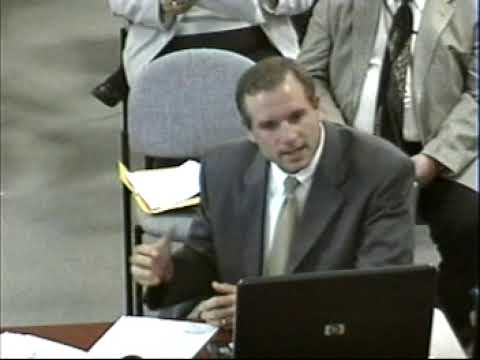
Mike Perrata, the State Highway Administration’s project manager, told the St. Mary’s County Planning Commission on June 9 that a planning study of Maryland 4 and the Thomas Johnson Bridge is underway to address congestion and safety on the corridor connecting to Maryland 235.
Perrata said the study grew from local elected-official requests and public workshops held earlier in the year; about 230 citizens attended combined workshops and the public generally supported the study’s purpose. “We’re looking at improving existing capacity and traffic operation. We need to increase vehicular and pedestrian safety,” Perrata said, adding the team is treating the corridor as a multiuse corridor for vehicles, pedestrians and bicyclists.
The study considers five alternatives: no-build (baseline); Transportation System Management/Transportation Demand Management (TSM/TDM) short-term improvements; a two-lane parallel structure immediately south of the existing bridge; full replacement with a four-lane bridge; and a bypass called the “Myrtle Point Crossing” roughly a mile north of the existing bridge that would touch down in the St. Mary’s County side near Myrtle Point Park.
Perrata said traffic volumes on the corridor already show failing levels of service in peak hours and are projected to worsen: “Level of service F all across the board except for Es and the PM right now in 02/2007. It's not gonna take much growth … for these to be all Fs.” He told commissioners that with any of the three build alternatives the team expects levels of service to improve from F to C by the 2030 planning horizon.
The TSM/TDM alternative would rely on operational fixes — signal and intersection improvements, minor roadway widening and lane extensions — with estimated costs in the $10–20 million range. A two-lane parallel span was preliminarily costed at roughly $440–465 million (2008 dollars); a four-lane replacement at $620–645 million; and the Myrtle Point Crossing at $675–700 million. Perrata said those totals are conservative and include large contingencies while the project remains in early planning.
Perrata listed environmental and community constraints the team will evaluate: wetlands (preliminary mapping shows a maximum of about 3 acres affected), up to about 23 acres of potential woodland clearing, potential submerged cultural resources requiring underwater survey, and coordination on peregrine falcon nesting on the existing structure. He also said the Myrtle Point Crossing falls inside a designated Priority Funding Area, which the project team considers helpful for funding eligibility.
The project schedule calls for alternative workshops in the week after the hearing (public open houses in Calvert and St. Mary’s counties), a fall 2009 design public hearing, and subsequent environmental studies. Perrata emphasized that current funding covers planning only and design and right‑of‑way phases are not funded at this time.
Commissioners asked why tunnel or depressed‑grade intersection options had not been carried forward. Perrata replied that tunneling introduces major drainage and retaining‑wall costs and that the project team had evaluated multiple alternatives earlier in the process; he said SHA will provide a written explanation of why tunneling was not advanced.
Perrata and staff urged residents to attend the upcoming public workshops and noted display boards and brochure mailings to about 8,000 households and businesses in the project area.