Get Full Government Meeting Transcripts, Videos, & Alerts Forever!
Get email alerts on the Education topic
No spam. Unsubscribe anytime.
Superintendent candidates at Milwaukee forum emphasize literacy, equity, staffing and safety
Summary
Three finalists for Milwaukee Public Schools superintendent fielded audience questions at a public forum, stressing literacy improvements, equity-focused resource targeting, teacher recruitment and retention, and competing approaches to school safety and police presence.
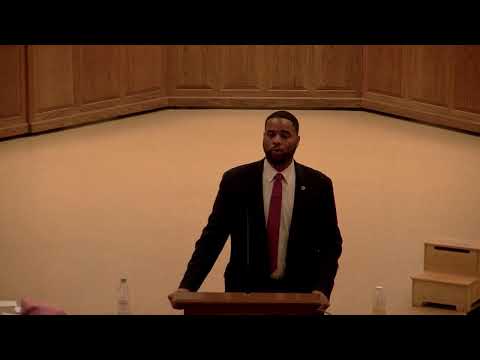
Milwaukee public attendees heard three finalists for the next Milwaukee Public Schools superintendent lay out competing priorities and approaches at a board-organized forum Tuesday night.
Dr. Brenda Cassellius, CEO of Fresh Energy and a former Minnesota state education commissioner and Boston superintendent, said the district must lift literacy, attendance and graduation rates while centering children, families and community supports. “I always talk about children, families, and community,” Cassellius said. She highlighted early-childhood phonics and K–3 bilingual pathways, and pointed to state-level requirements she identified as “Act 20” on phonics instruction.
Dr. Joshua Stark, a former superintendent and K–12 leader who has worked in urban districts and the nonprofit and corporate sectors, framed the work around system choices and accountability. “What do we allow? What do we permit?” Stark asked, arguing that transparency, collective decision making and clearer processes are needed to bring consistent performance across schools.
Dr. Andre Townsel, currently superintendent of Calvert County Public Schools in Maryland, emphasized visible, direct leadership and message amplification: “I’m visible, I’m vocal, and I’m vigilant,” he told the audience. Townsel described targeted literacy investments and financial measures he said produced results in his district.
Why it matters: Milwaukee Public Schools serves about 68,000 students, with significant disparities among schools on state measures, multilingual enrollment and chronic absenteeism. The board will select the superintendent who will shape budgets, staffing, curriculum choices and safety policies that affect students’ daily experience.
Key themes from the forum
Literacy and early childhood: All three candidates prioritized literacy. Cassellius noted statewide curriculum requirements and cited early-childhood investment and multilingual K–3 pathways. Townsel described using the science of reading and district literacy plans tied to professional development and assessment (for example, AIMsweb and WIDA/ACCESS where applicable). Stark urged use of rapid data cycles and evidence-based practice adoption to measure progress.
Equity and resource targeting: Each candidate said resources should follow students with the greatest needs. Cassellius described using an "opportunity index" and prioritizing schools with the lowest measures for intensive intervention. Stark and Townsel also advocated community-engaged, data-driven targeting and for lifting both the floor and the ceiling of achievement.
Teachers, recruitment and retention: Candidates emphasized protecting teacher time, professional development and growing local pipelines. Cassellius and Stark called for protecting instructional time and reducing paperwork for special education staff. Townsel described raising starting teacher pay and retention bonuses in his districts and investing in morale and career pathways.
Class size and facilities planning: Candidates acknowledged disparities in class size across schools. Cassellius recommended targeted smaller classes in turnaround settings and a facilities/enrollment study. Stark recommended focusing on the instructional goals behind reduced ratios. Townsel noted class-size caps are often set in labor agreements and tied to funding and staffing (FTE) calculations.
Bilingual education and immigrant protections: Candidates supported dual-language pathways and continuity K–12. Cassellius and Townsel called for materials and bilingual educators; Stark said he favored expansion where research supports long-term pathways. All three said districts should take policy and community steps to protect students and families facing immigration enforcement, including clear data- and information-sharing policies and community training.
School safety and police in schools: Candidates described different experiences and constraints. Cassellius and Stark recounted their work to replace or retrain school-based police with school safety supervisors and restorative practices in prior districts, while noting a recent legal requirement in Wisconsin requiring police presence that will limit local discretion. Townsel said compliance with state law is required and discussed options including memoranda of understanding and exploring models that align law and community expectations.
Budget and finance: Candidates agreed budgets should align with a strategic plan and target funds to students who need them most. Cassellius and Stark urged transparent, participatory budget processes; Townsel described steps he said had reduced deficits and produced underspends that preserved staffing, and noted using investment strategies and attrition reviews to create fiscal room.
Community engagement and metrics: Each candidate emphasized frequent, multi-channel communication with families, staff and the public, and recommended citizen advisory groups and regular public reporting on strategic goals.
No formal decisions were made: the forum was a public input event organized by the superintendent search firm for the Milwaukee Board of Education. Board members will review feedback from the public (the facilitators repeatedly reminded attendees about a QR-code feedback form) and make the final hiring decision under state statute.
Ending: The board will collect community input and proceed through its hiring process; the forum underscored that the next superintendent will face immediate tasks—improving literacy outcomes, addressing staff recruitment and retention, reconciling safety requirements with community expectations, and aligning budgets to equity-focused goals.