Get Full Government Meeting Transcripts, Videos, & Alerts Forever!
Get email alerts on the Physical Education Requirements topic
No spam. Unsubscribe anytime.
Panel backs bill to increase K‑8 physical education minutes, adds narrow exemption for off‑campus high‑school courses
Summary
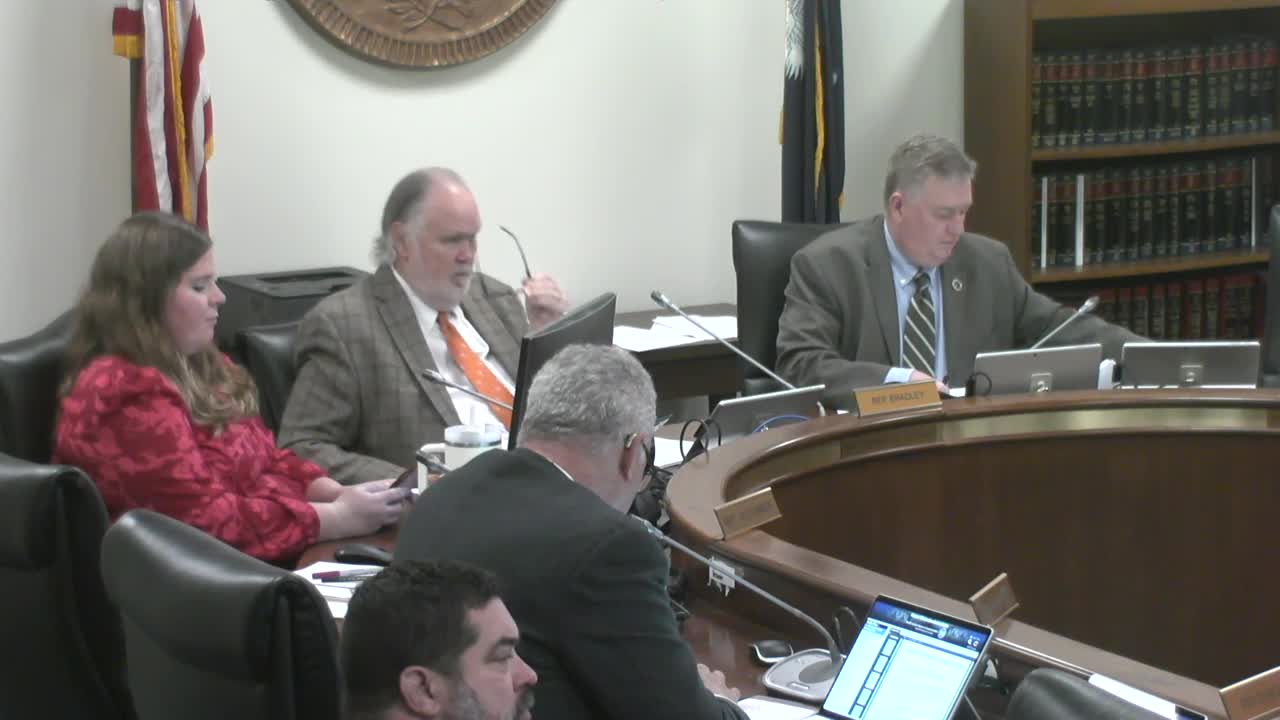
The House Education and Public Works subcommittee voted Feb. 4, 2025, to report H.3195 favorably as amended, a bill that sets minimum physical education requirements for K‑8 students and adds a narrow waiver for middle‑school students taking high‑school classes off campus.
The House Education and Public Works subcommittee advanced H.3195 on Feb. 4, 2025, a bill that would increase required physical education (PE) minutes in K‑8 and add accountability for PE and physical activity reporting.
Under the bill language discussed in committee, kindergarten through fifth‑grade students must receive at least 1.5 hours of physical education per week. Sixth through eighth graders must receive a minimum of 60 hours of physical education per school year (the committee adopted a technical amendment to clarify implementation for students who take high‑school courses off site). Supporters said the measure is intended to address declining child fitness, rising childhood obesity and associated downstream costs — including impacts on military readiness and workforce fitness.
Why it matters: Witnesses presented data showing a drop in motor‑skill competence and rising obesity rates among children; experts testified that insufficient movement opportunities during the school day contribute to poorer fitness and higher long‑term health costs. Testimony included academics and public‑health advocates who argued the bill would restore daily movement opportunities, improve student attention in class, and reduce future healthcare and readiness costs.
Expert testimony: Dr. Sally Miedema, representing the South Carolina Alliance for Health, Physical Education, Recreation and Dance, said roughly half of South Carolina students “do not score in healthy zones of cardio‑respiratory fitness” and that about a third of children are obese; she noted only 30–40% of schools were meeting statutory minutes for PE and physical activity reporting. Dr. Ryan Sacco (The Citadel) and Dr. David Stodden (University of South Carolina) presented research linking early childhood motor skill deficits to later fitness and military‑readiness outcomes. Patrick Kelly of the Palmetto State Teachers Association and Ryan Bailey of the South Carolina Association of School Administrators encouraged the committee to adopt the measure and recommended a narrowly drawn exemption for students taking off‑campus high‑school courses.
Amendment and votes: Committee members adopted an amendment that creates a narrow exemption for seventh‑ and eighth‑grade students who are taking high‑school courses off campus (the amendment requires reasonable efforts by the sending school to accommodate participation in PE). The subcommittee then voted 8–0 (two members absent) to report the bill favorably as amended to the full committee.
Clarifications recorded in the hearing: Proponents emphasized the bill sets minimums and leaves scheduling flexibility to districts. Witnesses urged greater reporting and accountability; one expert noted that PE used to be reported on the state report card and that reporting declined in recent years.
Next steps: The bill was sent to the full Education and Public Works Committee; committee members signaled willingness to refine timing and enforcement language before full committee consideration.