Get Full Government Meeting Transcripts, Videos, & Alerts Forever!
Get email alerts on the Committee Rules And Organization topic
No spam. Unsubscribe anytime.
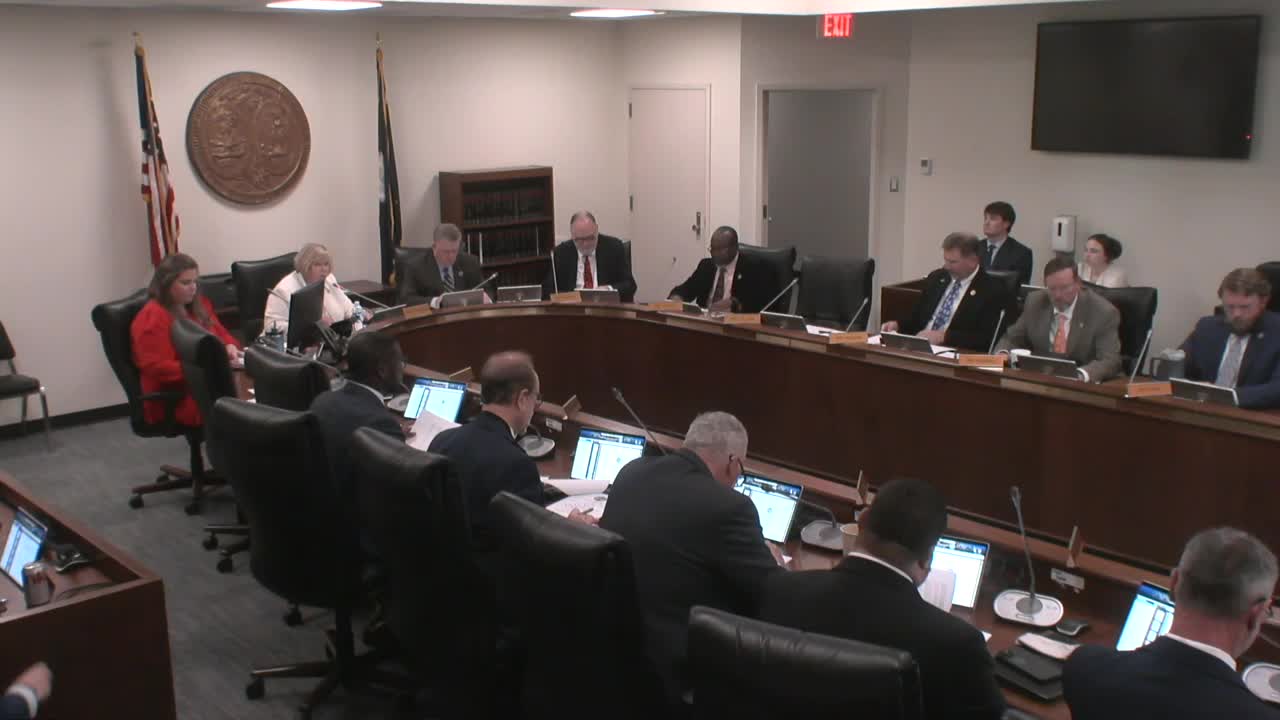
House Education and Public Works committee adopts rules, lays out subcommittees and meeting procedures
Summary
The House Education and Public Works Committee accepted its proposed committee rules by acclamation, announced subcommittee chairs and schedules, and emphasized procedural expectations for bill review and amendment submission.
The House Education and Public Works Committee accepted its proposed committee rules by acclamation and spent its opening meeting organizing subcommittees, scheduling upcoming informational meetings and setting expectations for how members should prepare for hearings.
The committee chair opened the session and asked staff member Pierce to walk members through the draft rule changes. Pierce said, “There are only a very few number of changes that were incorporated into the the draft, proposed rules,” and described the principal edits as adding a decorum rule to conform committee practice to the House rules, applying those rules to subcommittee meetings, changing one phrase for grammar and replacing Roman numerals with letters.
The nut of the meeting was procedural: members voted to approve the rules and the chair announced that the rules “are accepted by acclamation.” The committee also announced subcommittee leadership: Representative Bradley will chair the K–12 subcommittee; Representative McGinnis will chair higher education; Representative Gillum will chair motor vehicles; Representative Vaughn will chair transportation; and Representative Hartnett will chair public safety. Staff said informational subcommittee meetings will begin after a one-week postponement and that many early meetings will be “informational” so members—especially new members—can hear from agencies such as the Department of Transportation, the Department of Motor Vehicles, and the State Department of Education.
Committee members discussed expectations for amendment procedure and preparation. The chair reiterated that members should read materials in advance and noted that packets will be distributed electronically on tablets and by email rather than as thick paper packets. The chair told members to give staff at least 24 hours notice before a committee meeting and reminded returning members that subcommittee review is the preferred time to work through amendments.
During Q&A Representative Kilmartin asked how flexible the chair would be about amendment filings during meetings, noting that in the previous year some amendments were handled during full committee sessions. Pierce said the requirement to have amendments in writing was not a recent change and the chair said the committee will be collaborative and try to accommodate urgent needs when appropriate. Staff estimated the volume of legislation the committee might handle: roughly 60 K–12 bills and between 150 and 200 bills across the committee’s two‑year span, according to staff remarks.
Administrative staffing and continuity were also addressed. The chair said legislative aide Lauren will be with the committee through March and that Ellie, identified as an intern and graduate staffer, will take on additional responsibilities when Lauren is on leave. The chair instructed members to coordinate with staff for printed copies if needed and to direct scheduling questions to Pierce.
No policy bills were debated or adopted during this organizational meeting. The chair noted that the education savings account bill is being debated in the Senate but the committee took no formal action on that measure during this meeting.
The meeting concluded with the chair reminding members to limit travel the next week so meetings can be rescheduled as needed and then adjourning the session.