Get Full Government Meeting Transcripts, Videos, & Alerts Forever!
Get email alerts on the Higher Education Governance topic
No spam. Unsubscribe anytime.
Commission on Higher Education describes coordinating role, oversight fixes and data plans
Summary
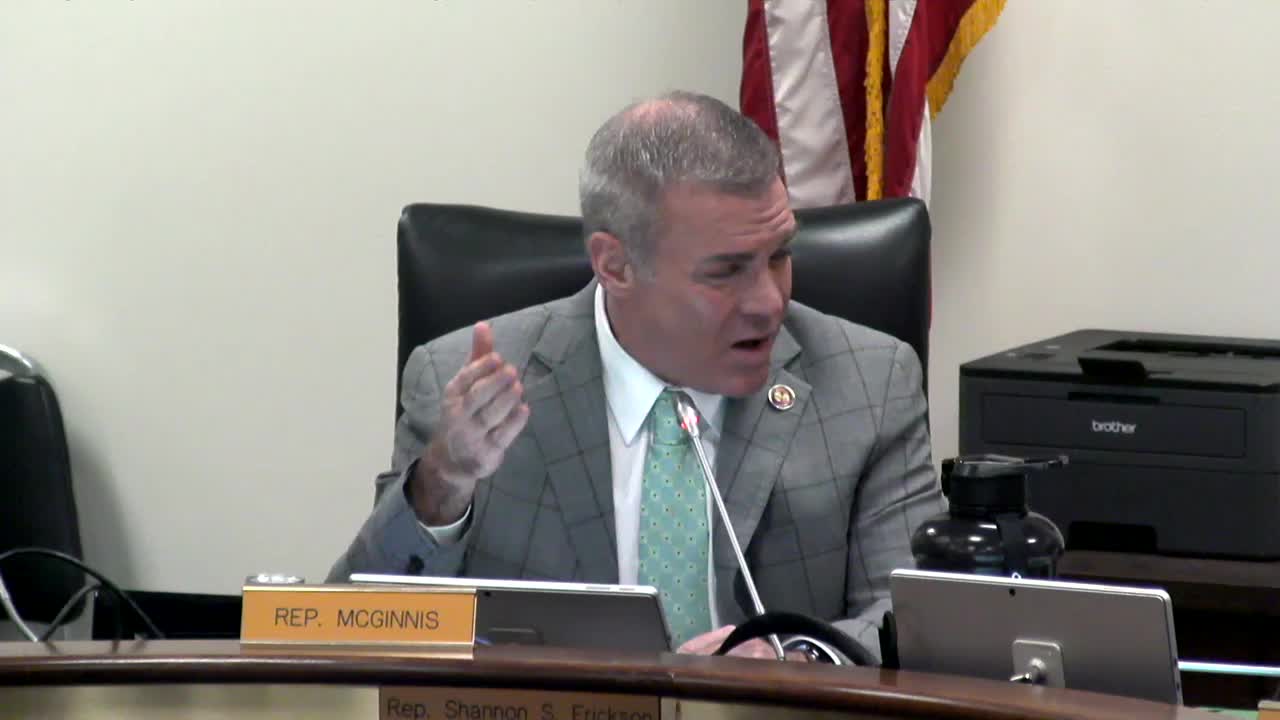
At a Higher Education Subcommittee meeting, Jeff Perez, president and executive director of the South Carolina Commission on Higher Education (CHE), outlined CHE’s coordinating functions, steps taken after recent oversight findings, and plans to strengthen data and program review.
At a meeting of the Higher Education Subcommittee, Jeff Perez, president and executive director of the South Carolina Commission on Higher Education, told members CHE’s role is to “promote access, affordability, and quality” across the state’s higher education institutions while serving primarily as a coordinating body.
Perez said CHE distributes state scholarship and need‑based grant funds, reviews and approves new academic programs, licenses certain vocational and proprietary schools, serves as the state approving agency for veterans’ benefits, and collects statewide higher education data. “We are in the grand scheme of things considered a coordinating body,” Perez said.
CHE’s work matters because its decisions affect scholarship distribution and program approvals for the state’s 75 institutions and roughly 240,000 students, Perez told the subcommittee. He described steps the agency is taking after oversight reviews identified problems with financial accounting and agency practices.
Perez described two oversight processes that examined CHE and led to corrective work: staff engagement with the House legislative oversight committee and an inspector general review. He said the inspector general’s report and the legislative oversight recommendations led CHE to create an “IG Tracker,” a Gantt‑chart schedule to implement the reports’ recommendations. “I like to say you can own the problem or own the solution,” Perez said, describing the agency’s approach to remediation.
On the scholarship accounting issue that the subcommittee discussed, Perez said the General Assembly addressed the immediate shortfall last year by sweeping funds into the budget and that CHE has developed a mathematical projection formula for future scholarship needs. He said the formula was developed with the state’s Revenue and Fiscal Affairs office and that RFA affirmed the projection used in the governor’s executive budget.
Perez also highlighted CHE’s data services, including PASCAL, the state virtual interlibrary loan system, which he said has produced substantial cost savings across campuses. He described CHE’s participation in Act 67’s Coordinating Council for Workforce Development, saying agencies now share data through RFA so workforce priority occupations—168 occupations identified by the council—can be considered when reviewing new academic programs.
Committee members asked about larger governance questions, including whether the state should examine a centralized board‑of‑regents model. Perez said CHE will provide research and an impartial analysis if the subcommittee requests it, and that CHE would serve as an “honest broker” in presenting pros and cons.
The presentation closed with members signaling they will continue oversight work and follow up with CHE for additional detail on projections and program review practices.