Get Full Government Meeting Transcripts, Videos, & Alerts Forever!
Get email alerts on the Energy Regulation topic
No spam. Unsubscribe anytime.
House LCI committee passes South Carolina Energy Security Act with amendments
Summary
The South Carolina House Labor, Commerce and Industry Committee voted unanimously to adopt the subcommittee report and pass House Bill 3309, the South Carolina Energy Security Act, sending the bill to the full House after adopting multiple amendments that change commission structure, procedural appeals, pay levels and clarify utility authorities.
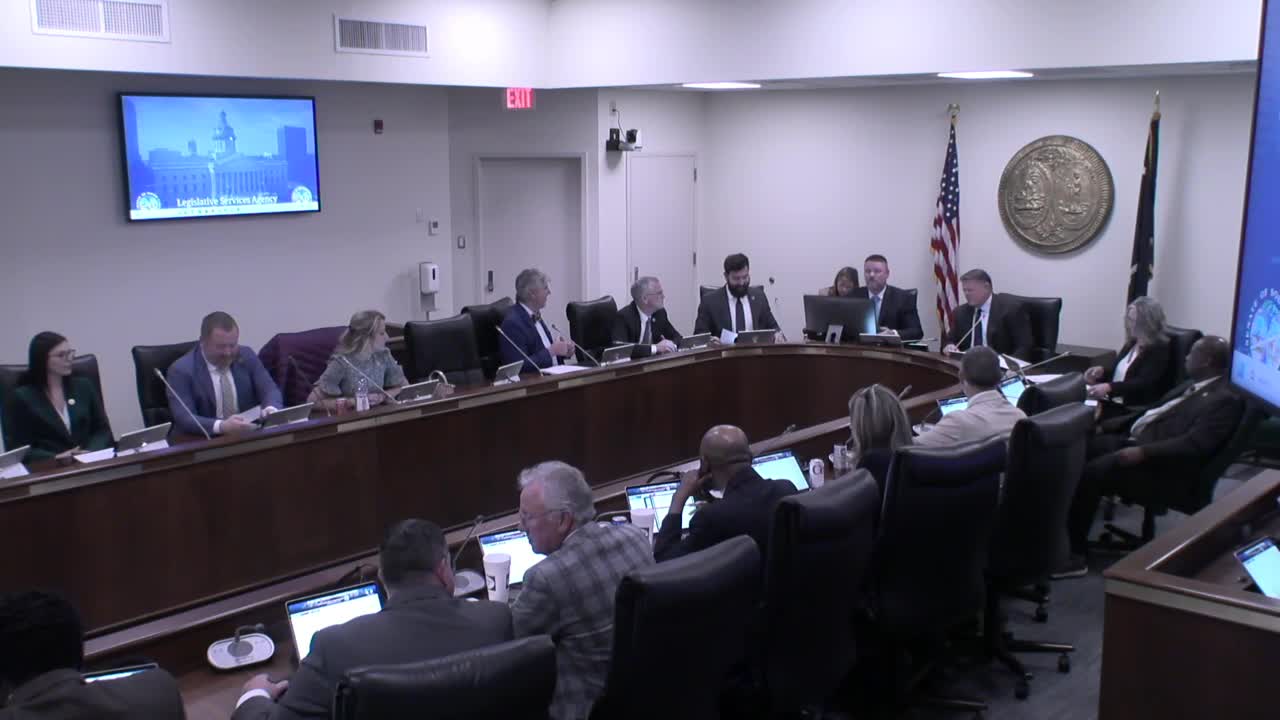
The Labor, Commerce and Industry committee voted unanimously to adopt the subcommittee report and pass House Bill 3309, the South Carolina Energy Security Act, sending the bill to the House floor. The committee approved a set of amendments intended to clarify regulatory procedures, adjust compensation for Public Service Commission officials and narrow some powers previously written into the bill.
The bill matters because it would change how energy projects and utility regulation are reviewed in South Carolina, affect how certain appeals are processed, and alter administrative authority and pay structures for the Public Service Commission (PSC). Supporters said the changes aim to avoid unnecessary delays in permitting and to protect ratepayers; critics raised procedural questions during committee discussion.
Representative Gatch, the subcommittee chair, summarized the amendments adopted in subcommittee and in committee. He said the panel removed language that would have cut the number of PSC commissioners from seven to three and instead retained a seven-member commission. The amendments also expanded some provisions to cover water utilities and added language intended to prevent incomplete applications from being treated as approved because of missed deadlines (sometimes described in testimony as a “lazy judge” loophole). Gatch said the bill also clarifies the parties’ burden of proof in proceedings and tightens language about utilities’ authority to clear or excavate land so that such authority applies only to defined "facilities."
Gatch described changes to ex parte communications rules, saying the bill “added language to allow in certain instances, to make it a little more flexible, so that we're not there are no violations of the law regarding ex parte communications.” He also said the committee fixed a procedural gap so the Administrative Law Court (ALC) would create a record before a direct appeal could go to the South Carolina Supreme Court, addressing concerns raised by courts and bar representatives about deciding appeals without a record.
Other amendments noted by Gatch include: - Direction that the PSC executive director's salary be placed under the agency head salary commission (with an adjustment to the effective fiscal year noted in committee discussion). Representative Gatch said the committee moved the effective year earlier by one year to correct a scrivener’s error. - An adjustment to commissioner pay: the committee said commissioners will receive a pay increase but that raises would not take effect until the next election cycle; the committee also revised the proposed salary level downward from an appellate-court-judge benchmark to a circuit-court-judge benchmark. - Consumer and ratepayer provisions: addition of ratepayer protections and oversight by the Public Employee Relations Commission (PERC) was added and the consumer advocate position will remain at the Department of Consumer Affairs, per the amendments. - Clarifications to preserve Santee Cooper's independent rate-making authority and to remove certain references to projects and programs (including language referring to the Carolina Long Bay project and specific whereas clauses mentioning Kennedys and Bad Creek). The committee also struck language allowing broad, unspecified rights-of-way and excavation authority. - A targeted amendment intended to speed relief for a delayed project (discussed as Riverneck Road) by allowing some similarly situated cases faster access to the Supreme Court; Gatch said that amendment was aimed at reducing appellate delay for those litigants.
Representative Williams commended Gatch for his work on the subcommittee and asked about the proposed pay scale for PSC commissioners; Gatch explained the committee shifted the benchmark from an appellate court salary to a circuit court salary and confirmed the effective timing change mentioned above. Williams’s remarks were acknowledged by the chair before the committee proceeded to votes.
On procedure, the committee first adopted the subcommittee report, then individually adopted the committee amendments discussed by Gatch. Each motion carried without recorded opposition. The final motion to pass House Bill 3309 as amended was approved by a unanimous show of hands; the committee chair announced the bill will now go to the full House.
The committee discussion focused on technical fixes, procedural protections, and clarifications of authority rather than substantive changes to broad policy goals in the bill. The transcript shows the committee prioritized shortening appellate delays and narrowing operational authorities that had been broadly worded in earlier drafts. The record does not show floor action or further amendments beyond the committee; the bill's future changes will depend on full House consideration.
Less critical details recorded in committee remarks included references to federal coordination (a change in whereas language intended to clarify state intent for Federal Energy Regulatory Commission consideration of interstate pipeline issues) and removal of several scrivener errors. The committee’s discussion noted stakeholders had multiple opportunities to testify in subcommittee and that subcommittee hearings had taken several hours over extra days.
Votes at a glance: The committee adopted the subcommittee report, adopted amendments (described above), and passed House Bill 3309 as amended; the transcript records unanimous approval on the recorded motions but does not provide individual vote counts.