Get Full Government Meeting Transcripts, Videos, & Alerts Forever!
Get email alerts on the Energy Policy topic
No spam. Unsubscribe anytime.
House subcommittee approves H.3309 after amending PSC procedures, siting and appeals rules
Summary
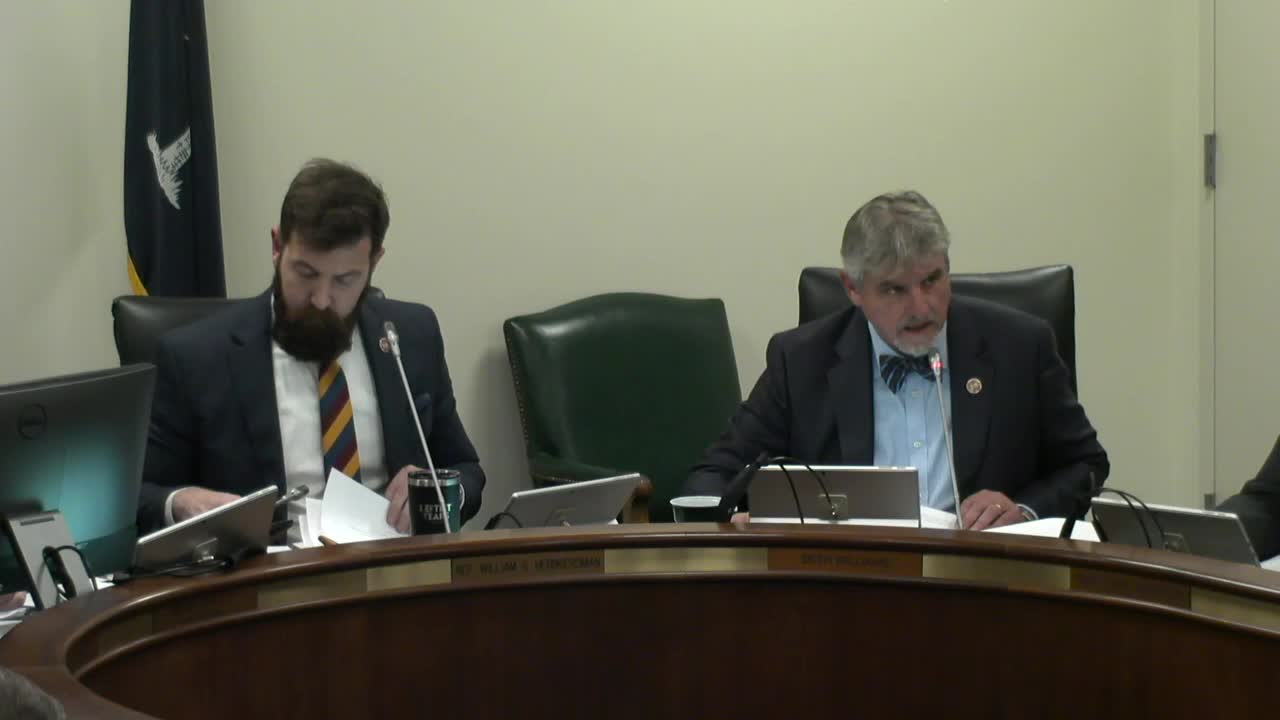
The House Labor, Commerce and Industry public utility subcommittee voted to adopt four amendments and approve H.3309 as amended, sending the energy bill to the full committee for consideration.
The House Labor, Commerce and Industry public utility subcommittee voted to adopt four amendments and approve H.3309 as amended, sending the energy bill to the full committee for consideration.
H.3309, described at the meeting as a broad package of energy and utility reforms, was advanced after the subcommittee approved Amendment 1 (PSC reforms and procedural changes), Amendment 2 (permit-appeal streamlining), Amendment 3 (consumer-advocate evaluation requirement), and Amendment 4 (technical clarifications). The committee chair called for voice votes on each amendment and on the bill; the transcript records “the ayes have it” and a unanimous voice vote on the final motion to approve the bill as amended. The bill will be considered by the full committee at a meeting scheduled for the next day.
Why it matters: The measure makes several procedural and substantive changes that affect how energy infrastructure projects are reviewed, how the Public Service Commission (PSC) conducts proceedings, and how the state positions itself for advanced nuclear and other generation options. Supporters said the changes aim to reduce backlog in permit appeals, clarify PSC authority, and speed decisions on projects they said the state needs to address an energy shortfall.
Key changes and discussion
- Review timelines and permit applications: Representative Kirby presented language that codifies a 6-month review period for energy infrastructure permit applications, requires a pre-application meeting with the agency to establish milestones, and permits a written extension only by mutual agreement. Kirby said, “A permit application for an energy infrastructure project shall not submit an application for the project prior to conducting a pre application meeting with the agency to establish milestones within the 6 month period.” The amendment also adds buffer language for public comment periods.
- Major facility siting and PSC deadlines: The amendment directs the PSC to issue an order accepting or denying siting applications within 60 days for major facility siting questions (generation, water, sewer facilities). The measure also requires parties to seek rehearing or reconsideration and to develop an Administrative Law Court record before appeals to the South Carolina Supreme Court in permit-related matters; proponents said this is intended to reduce cases languishing in the Court of Appeals.
- Ex parte communications and site visits: Amendment language revises the scope of prohibited ex parte communications and clarifies when commissioners may take site visits or educational tours. The bill allows commissioners to participate in site visits provided the Office of Regulatory Staff (ORS) director also attends and a summary of the visit and any distributed materials be posted to the PSC website.
- PSC composition, procedure and pay timing: Amendment 1 leaves the PSC membership at seven commissioners (matching South Carolina’s seven congressional districts) and makes procedural changes including allowing the party bearing the burden of proof to open and close their case. The measure includes a provision that any authorized commissioner pay raises would take effect at the next election cycle, not immediately.
- Appeals process and backlog concerns: Representative Schuessler and others described sections (58-37-130 and 58-37-135 as presented) that allow permit appeals to go directly to the South Carolina Supreme Court and permit certain pending appeals to proceed similarly; proponents said this would address projects delayed in the Court of Appeals. Representative Kirby and others cited the River Neck natural gas project as an example of a critical project delayed since 2022 and said delays are increasing fuel costs and could risk jobs.
- Advanced nuclear and strategic planning: The bill transfers the governor’s Nuclear Advisory Council to ORS, establishes a full-time executive director for the council, encourages feasibility studies for small modular reactors and other advanced nuclear technologies, and authorizes a PSC SMR pilot program if recommended by the council. The sponsor said the policy explicitly encourages advanced nuclear development to support economic development and reliability needs.
- Santee Cooper and debt approvals: The bill clarifies that Santee Cooper retains independent rate-making authority but that transmission projects and any projects incurring debt must be approved by the Santee Cooper board and the Joint Bond Review Committee (JBRC).
- Economic development rates and IRPs: The bill sets rules for “qualifying” and “transformational” customers, allows special rates for economic development when conditions are met (including a 10-year evaluation of financial value to the system), and requires utilities to account for transmission planning, economic development, and population growth in integrated resource plans (IRPs). The PSC must apply a balancing test when reviewing IRPs.
- Energy efficiency, demand-side management and distributed energy resources: The bill directs the PSC to adopt procedures to encourage cost-effective energy efficiency and DSM programs, authorizes expedited approval for programs under $5 million, permits the PSC to appoint a third-party administrator for residential low-income programs if a utility fails to meet duties, and creates a framework for innovative customer-sited distributed energy resource programs.
Decisions, motions and next steps
The subcommittee approved Amendment 1, Amendment 2, Amendment 3 and Amendment 4 by voice votes and then approved H.3309 as amended by a unanimous voice vote. The chair announced the bill as approved and referred it to the full Labor, Commerce and Industry Committee for consideration at the next day’s meeting.
Noted concerns and open items
Committee members and presenters emphasized reducing delay in appeals and establishing clear records for appellate review. Representative Kirby said the amendments aim to “get them there, so we can get a decision so people can make their business decisions.” The transcript records public testimony from prior meetings was considered in drafting the amendments; no new stakeholder testimony was taken at this session. The transcript does not record roll-call tallies or named votes; outcomes were announced by voice vote.
Ending
The subcommittee adjourned after scheduling the full committee review. The bill will appear on the Labor, Commerce and Industry Committee agenda the following day.