Get Full Government Meeting Transcripts, Videos, & Alerts Forever!
Get email alerts on the Energy Policy topic
No spam. Unsubscribe anytime.
Subcommittee continues hearings on H.3309; testimony focuses on grid capacity, solar siting and PSC changes
Summary
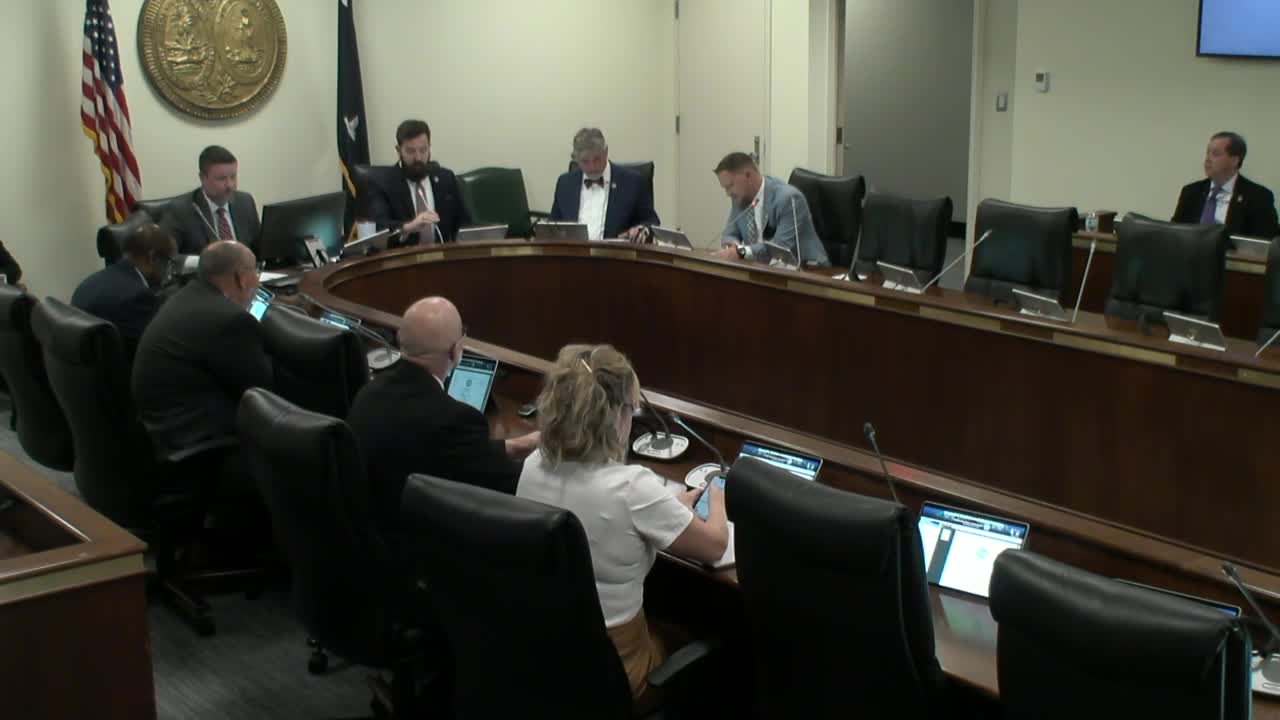
Subcommittee Chairman (name not specified) opened a Public Utility Subcommittee meeting on House Bill 3,309, the South Carolina Energy Security Act, saying, “we have 1 bill on the agenda today. It's h 3,309, South Carolina Energy Security Act. We're gonna continue to take testimony today. We're not gonna be taking any votes.”
Subcommittee Chairman (name not specified) opened a Public Utility Subcommittee meeting on House Bill 3,309, the South Carolina Energy Security Act, saying, “we have 1 bill on the agenda today. It's h 3,309, South Carolina Energy Security Act. We're gonna continue to take testimony today. We're not gonna be taking any votes.”
The testimony centered on projected increases in energy demand, proposed changes in how new generation is reviewed and financed, local siting authority for projects, and proposed structural changes to the Public Service Commission and the consumer-advocate role.
Secretary Harry Lightsey, introduced as Mr. Harry Lightsey and later addressed in testimony as Secretary Lightsey, told the committee that South Carolina must add generating capacity to meet industrial growth and population increases. “Regardless of whether or not data centers are built in South Carolina, we must build more generating capacity to support the growth of our businesses and our population,” he said, adding that advances such as electrified transportation and industrial processes will raise demand. Lightsey also described SCnexus’s federal designation and state support as part of the state’s effort to position itself for energy innovation.
Brett Sowers, an executive at Energy Re (formerly Southern Current), urged competitive procurement and warned that parts of H.3309 would give utilities excessive discretion and limit financing options for independent power producers (IPPs). He said the 2019 Act 62 requirement of a minimum 10-year contract for IPPs had been important for financing and criticized H.3309’s proposed five-year contract term as written in the testimony. Sowers also cited a University of South Carolina economic analysis commissioned by industry stakeholders and described land-use findings, saying projected utility-scale solar through planning horizons would occupy a maximum of about 1.4% of the state's agricultural property and about 0.2% of statewide acreage if all projected projects were sited on agricultural land.
Committee members asked technical and regional questions. Representative Kirby raised access to natural gas in parts of the state; Lightsey said pipelines “literally stop within a few miles of the border” with North Carolina, creating curtailment risks for manufacturers. Representative Hager asked for a snapshot of current capacity; Sowers answered that South Carolina has around 2,400 megawatts of solar and estimated that those installations cover in the order of 20,000 acres. On battery storage, Sowers referenced a recently completed 66-megawatt battery project on Dominion’s system.
Frank Knapp, president and CEO of the South Carolina Small Business Chamber, urged caution on several provisions in H.3309. Knapp said the bill would reduce the Public Service Commission from seven members to three, move the independent consumer-advocate function into the Office of Regulatory Staff (ORS), and direct ORS to consider the financial health of utilities — a change he argued would weaken residential consumer representation. Knapp also criticized a provision he described as allowing “economic development rates” that could shift costs to other customers to subsidize new large industrial customers, and he said the bill was silent on AI data centers while those facilities are driving new demand.
Carrie Gruby Lybarger, administrator and consumer advocate at the South Carolina Department of Consumer Affairs, summarized her office’s consumer-advocate role and history. Lybarger said the consumer advocacy division was originally added to her agency in 1978, later carved out when ORS was created, and reinstated to the Department of Consumer Affairs in fiscal year 2019 following the failed V.C. Summer project. “We are to represent the consumer interest in rate making proceedings before the Public Service Commission,” she told the subcommittee, and noted her office had participated in 33 matters before the PSC, 13 of them specific to rate making.
Speakers also noted process and siting concerns raised by the bill’s language. Sowers said the bill’s requirement for a duplicative Public Service Commission review of projects over a stated acreage threshold (as described in testimony) would threaten local-rule decisionmaking and add delays. He urged clearer competitive-procurement rules that would not restrict long-term contract terms IPPs need to finance projects.
No votes were taken at the session. The chairman said the committee will hold another subcommittee meeting, likely next week, to take up H.3309 and any proposed amendments. The meeting ended with a motion to adjourn that was accepted.