Get Full Government Meeting Transcripts, Videos, & Alerts Forever!
Get email alerts on the Energy Policy topic
No spam. Unsubscribe anytime.
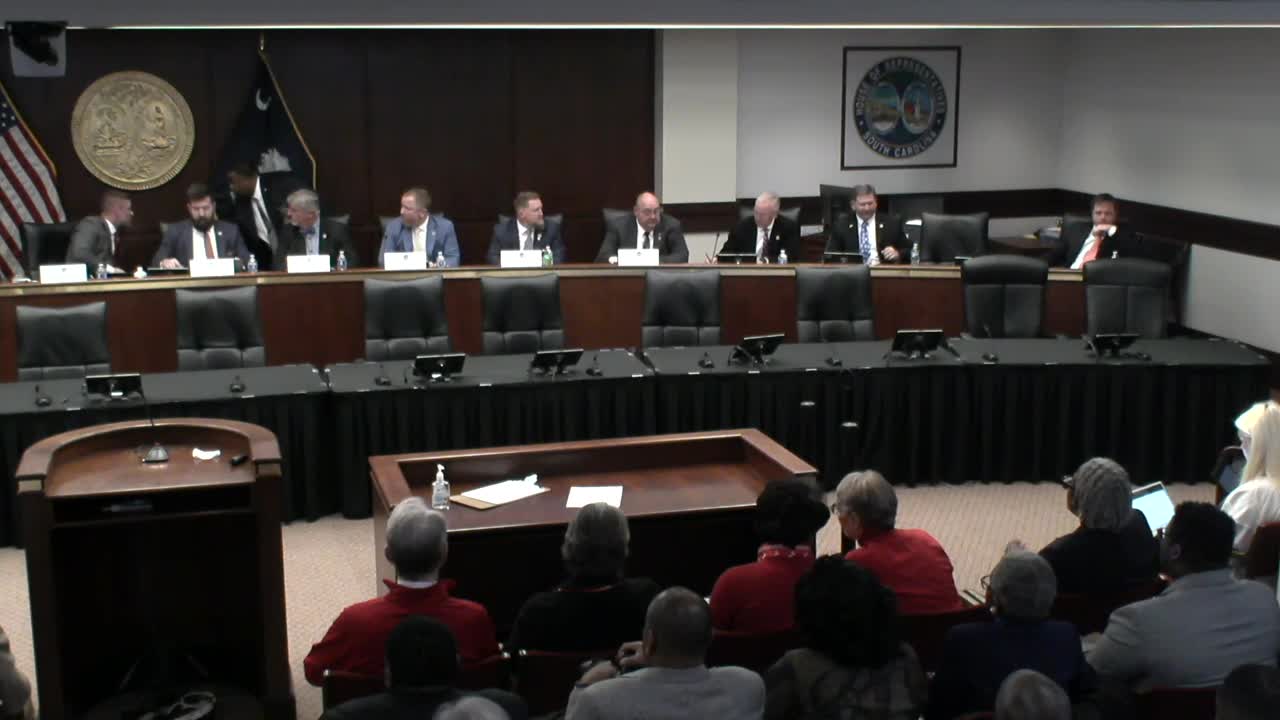
House subcommittee hears hours of testimony on H.3309 energy bill; no votes taken
Summary
A House Labor, Commerce and Industry subcommittee heard extended testimony on H.3309, the South Carolina Energy Security Act, including competing views on a proposed joint Santee Cooper–Dominion natural‑gas project at Kennedy’s, permitting and consumer protections. Committee members took no votes and agreed to reconvene after the House session.
A House Labor, Commerce and Industry (LCI) subcommittee spent most of a scheduled hearing hearing testimony on H.3309 — the South Carolina Energy Security Act — with utility executives, environmental and consumer groups, and local advocates outlining sharply different views on how to meet the state’s growing electricity needs. No votes were taken; the panel said it will reconvene after the chamber’s afternoon session.
Proponents, including Dominion Energy South Carolina, Santee Cooper and Duke Energy, told the subcommittee the state faces tightening capacity and said H.3309 would clear legal and permitting obstacles they say slow new dispatchable generation. "You gotta serve the load. When the light…is switched, you gotta serve it," Keller Kasam of Dominion said, describing the company’s obligation to customers. Jimmy Staton, president and CEO of Santee Cooper, told members a joint combined‑cycle natural‑gas plant at Dominion’s Kennedy’s brownfield site could save money through economies of scale and use existing transmission, but stressed the bill would grant only authorization to partner — not approval of a specific plant.
Opponents ranging from the Coastal Conservation League and Sierra Club to AARP and local citizen groups urged stronger consumer safeguards, preservation of independent oversight and expanded energy efficiency and renewable programs instead of broad permitting rollbacks. "We oppose H.3309 in its current form because it weakens regulatory protections and risks shifting large costs to ratepayers," said John Roof of AARP South Carolina. Conservation and justice advocates pressed the committee for a third‑party administrator for energy‑efficiency programs and cautioned against expanding state exposure to pipeline or eminent‑domain risk for so‑called "anchor tenant" arrangements.
Why it matters: witnesses described both an immediate reliability challenge during winter cold snaps and a longer‑term growth in demand driven in part by large industrial customers and data centers. Utilities said some dispatchable capacity — typically natural gas, hydro or nuclear — will be needed alongside renewables and batteries to keep the grid stable. Opponents said the bill as drafted would erode the Office of Regulatory Staff’s independence, reduce the Public Service Commission’s oversight tools and could speed approvals by triggering automatic approvals or compressed timelines for permits.
Key details from testimony and documents presented - Dominion: said its system includes about 1,200 megawatts of large‑scale solar capacity today and roughly 5,600 megawatts of generation overall; Dominion described a proposed gas hub called "Mississippi Crossing" that could reduce gas price roughly a dime per unit versus Henry Hub prices. - Santee Cooper: said it has taken near‑term actions (a contracted 100 MW gas facility and contracted imports of roughly 400 MW) and expects to add 1,200 MW from medium‑term projects; Staton said Santee Cooper would not close its Winya coal plant "until we have adequate replacement for that capacity." He said H.3309 would authorize a partnership with Dominion at Kennedy’s but would not bypass PSC or environmental permitting processes. - Cost and timing: witnesses gave widely different cost and timetable estimates — Staton and Keller referenced a roughly $3 billion estimate for a combined‑cycle plant concept at Kennedy’s and cited long turbine lead times (multiple years) and supply‑chain delays; opponents cited the multi‑billion‑dollar overruns at V.C. Summer as a cautionary example. - Permitting and oversight: conservation and consumer groups objected to provisions they said would limit the PSC’s use of independent consultants, shorten agency review timelines and narrow public participation; several urged retaining ORS authority and an independent consumer‑advocate role.
Quotes from the hearing included both technical and consumer‑focused concerns. "We will not willingly close Winya until we have adequate replacement for that capacity," Santee Cooper’s Jimmy Staton told the committee. Tim Pearson of Duke Energy said the bill would provide policy clarity and timeliness the company views as necessary to attract generation investment. Environmental groups and community speakers emphasized energy efficiency and solar growth as lower‑cost, lower‑risk alternatives, and requested stronger language to implement a third‑party administrator for efficiency programs and to avoid shifting costs to vulnerable households.
Next steps and committee action: the subcommittee took no votes and recessed to return after the chamber session; members signaled continued negotiation. Committee staff were asked to merge submitted written testimony and prepare follow‑up materials. Stakeholders requested amendments on permitting timelines, consumer protections, ORS authorities and how large industrial "anchor tenant" costs would be allocated.
What the hearing did not do: the subcommittee did not approve any project, vote on H.3309 or adopt implementation language. Any authorization to build a specific plant would still require utility filings, PSC review and environmental permitting.