Get Full Government Meeting Transcripts, Videos, & Alerts Forever!
Get email alerts on the Ports And Maritime topic
No spam. Unsubscribe anytime.
South Carolina Ports Authority reports steady 2024 volumes, no capital request for 2025
Summary
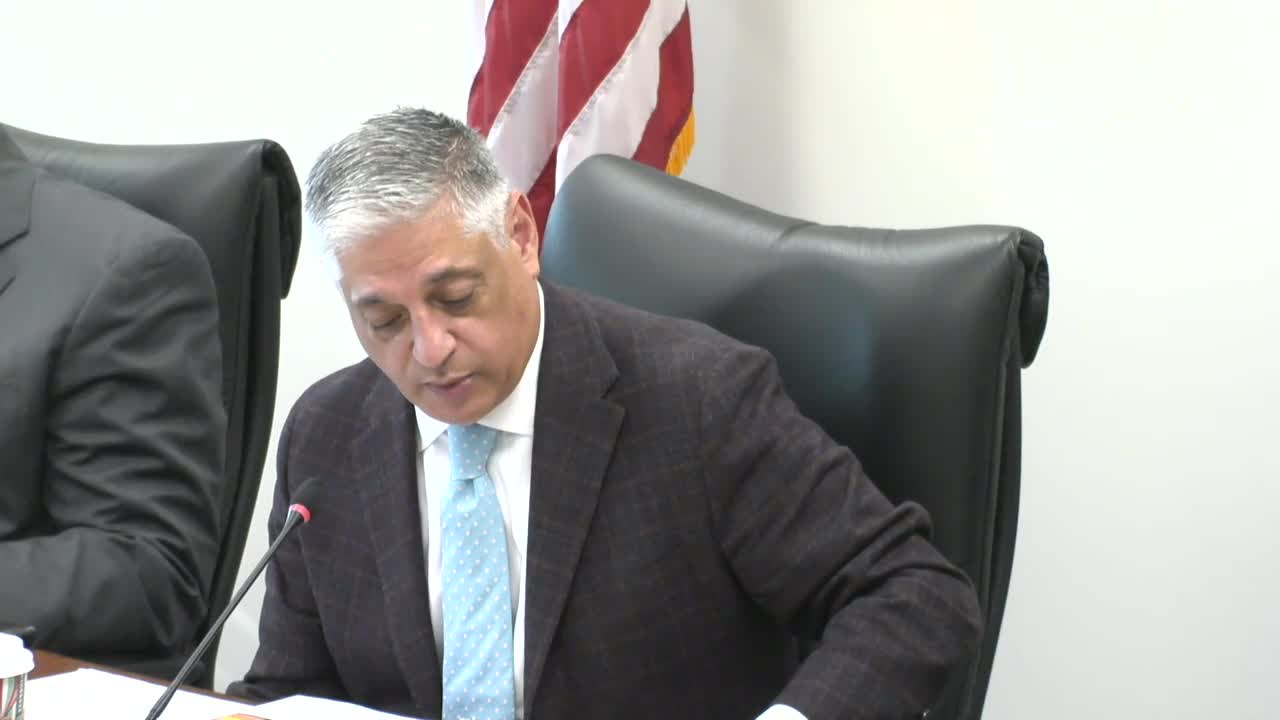
Barbara Melvin, president and CEO of the South Carolina Ports Authority, told the Economic Development Budget Subcommittee the port finished 2024 with record activity at Wando Terminal and 2.5 million TEUs overall, and said the authority will not request capital funding in 2025.
The South Carolina Ports Authority finished 2024 with record container and terminal outcomes but is not requesting capital funding in the 2025 budget cycle, Authority President and CEO Barbara Melvin told the Economic Development Budget Subcommittee.
Melvin said the authority handled a record at the Wando Terminal and reported 2.5 million TEUs in 2024 while citing inland ports Greer and Dillon as major contributors. "Volume cures everything," Melvin said, describing volume growth as the main way the port covers costs and improves productivity.
The Ports Authority told the subcommittee it is continuing multiple capital projects and planning to expand permitted capacity from about 3.5 million TEUs to 5.3 million TEUs by the 02/1933 timeframe and ultimately to 10 million TEUs with planned future investments. Melvin highlighted the Navy base intermodal facility: site work is underway, rail-mounted gantry cranes are arriving, more than four miles of new rail have been installed, and supporting infrastructure such as a substation and the McMillan Overpass are in progress.
Melvin said the authority has reopened the Leatherman Terminal and handled more than 15,000 boxes through November; the terminal added roughly 700,000 TEUs of latent capacity. The authority also noted the recent acquisition of the WestRock property adjacent to North Charleston — described as adding roughly 280 acres and about 5,000 linear feet of berth — as a key step to increase long‑term capacity.
Melvin discussed short‑term headwinds including uneven container front‑loading to the East Coast because of Suez/turnaround time differences and lingering trade/tariff uncertainty ahead of the Chinese New Year. She also said equipment reliability sits at about 99.7% and average truck turn times and crane productivity rank well nationally. On labor, Melvin noted the October work stoppage was resolved and that a master contract in concept was reached between the United States Maritime Alliance and the International Longshoremen, with ratification expected among members in February.
Committee members asked about inland port roles, cruise ship interest and the timetable for transportation projects that affect ports access. Melvin said rail intermodal capacity is key to capturing cargo beyond the immediate port area and that inquiries from multiple cruise brands are under consideration but no firm agreements were announced. She deferred timetable specifics for DOT‑led bridge projects to the Department of Transportation.
Melvin closed by emphasizing workforce and industry needs: terminal operating systems, skilled warehouse labor and supporting logistics training are critical to sustain port operations.
The Ports Authority did not present a formal capital request for the committee to approve during the hearing; the authority thanked the committee for prior support and offered to answer follow‑up questions.