Get Full Government Meeting Transcripts, Videos, & Alerts Forever!
Get email alerts on the Workforce Paraprofessionals topic
No spam. Unsubscribe anytime.
AHEC seeks $875,000 to build data and staffing capacity for paraprofessional health workforce in rural communities
Summary
The South Carolina Area Health Education Consortium requested $875,000 in recurring funds to place regional staff and build a centralized data capacity for paraprofessional health workers, with an emphasis on rural and underserved counties.
The South Carolina Area Health Education Consortium requested recurring state funding to develop data-driven workforce strategies for paraprofessional health roles and to place regional staff who will connect employers and training programs in underserved counties.
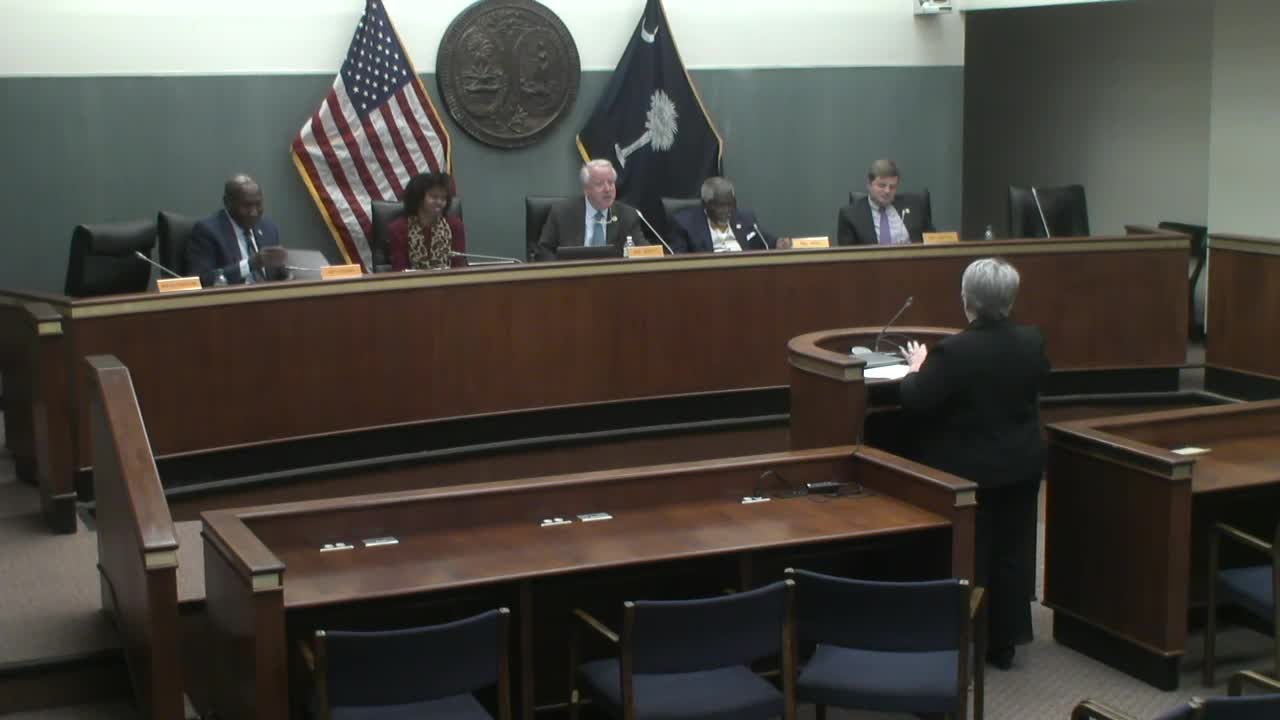
An AHEC representative told the subcommittee that paraprofessionals—certified nursing assistants, pharmacy and lab technicians, medical assistants and similar roles—perform many essential health tasks but that data on their training and distribution is fragmented. “So we are requesting 875,000, as a recurring request,” the presenter said, explaining the funds would support two regional staff at each of the four AHEC centers (eight regional positions) plus two program-office FTEs to build and analyze a centralized data system and to coordinate employers, high schools, technical colleges and apprenticeship programs.
AHEC described the work as intended to identify employer capacity, training throughput and certification gaps so the state can better align technical-program capacity and recruitment strategies in rural and underserved counties. Short-term outcomes would include stronger school–employer partnerships and targeted apprenticeships; long-term goals include improved paraprofessional pipelines that reduce burnout among licensed clinicians.
Committee members praised the proposal and asked about synergies with existing graduate medical education and retention programs. AHEC said the request is complementary—focused on lower-barrier, high-demand occupations that are critical to care delivery but not tracked through licensure data—and provided a model for regional, boots-on-the-ground engagement.
No formal action was taken at the hearing.