Get Full Government Meeting Transcripts, Videos, & Alerts Forever!
Get email alerts on the Ethics Commission Budget topic
No spam. Unsubscribe anytime.
State Ethics Commission tells subcommittee it can maintain current budget after staffing, training gains
Summary
A State Ethics Commission official told the Criminal Justice Budget Subcommittee that the agency is not seeking additional funds this year, citing staffing gains, a new candidate training video and faster case processing; members then moved into proviso votes.
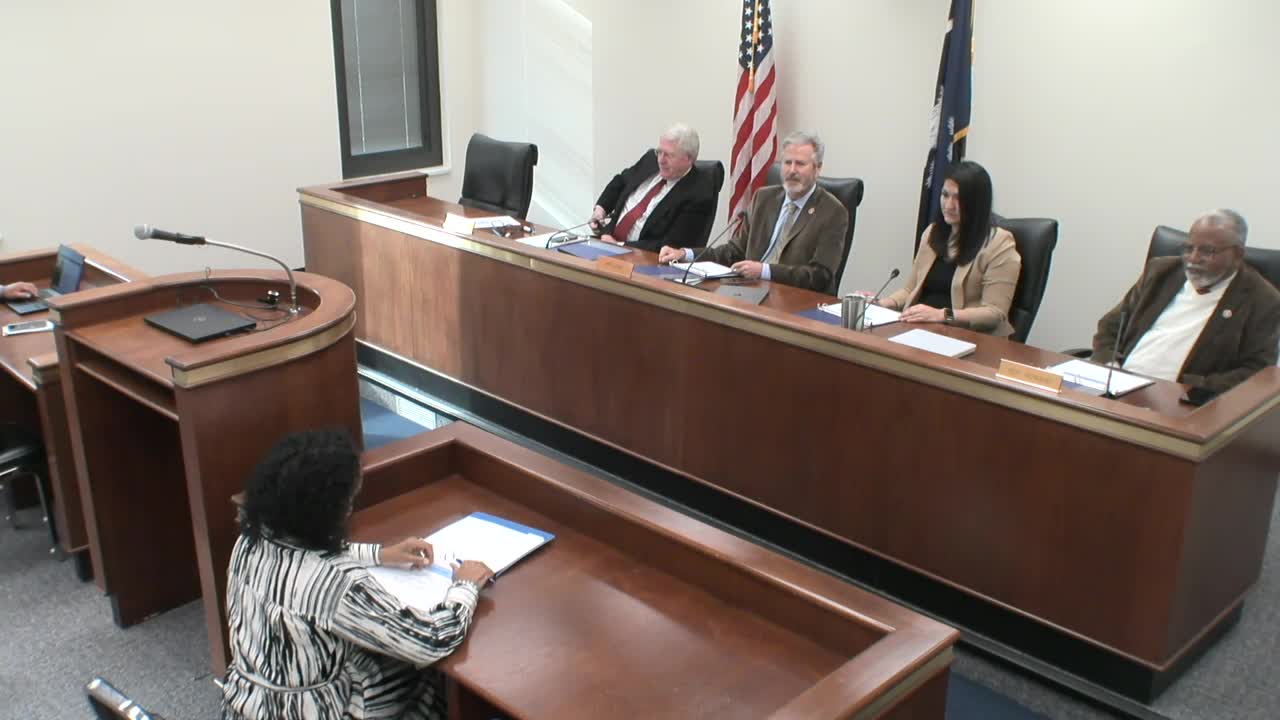
Megan, a State Ethics Commission official, told the Criminal Justice Budget Subcommittee of the House Ways and Means Committee on Oct. 12 that the commission is not requesting additional funding for the coming fiscal year and asked the subcommittee to maintain the agency’s current budget levels.
Megan said the agency has improved capacity after hiring investigators and legal staff and has reduced the volume of routine filing questions by expanding candidate training. "We are not asking for anything this year," she said, summarizing the commission’s budget request.
The commission reported a 7.6% decrease in the number of individuals calling for filing help and said a candidate training video launched in January reached more than 1,000 viewers, compared with roughly 150 candidates reached during prior virtual trainings. The commission said those outreach efforts, combined with a fuller staff, let investigators and attorneys focus more on enforcement cases.
Megan told the subcommittee the agency now has six investigators and an additional attorney. She said there was a large percentage increase in cases presented for probable cause and a substantial increase in cases resolved by the legal office; the commission characterized those trends as greater enforcement efficiency. "The longer an ethics investigation sits ... the less likelihood there is for accountability in a timely fashion," she said.
The commission said it has increased transparency by posting case listings on its website once probable cause is found, and by publishing lists of pending hearings and concluded decisions. Megan also described improvements to outreach: the commission receives lists of all candidates from the State Election Commission (name and contact information) and sends an initial packet with a welcome letter, a candidate newsletter, a link to the training video and contact information for help.
On compliance, Megan said the noncompliance unit—now fully staffed—opened about 15–16 cases to notify filers who are late with campaign disclosure or statements of economic interest. She noted a statutory penalty of $100 for each late filing, and said that only a small share of those contacted ultimately have complaints filed against them after repeated notices.
Members raised user-experience issues with the online filing portal, calling it confusing for some new candidates and long-time filers alike. "It is still confusing," one representative said. Megan invited members to share specific problems with committee staff so the House and Senate ethics committees and commission staff can consider changes to the portal, noting that any change requires agreement among those bodies.
The presentation closed with thanks from subcommittee leadership and no request for additional appropriations from the commission.