Senate Small Business Committee hears testimony from Kelly Loeffler on SBA priorities: audits, disaster loans and fraud control
Get AI-powered insights, summaries, and transcripts
SubscribeSummary
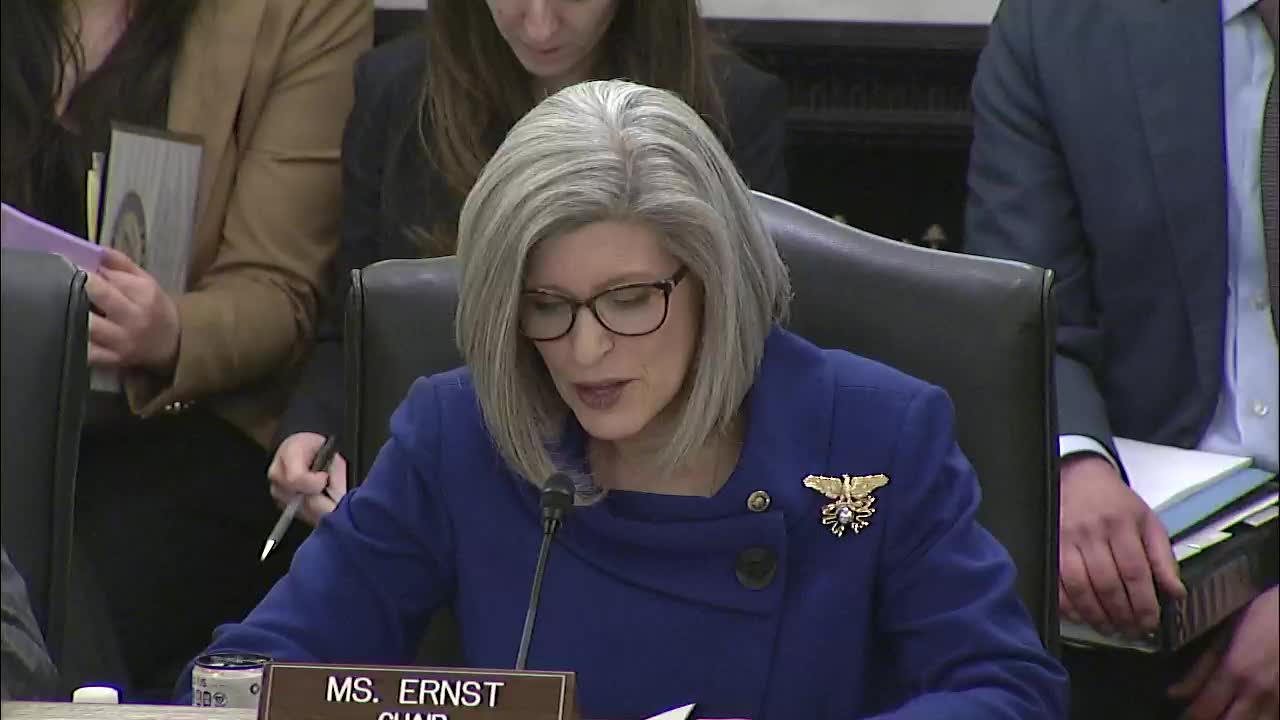
Senator Joni Ernst, chairwoman of the Senate Committee on Small Business and Entrepreneurship, formally opened a Jan. 29 hearing on President Trump’s nominee for Small Business Administration administrator, former U.S. Senator Kelly Loeffler, whose testimony focused on restoring financial controls, speeding disaster relief and pursuing a 0‑tolerance policy toward fraud.
Senator Joni Ernst, chairwoman of the Senate Committee on Small Business and Entrepreneurship, formally opened a Jan. 29 committee hearing to consider President Trump's nominee to be administrator of the Small Business Administration, former U.S. Senator Kelly Loeffler. The committee swore in Loeffler and then heard opening statements and questions focused on agency accountability, disaster funding, fraud recovery and recent executive actions affecting diversity and equity programs.
The hearing concentrated on three recurring themes: restoring financial controls and auditability at SBA; ensuring timely disaster relief and better transparency with Congress; and preventing fraud and waste in pandemic-era programs. Chairwoman Joni Ernst said the agency must be “shored up” after what she described as failures in the prior administration and cited the inability of the Government Accountability Office to issue an audit since fiscal 2020. Ranking Member Edward J. Markey stressed the potential harm from abrupt OMB spending orders and the recent firing of an inspector general: “Inspector general Ware has earned bipartisan respect,” Markey said, and he argued the dismissal violated a statutory 30‑day notice requirement.
Kelly Loeffler, introduced to the panel by Senators Britt and Tim Scott, said if confirmed she would prioritize restoring financial accountability and returning staff to field offices. “If I have the honor of being confirmed, I'll leverage my decades of business experience to champion America's entrepreneurs,” Loeffler testified, adding that she would “crack down on fraud with a 0 tolerance policy” and ensure disaster funds are resourced and accounted for so affected Americans do not face delays.
Committee members cited recent operational failures as examples of the problems Loeffler would inherit. Chair Ernst and other senators noted that the SBA administered large pandemic-era relief programs and that the agency received roughly $1.1 trillion in COVID‑related funding; committee questions also referenced reported charge-offs of about $18.6 billion in fiscal 2024 and growing delinquencies in the agency's 7(a) loan portfolio. Senators repeatedly asked how Loeffler would ensure the SBA provided timely, transparent reporting to Congress about account balances and disaster loan pipeline status; she pledged cooperation and requested to work with the committee on fixes.
Several senators pressed Loeffler on the impact of an Office of Management and Budget memorandum that briefly put federal discretionary spending under a hold and on President Trump's executive orders reversing certain diversity, equity and inclusion (DEI) initiatives. Loeffler said she supports implementing the president's directives while also committing to “uphold the law” and to inform the committee of program changes. Members on both sides warned that statutory programs administered by SBA—such as the 8(a) Business Development program, the Small Business Innovation Research (SBIR) and Small Business Technology Transfer (STTR) programs, the Restaurant Revitalization Fund and CARES Act authorities—are subject to existing law and congressional oversight.
Lawmakers also asked about operations in rural and disaster-affected communities, SBIR/STTR reauthorization, field offices and program access for veterans and minority entrepreneurs. Loeffler said she would emphasize the agency’s field presence and counseling programs, including SCORE and district offices, and said she would work with senators on SBIR/STTR priorities and on expanding outreach to rural areas and veterans.
The committee agreed by unanimous consent to enter a list of letters of support for Loeffler from multiple trade and advocacy groups into the record. The chair also swore in Loeffler and left the record open for additional questions for the record until close of business the next day and two weeks for supplementary materials. No committee confirmation vote took place during the hearing.
The hearing mixed pointed policy questions—about audits, account shortfalls and fraud recovery—with broader partisan disputes over executive authority and the scope of DEI-related initiatives. Senators expressed shared interest in faster, more accountable SBA operations, but differed sharply on the causes of recent problems and on the propriety of recent presidential actions. The committee will accept additional questions for the record and follow-up from the nominee before any committee vote.