Citizen Portal

Sheriffs and Senators Press for More HIDA Funding, Naloxone and School Education as Part of Fentanyl Response

2247225 · February 4, 2025

Get AI-powered insights, summaries, and transcripts

Subscribe
AI-Generated Content: All content on this page was generated by AI to highlight key points from the meeting. For complete details and context, we recommend watching the full video. so we can fix them.

Summary

Major County Sheriffs and family advocates told the Judiciary Committee that law enforcement and prevention programs need more stable funding, including reauthorizing and increasing HIDA funding, expanding naloxone availability and supporting school-based education and community grants.

Sheriffs, family advocates and senators emphasized that ending the fentanyl crisis requires sustained funding for interdiction task forces, widely available naloxone and expanded prevention and recovery services.

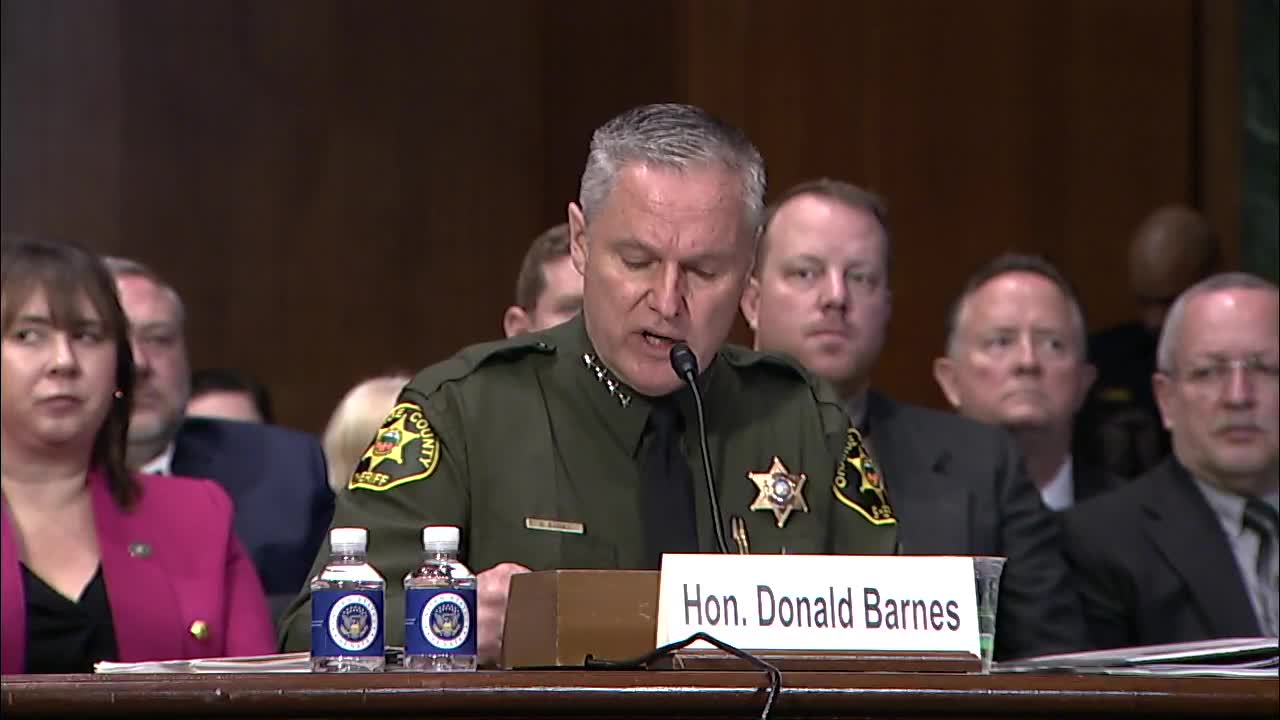
Sheriff Don Barnes, representing the Major County Sheriffs of America, told senators his agency seized large quantities of fentanyl and urged Congress to reauthorize and increase funding for the High Intensity Drug Trafficking Areas (HIDA) program. He said HIDA funding had remained static for a decade and that the HIDA Enhancement Act would reauthorize the program at $333 million annually. "HIDA funding has been stagnant, stale for the last 10 years," Barnes said, adding local task forces rely on HIDA as partial offsets to local contributions.

Witnesses and senators also discussed a temporary federal grant freeze and the reassignment of federal law-enforcement personnel away from drug investigations. Several senators — including Richard Blumenthal and Sheldon Whitehouse — warned that diverting FBI, DEA and other agents to different priorities could weaken long-term investigations into trafficking networks. Dr. Cecilia Farfan Mendez said diverting resources from multi-agency task forces undermines complex investigations that require international cooperation.

Family organizations asked for federal support for prevention work: Jaime Puerta described VOID's 22‑minute documentary, Dead on Arrival, used in junior high and high schools, and said community groups lack grant funding. Noring and Puerta urged more public education campaigns, school naloxone availability and school-based prevention programs. Emergency clinicians testified about naloxone's life-saving role: Dr. Tom Westlake recounted reviving a patient with Narcan during a shift and witnesses said deputies carrying naloxone have saved hundreds of lives locally.

Ending: Senators on both sides expressed support for reauthorizing and boosting HIDA funding, clarifying grant rules and expanding prevention grants and naloxone availability; they said funding decisions would be part of upcoming legislative and appropriations work.