Get Full Government Meeting Transcripts, Videos, & Alerts Forever!
Get email alerts on the Mining And Landfill Setbacks topic
No spam. Unsubscribe anytime.
Panel agrees to reconvene mining stakeholder group after testimony on HB 3503 setbacks
Summary
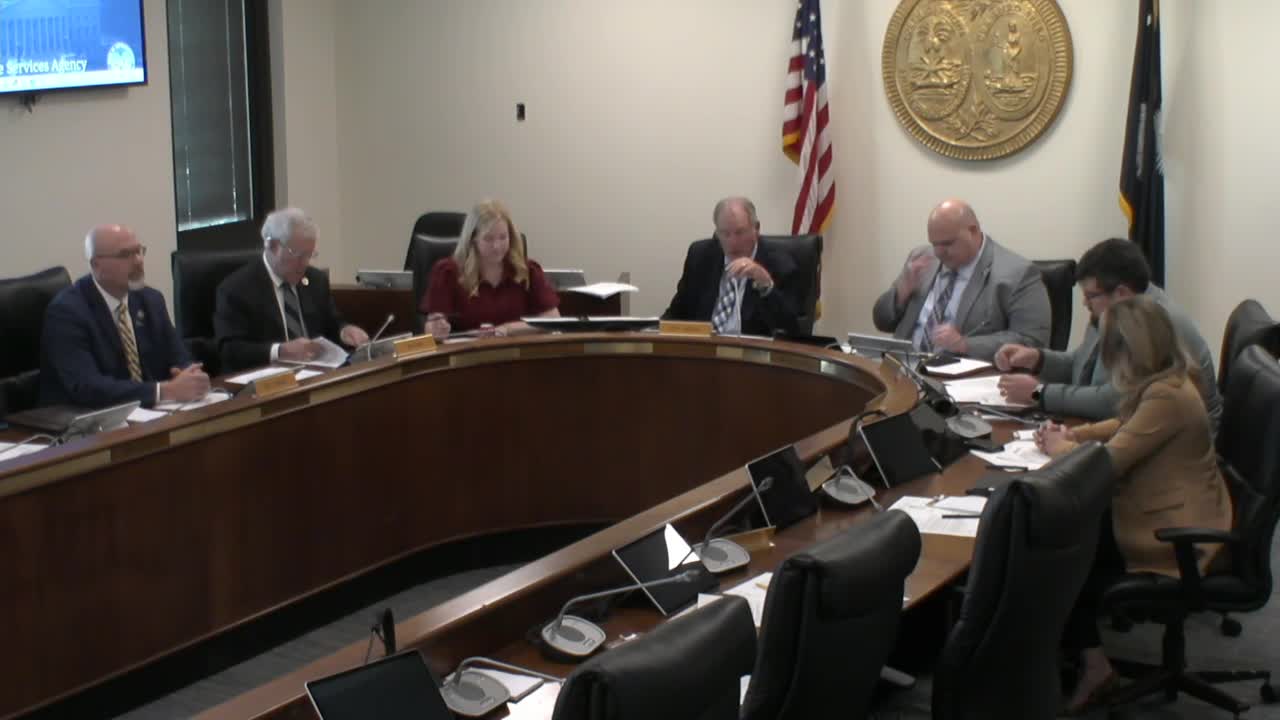
Chairman Burns convened an environmental subcommittee hearing that centered on House Bill 3,503, a bill sponsored by Representative Bustos that would prohibit the South Carolina Department of Environmental Services from issuing permits for a mine, sanitary landfill or similar solid-waste facility within two miles of any park, preserve, green space or other protected area owned or managed by a public entity.
Chairman Burns convened an environmental subcommittee hearing that centered on House Bill 3,503, a bill sponsored by Representative Bustos that would prohibit the South Carolina Department of Environmental Services from issuing permits for a mine, sanitary landfill or similar solid-waste facility within two miles of any park, preserve, green space or other protected area owned or managed by a public entity.
The measure drew competing testimony from environmental groups, the aggregate industry and local government representatives, and the panel voted to reassemble the mining stakeholder group formerly organized by DES to study setbacks and related rules.
Nut graf: Supporters told the subcommittee the bill seeks to protect rare habitats, tourism and water quality near public conservation lands; industry groups warned a uniform two-mile buffer would block access to essential construction materials and could raise costs and delay infrastructure projects. The panel approved a motion to reconvene a study group so the parties can negotiate technical setbacks and gather scientific input.
Laura McGill Milton, an attorney with the South Carolina Environmental Law Project, said the proposal would not ban mining but would put a buffer between industrial activity and public lands. “We are not opposed to mining altogether, but House Bill 3,503 doesn't stop development. It ensures that mines are properly set back from public lands protecting them from pollution and devastation,” Milton said. Milton cited state park visitation and tourism numbers, saying, “Our state parks alone draw nearly 8,000,000 visitors every year” and that tourism “contributes an estimated 29,000,000,000 to our economy, supporting 1 in every 10 jobs and generating 1,800,000,000 in state and local taxes annually.”
Becky Ryan, North Coast Office director for the Coastal Conservation League, described proposals for sand mines adjacent to Lewis Ocean Bay Heritage Preserve and the potential effects on Carolina Bay hydrology and rare species, including Venus flytraps. “The potential impacts from these mines are severe,” Ryan said, describing groundwater drawdown and the risk of dust and noise disrupting wildlife and visitors.
Industry witnesses pushed back. Jessica Palmer, executive director of the South Carolina Aggregates Association, told the committee aggregates are “a nonrenewable resource and a critical 1,500,000,000 industry in South Carolina” and said a statewide two-mile buffer could “render vast regions of our state off limits for mining activities.” Trevor McLeod, vice president for Luck Companies, said the industry already faces lengthy permitting and that restricting acreage could delay projects and increase costs; he noted Luck's recent $450,000,000 investment plans and said mines support roads, schools and other infrastructure.
John Winges of the South Carolina Association of Counties urged caution on the bill's landfill and solid-waste provisions, saying a broad buffer could limit placement of transfer stations, collection sites and emergency disposal capacity, and could leave counties short of options after natural disasters.
Julie Blaylock, bureau chief of the Bureau of Land and Waste Management at the Department of Environmental Services, told the committee that a two-mile buffer would be more restrictive than existing regulatory practice and that DES historically set setbacks case by case, relying on local zoning and the specifics of each proposed operation. She said DES would be willing to reconvene a stakeholder group to revisit setbacks and related rules.
After public testimony, Representative Cromer moved to reassemble the prior study committee; Representative Reese seconded the motion. Committee clerk Ellie called the roll: Representatives Kramer, Harris, Morgan and Burns voted aye; one member was not present. The motion passed and the chair directed DES to work with stakeholders on next steps.
Ending: The committee moved on to a separate agenda item on wells and septic systems after the vote; members directed staff and DES to reconvene interested parties for technical work on setbacks and related regulatory language before further action on HB 3503.